Celadon Ceramics
Celadon is Korea's most celebrated traditional ceramic art, admired worldwide for its elegant jade-green glaze, refined craftsmanship and graceful inlaid designs.
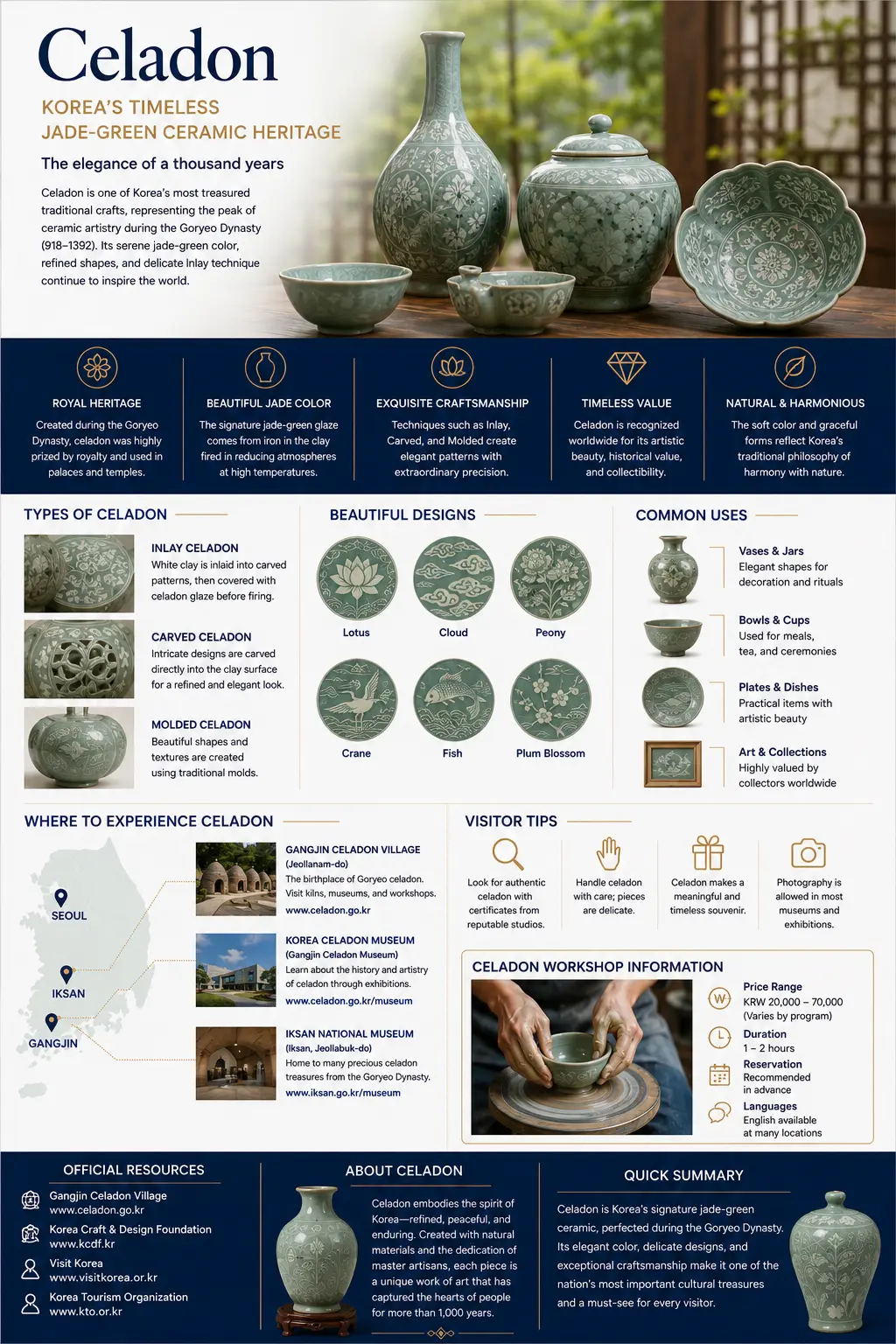
Quick Summary
Key takeaways
- Korean celadon represents one of the world's finest ceramic traditions, combining elegant design, innovative techniques, and exceptional craftsmanship that continue to inspire ceramic artists today.
The Complete Guide
Celadon is Korea's most celebrated traditional ceramic art and one of the country's greatest artistic achievements. Produced primarily during the Goryeo Dynasty (918–1392), Korean celadon is internationally admired for its elegant jade-green glaze, refined craftsmanship, and graceful designs.
Goryeo celadon reached extraordinary artistic excellence through advanced firing techniques and the unique Sanggam inlay method, in which decorative patterns are carved into clay and filled with white or black slip before glazing.
Today, celadon remains a symbol of Korean cultural heritage and can be admired in museums, historic kiln sites, and pottery villages throughout the country.
Characteristics of Korean Celadon
Jade-Green Glaze
The soft green color is the most distinctive feature of Korean celadon and is admired worldwide.
Sanggam Inlay Technique
Intricate decorative patterns are created by inlaying contrasting colored clay into carved designs before glazing.
Elegant Design
Traditional motifs include cranes, clouds, lotus flowers, peonies, bamboo, and flowing water.
Exceptional Craftsmanship
Each piece is individually handcrafted using techniques refined over centuries.
Highlights
Ask AI About This Topic
Have a question about Celadon Ceramics?
Get instant, locally-checked answers from the ASK KOREA AI. Ask anything from specific edge cases to itinerary decisions.
"Explain Korean celadon and where I can see or make it today."
ASK KOREA Transit