What Makes Korean Temples Special?
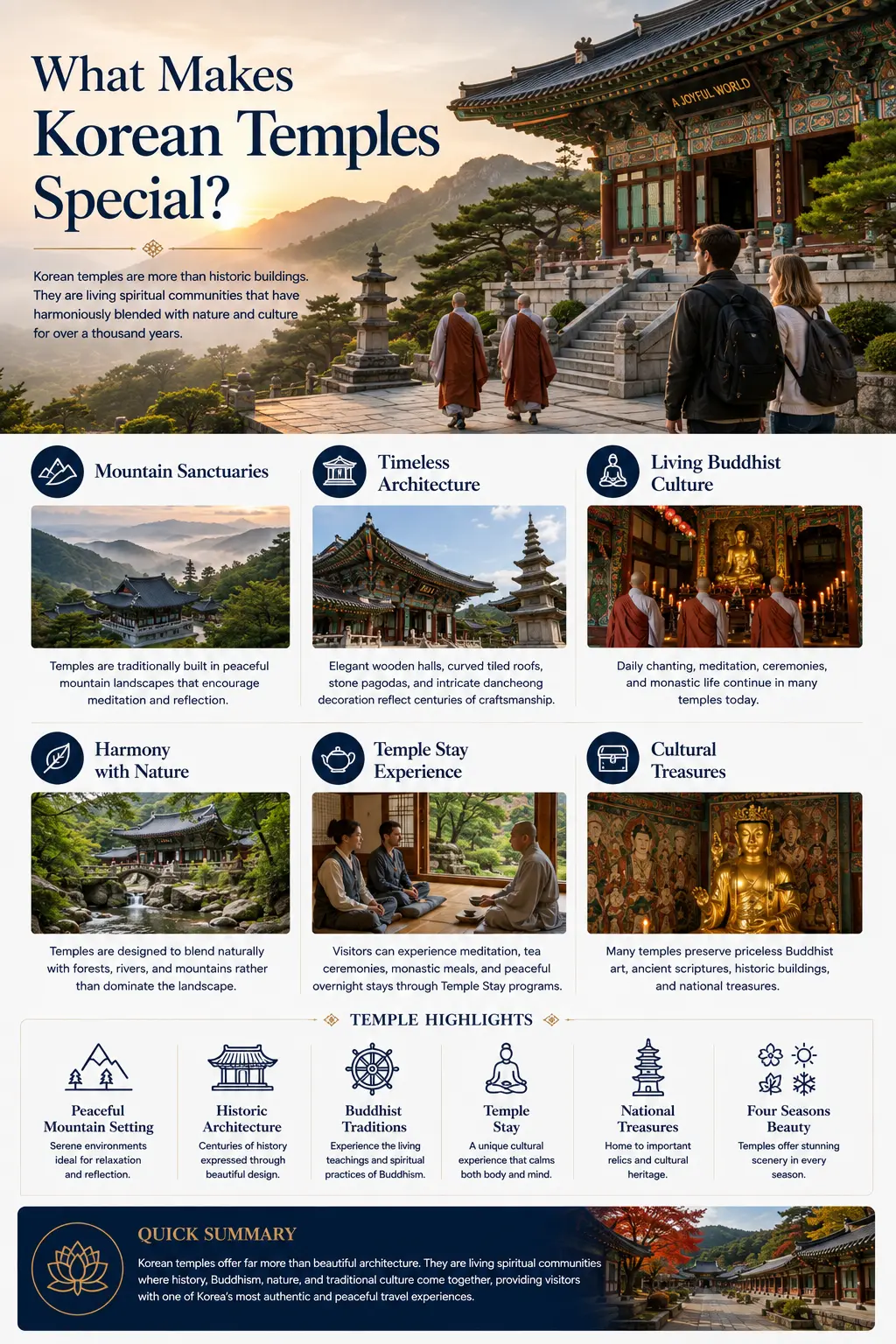
Korean temples are more than historic buildings — they are living spiritual communities that have blended with nature and culture for over a thousand years.
Quick Summary
Key takeaways
The Complete Guide
Korean temples are distinguished by their close relationship with nature, elegant wooden architecture, and active role in modern society. Unlike many urban religious sites, most Korean temples are located deep within mountains, forests, or national parks, creating peaceful environments for reflection and meditation.
Traditional temple buildings are carefully designed according to Korean architectural principles that emphasize harmony with the surrounding landscape rather than dominating it. Visitors will often find colorful decorative paintings known as Dancheong, beautifully carved wooden halls, stone pagodas, bell pavilions, and quiet courtyards surrounded by centuries-old trees.
Many temples continue to function as active religious communities while welcoming visitors from around the world through Temple Stay programs, meditation retreats, and cultural education.
The combination of living religious practice, historic architecture, and natural scenery makes Korean temples unique among Buddhist destinations in Asia.
Highlights
Harmony with nature
Traditional wooden architecture
Dancheong decorative art
Stone pagodas
Meditation culture
Temple Stay programs
Living Buddhist communities
UNESCO-recognized monasteries
Quick Summary
Korean temples are unique because they remain active spiritual communities while preserving centuries of history, traditional architecture, and harmonious relationships with the natural environment.
Ask AI About This Topic
Have a question about What Makes Korean Temples Special??
Get instant, locally-checked answers from the ASK KOREA AI. Ask anything from specific edge cases to itinerary decisions.
"What makes Korean Buddhist temples different from temples in Japan or China?"
ASK KOREA Transit