Jeju Region
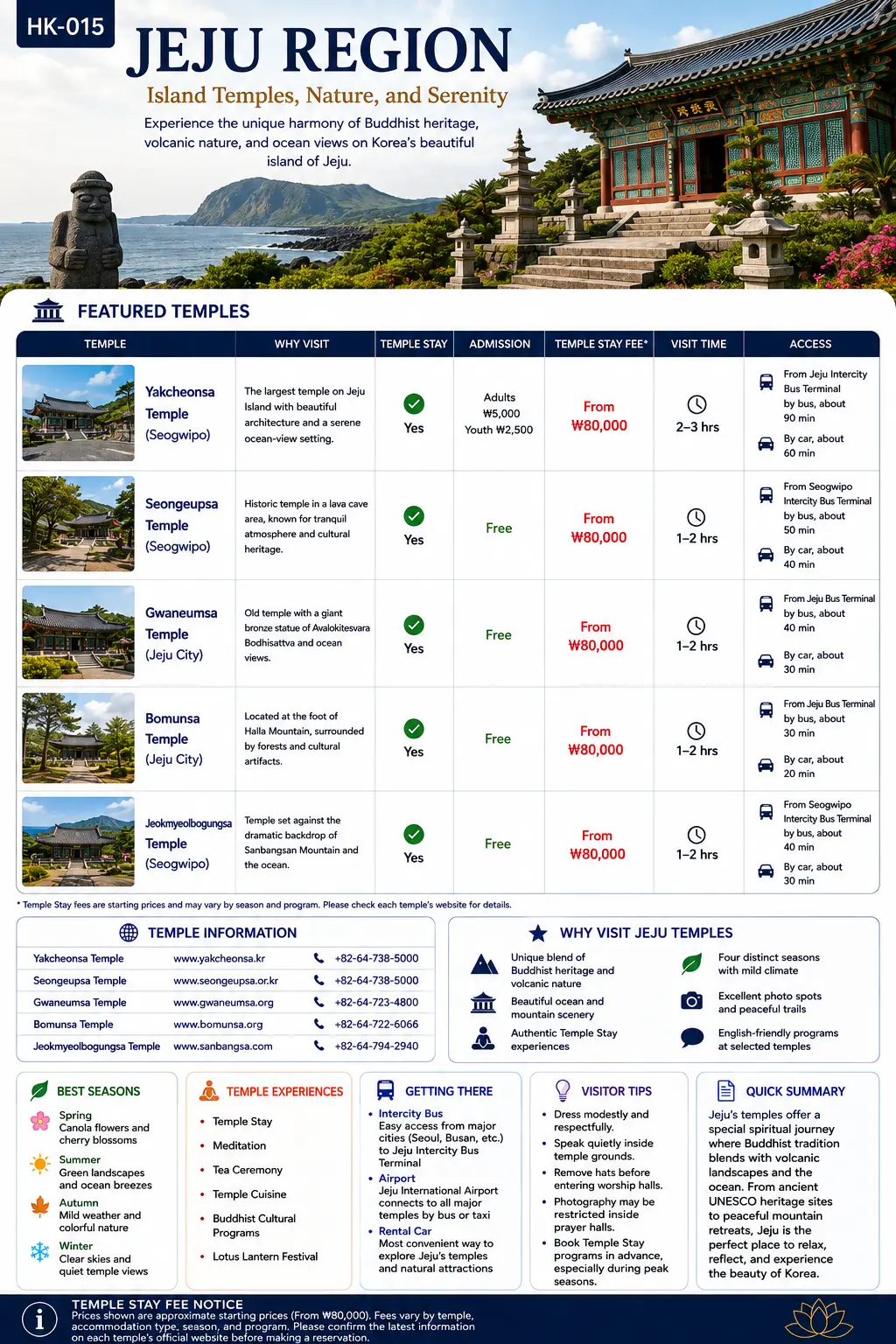
Jeju's temples offer a special spiritual journey where Buddhist tradition blends with volcanic landscapes and the ocean.
Quick Summary
Key takeaways
The Complete Guide
Jeju Island offers a distinctive Buddhist experience where traditional temples are set against volcanic landscapes, coastal scenery, and lush forests. Although fewer in number than those on the mainland, Jeju's temples reflect the island's unique cultural identity and peaceful atmosphere.
Temples in the Jeju Region
Yakcheonsa Temple
Yakcheonsa Temple is the largest Buddhist temple on Jeju Island and one of the largest in East Asia. It is renowned for its impressive architecture, magnificent main hall, colorful murals, and beautiful gardens.
Gwaneumsa Temple
Located on the slopes of Hallasan National Park, Gwaneumsa Temple serves as one of the principal gateways to Hallasan. Visitors enjoy its peaceful forest setting, mountain scenery, and spiritual atmosphere.
Beophwa Temple Site
Although much of the original temple no longer remains, the historic Beophwa Temple site provides valuable insight into Jeju's long Buddhist history and cultural heritage.
Highlights
Volcanic landscapes
Hallasan mountain scenery
Traditional temple architecture
Peaceful forest environment
Spiritual atmosphere
Cultural heritage
Beautiful gardens
Excellent hiking access
Quick Summary
Jeju Region offers a unique combination of Buddhism and volcanic island scenery, providing visitors with peaceful temples surrounded by some of Korea's most spectacular natural landscapes.
Ask AI About This Topic
Have a question about Jeju Region?
Get instant, locally-checked answers from the ASK KOREA AI. Ask anything from specific edge cases to itinerary decisions.
"How can I combine Jeju temple visits with Hallasan and coastal sightseeing?"
ASK KOREA Transit