Ginseng Cultivation
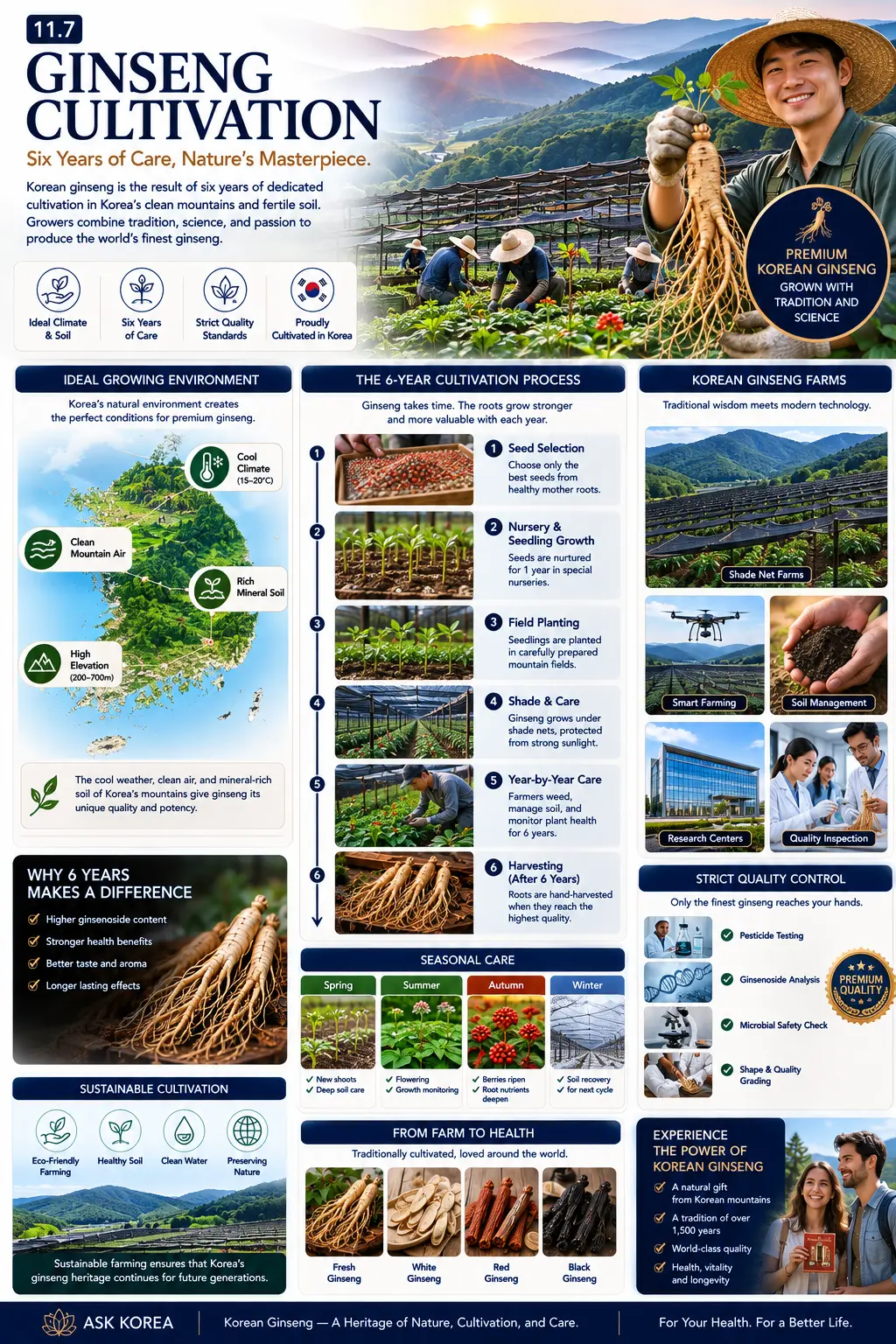
Korean ginseng is the result of six years of dedicated cultivation in Korea's clean mountains and mineral-rich soil.
Quick Summary
Key takeaways
- Korean Ginseng requires years of careful cultivation and expert farming techniques, making it one of Korea's most valuable and respected agricultural products.
The Complete Guide
Growing Korean Ginseng is a long and carefully managed process that requires patience, expertise, and ideal natural conditions. Unlike many crops that can be harvested within a single season, Korean ginseng is typically cultivated for four to six years before reaching maturity.
Farmers carefully prepare the soil, provide shade to protect the plants from direct sunlight, and monitor growing conditions throughout the cultivation period. Because ginseng is sensitive to climate and soil quality, only selected regions of Korea are considered suitable for producing premium-quality roots.
This careful cultivation process has helped establish Korea's worldwide reputation for producing some of the finest ginseng available.
The Cultivation Process
Soil Preparation
Fields are carefully prepared and allowed to recover before planting to ensure healthy growing conditions.
Planting
Young ginseng seedlings are planted in shaded fields designed to protect them from excessive sunlight.
Growth Period
Plants are cultivated for four to six years while farmers carefully manage water, temperature, and soil conditions.
Harvest
Mature roots are harvested by hand to minimize damage and preserve quality.
Major Ginseng-Producing Regions
Geumsan
Korea's most famous ginseng-producing region and home to the annual Geumsan Ginseng Festival.
Punggi
Known for producing premium-quality Korean ginseng through favorable climate and traditional cultivation methods.
Ganghwa
One of Korea's historic ginseng cultivation areas with a long agricultural tradition.
Highlights
Ask AI About This Topic
Have a question about Ginseng Cultivation?
Get instant, locally-checked answers from the ASK KOREA AI. Ask anything from specific edge cases to itinerary decisions.
"How is Korean ginseng cultivated over six years, and where does it grow?"
ASK KOREA Transit