Fresh, White & Red Ginseng
Fresh, white and red ginseng come from the same root but differ in processing, flavour, potency and how they are best enjoyed.
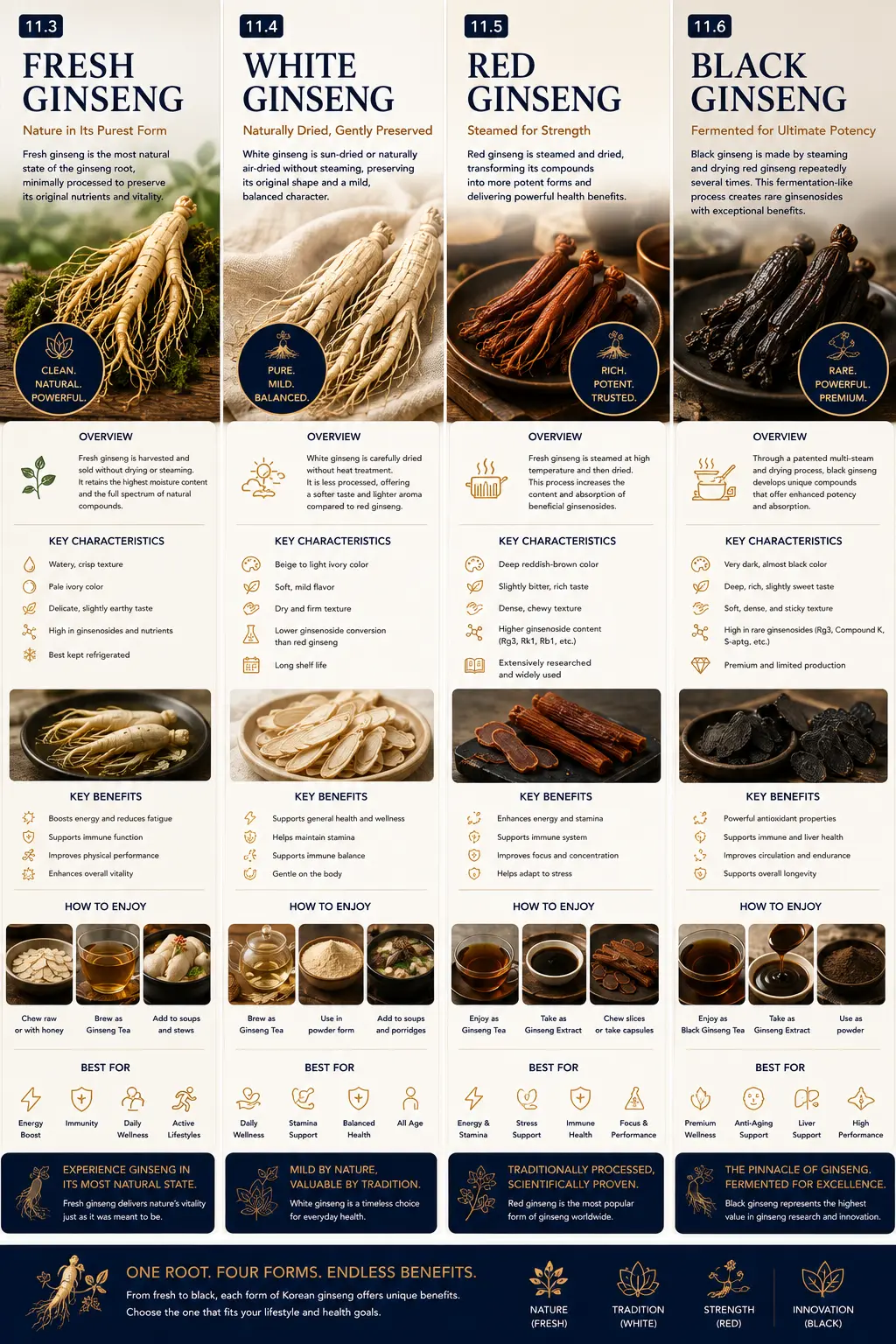
Quick Summary
Key takeaways
- Fresh Ginseng offers visitors the opportunity to experience Korean ginseng in its most natural form while discovering its importance in Korean cuisine and traditional culture.
- White Ginseng preserves the natural qualities of Korean ginseng through traditional drying methods, making it one of Korea's most respected and widely exported ginseng products.
- Red Ginseng represents the highest level of Korea's traditional ginseng processing, combining centuries of expertise with exceptional product quality that is recognized around the world.
The Complete Guide
Fresh Ginseng
Fresh Ginseng is the natural form of Korean ginseng harvested directly from the field without drying or steaming. It retains its original appearance, moisture, and fresh aroma, making it one of the purest forms of Korean ginseng.
Typically harvested after four to six years of cultivation, fresh ginseng is highly valued for its quality and is commonly used in Korean cuisine, traditional herbal preparations, and wellness products.
One of the most famous Korean dishes featuring fresh ginseng is Samgyetang (Ginseng Chicken Soup), which combines whole young chicken, fresh ginseng, glutinous rice, garlic, and jujubes.
Characteristics
Natural Form
Freshly harvested with its original moisture and appearance.
Premium Quality
Usually cultivated for 4–6 years before harvest.
Culinary Use
Commonly used in soups, herbal dishes, teas, and fresh preparations.
Seasonal Product
Fresh ginseng is most widely available during the harvest season.
Popular Fresh Ginseng Products
Highlights
White Ginseng
White Ginseng is produced by carefully drying fresh Korean ginseng without steaming. This traditional preservation method removes moisture while maintaining the natural characteristics of the root.
White Ginseng has been produced for centuries and is widely used in teas, herbal preparations, powders, extracts, and health products. Its light color reflects the natural drying process, distinguishing it from Red Ginseng.
Because it stores well and is easy to transport, White Ginseng has long been an important export product and remains popular both in Korea and internationally.
Characteristics
Naturally Dried
Prepared by air-drying or carefully controlled drying methods.
Long Shelf Life
Drying allows the product to be stored for extended periods.
Versatile Uses
Commonly used for tea, extracts, powders, and cooking.
Traditional Production
Prepared using methods that have been practiced for generations.
Popular White Ginseng Products
Highlights
Red Ginseng
Red Ginseng is one of Korea's most famous premium health products and a globally recognized symbol of Korean wellness culture. It is produced by carefully steaming fresh Korean ginseng before drying, a traditional process that has been practiced for centuries.
The steaming and drying process changes the color of the root to a rich reddish-brown while improving its stability for long-term storage. Today, Red Ginseng is available in many forms, including extracts, capsules, powders, teas, candies, beverages, and premium gift sets.
Because of its outstanding reputation, Red Ginseng has become one of Korea's most successful agricultural exports and one of the country's most popular gifts for family, friends, and business partners.
Characteristics
Steamed and Dried
Fresh ginseng is carefully steamed before drying using traditional methods.
Premium Quality
Produced from mature Korean ginseng cultivated for several years.
Long Shelf Life
The traditional production process allows the product to be stored for extended periods.
Premium Gift
Frequently chosen as one of Korea's most prestigious gifts.
Popular Red Ginseng Products
Highlights
Ask AI About This Topic
Have a question about Fresh, White & Red Ginseng?
Get instant, locally-checked answers from the ASK KOREA AI. Ask anything from specific edge cases to itinerary decisions.
"Compare fresh, white and red Korean ginseng and tell me which suits me."
ASK KOREA Transit