What Makes Korean Festivals Special?
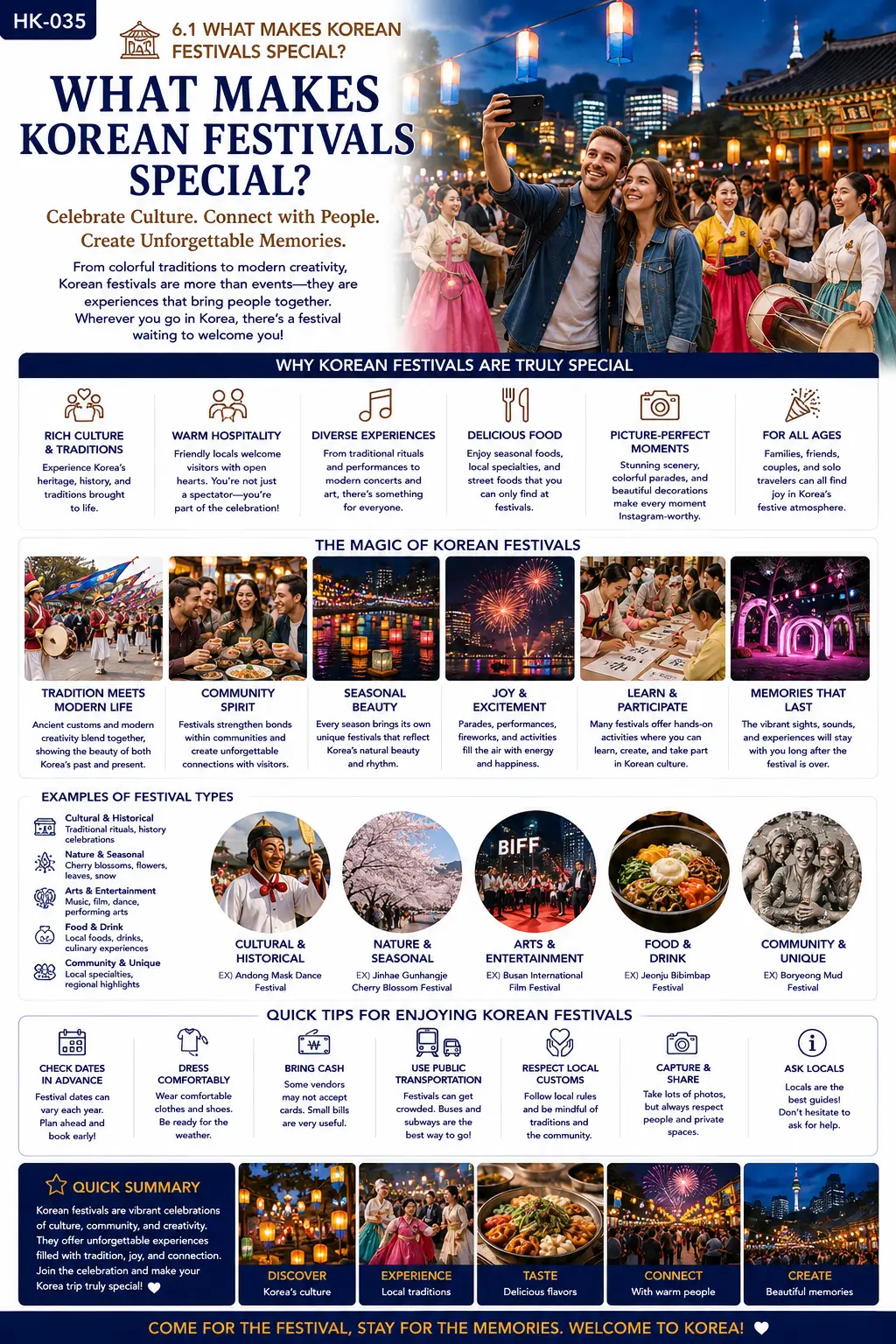
Korean festivals celebrate the country's history, seasonal beauty, local traditions and strong sense of community, blending centuries-old customs with modern performances.
Quick Summary
Key takeaways
- Korean festivals celebrate history, nature, culture, and community, allowing visitors to experience authentic Korean traditions while enjoying exciting seasonal events.
The Complete Guide
Korean festivals are unique because they celebrate the country's history, seasonal beauty, local traditions, and strong sense of community. Rather than being limited to entertainment, many festivals originated from agricultural customs, Buddhist ceremonies, fishing traditions, royal celebrations, or local cultural heritage.
Today, these festivals combine centuries-old traditions with modern performances, interactive activities, local cuisine, and cultural exhibitions. Visitors can enjoy flower festivals, lantern displays, seafood celebrations, traditional performances, fireworks, and hands-on experiences while exploring different regions of Korea.
Every province has its own signature festivals, making them an excellent way to discover Korea's regional diversity and cultural identity.
Why Korean Festivals Are Special
Four Distinct Seasons
Every season offers different festivals that reflect Korea's changing landscapes and climate.
Living Traditions
Many festivals continue customs that have been practiced for hundreds of years.
Regional Identity
Each region celebrates its own history, local products, cuisine, and cultural heritage.
Interactive Experiences
Visitors can actively participate through performances, workshops, traditional games, and cultural activities.
Family-Friendly Atmosphere
Most festivals provide activities suitable for visitors of all ages.
Highlights
Ask AI About This Topic
Have a question about What Makes Korean Festivals Special??
Get instant, locally-checked answers from the ASK KOREA AI. Ask anything from specific edge cases to itinerary decisions.
"Why are Korean festivals worth visiting, and what kinds of festivals can I experience?"
ASK KOREA Transit