Korea Food Guide · Guide 06

Traditional Korean Food

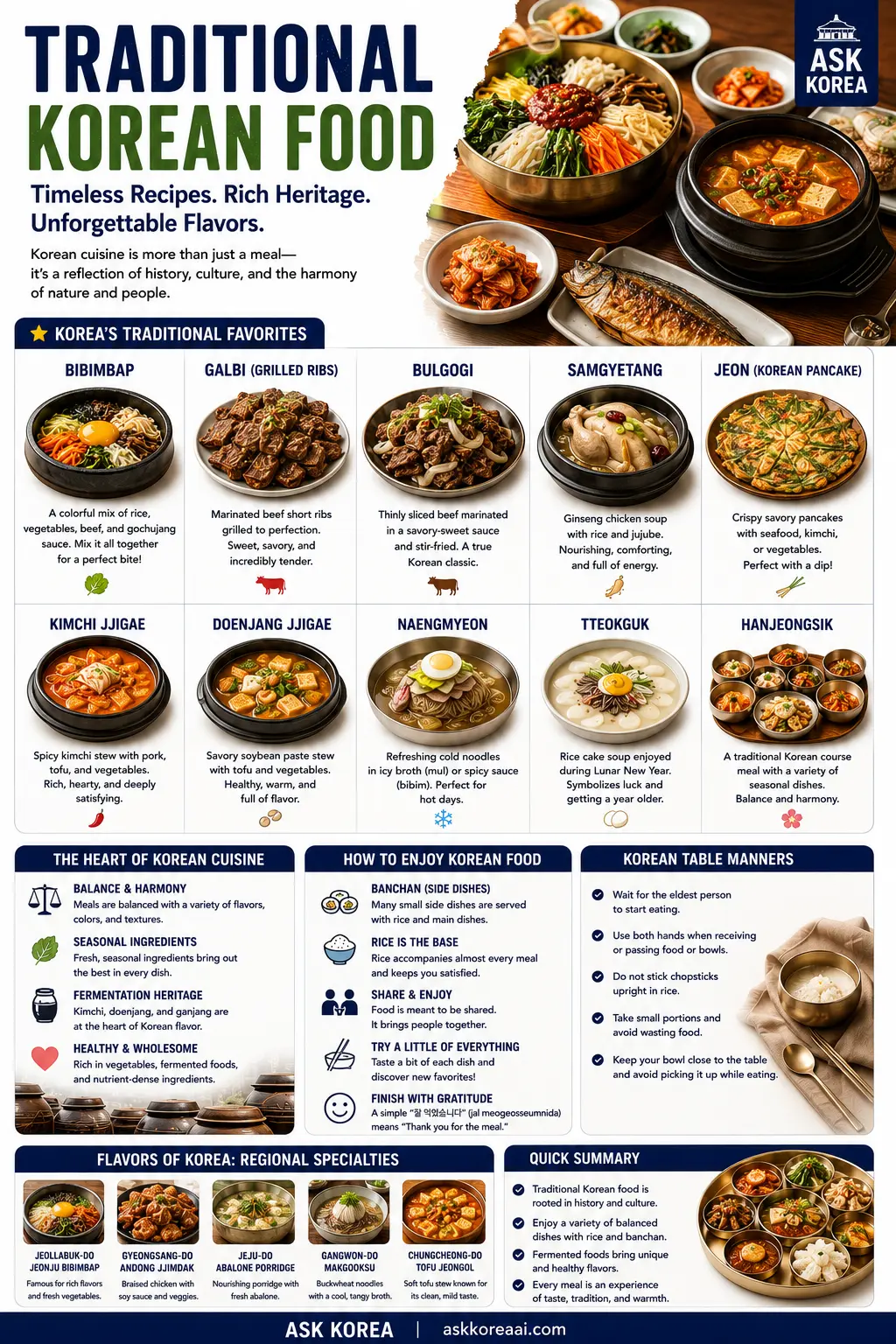
Traditional Korean food refers to dishes that have been enjoyed in Korea for generations. Many traditional dishes are based on:

Traditional Korean Food — ASK KOREA infographic
01 — Overview

Quick Summary

Traditional Korean food refers to dishes that have been enjoyed in Korea for generations. Many traditional dishes are based on:

Key takeaways

  • Try at least one soup or stew during your trip.
  • Galbitang is great for beginners.
  • Bossam is ideal for sharing.
  • Traditional Korean restaurants often include free side dishes.
02 — Full Guide

The Complete Guide

What is Traditional Korean Food?

Traditional Korean food refers to dishes that have been enjoyed in Korea for generations.

Many traditional dishes are based on:

  • Rice
  • Soup
  • Vegetables
  • Fermented foods
  • Seasonal ingredients
  • Traditional Korean food is often healthier and less processed than modern fast food.

Why do you need to know about Traditional Korean Food?

Many tourists only try:

  • Korean BBQ
  • Fried Chicken
  • Street Food
  • However, traditional Korean food is an important part of Korea's culture and daily life.
  • Trying traditional dishes helps visitors understand Korean history and eating habits.

Kimchi Jjigae

Kimchi stew made with:

  • Kimchi
  • Pork
  • Tofu
  • Vegetables
  • One of Korea's most popular comfort foods.
  • Many Koreans eat it regularly.

Doenjang Jjigae

Soybean paste stew.

Flavor:

  • Savory
  • Rich
  • Earthy
  • Often served with rice.
  • A common meal in Korean homes.

Sundubu Jjigae

Soft tofu stew.

Usually contains:

  • Soft tofu
  • Egg
  • Seafood or meat
  • Can be mild or spicy.
  • Popular with both locals and tourists.

Galbitang

Beef short rib soup.

Clear broth with tender beef.

Known for its rich flavor.

Often considered a premium traditional dish.

Seolleongtang

Milky beef bone soup.

Cooked for many hours.

Usually served with:

  • Rice
  • Green onions
  • Kimchi
  • Many foreigners are surprised by its white broth.

Bossam

Boiled pork served with:

  • Kimchi
  • Garlic
  • Lettuce
  • A popular sharing dish.
  • Often enjoyed with friends and family.

Traditional Korean Meal Structure

A traditional Korean meal often includes:

  • Rice
  • Soup or stew
  • Main dish
  • Side dishes (Banchan)
  • Unlike many Western meals, several dishes are shared at the table.

Which Traditional Food Should I Try First?

For First-Time Visitors:

  • Galbitang
  • Sundubu Jjigae
  • Bossam
  • Kimchi Jjigae
  • Seolleongtang
  • Doenjang Jjigae
  • These dishes are easy introductions to traditional Korean cuisine.

Common Mistakes

  • Thinking all Korean food is spicy
  • Ignoring soups and stews
  • Eating only BBQ
  • Not trying side dishes
  • Expecting Western-style meal portions

Important Korean Words

Korean English

Stew

Soup

Kimchi Stew

Soybean Paste Stew

Soft Tofu Stew

Beef Rib Soup

Beef Bone Soup

Boiled Pork Wraps

Side Dishes

How Much Does Traditional Korean Food Cost?

Typical prices:

  • Kimchi Jjigae → ₩8,000--12,000
  • Doenjang Jjigae → ₩8,000--12,000
  • Sundubu Jjigae → ₩9,000--15,000
  • Galbitang → ₩15,000--25,000
  • Seolleongtang → ₩10,000--18,000
  • Bossam → ₩30,000--60,000 (shared dish)
  • Prices vary by restaurant and location.

Pro Tips

  • Try at least one soup or stew during your trip.
  • Galbitang is great for beginners.
  • Bossam is ideal for sharing.
  • Traditional Korean restaurants often include free side dishes.

Fun Fact

Many Korean families still eat soup or stew almost every day.

Traditional Korean meals are centered around rice, soup, and side dishes rather than a single main course.

User Question

"What traditional Korean food should I try?"

AI Answer

Popular traditional Korean foods include Kimchi Jjigae, Sundubu Jjigae, Galbitang, Seolleongtang, and Bossam. These dishes represent Korea's traditional meal culture and are commonly enjoyed by locals.

ASK KOREA Essential Tip

  • If you want to experience real Korean food culture,
  • don't stop at BBQ and fried chicken.
  • Traditional soups, stews, and shared dishes are what many Koreans eat in everyday life.
Ask AI

Ask AI About This Topic

AI Assistant

Have a question about Traditional Korean Food?

Get instant, locally-checked answers from the ASK KOREA AI. Ask anything from specific edge cases to itinerary decisions.

Ask this question
Suggested prompt

"Tell me more about traditional korean food in Korea and how to enjoy it as a visitor."

ASK KOREA Transit