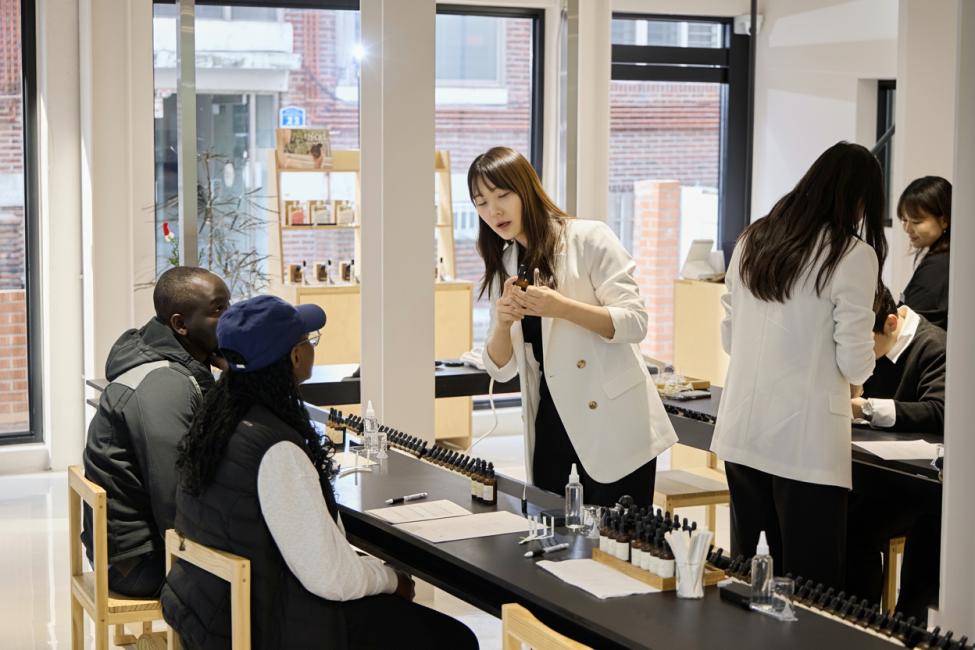
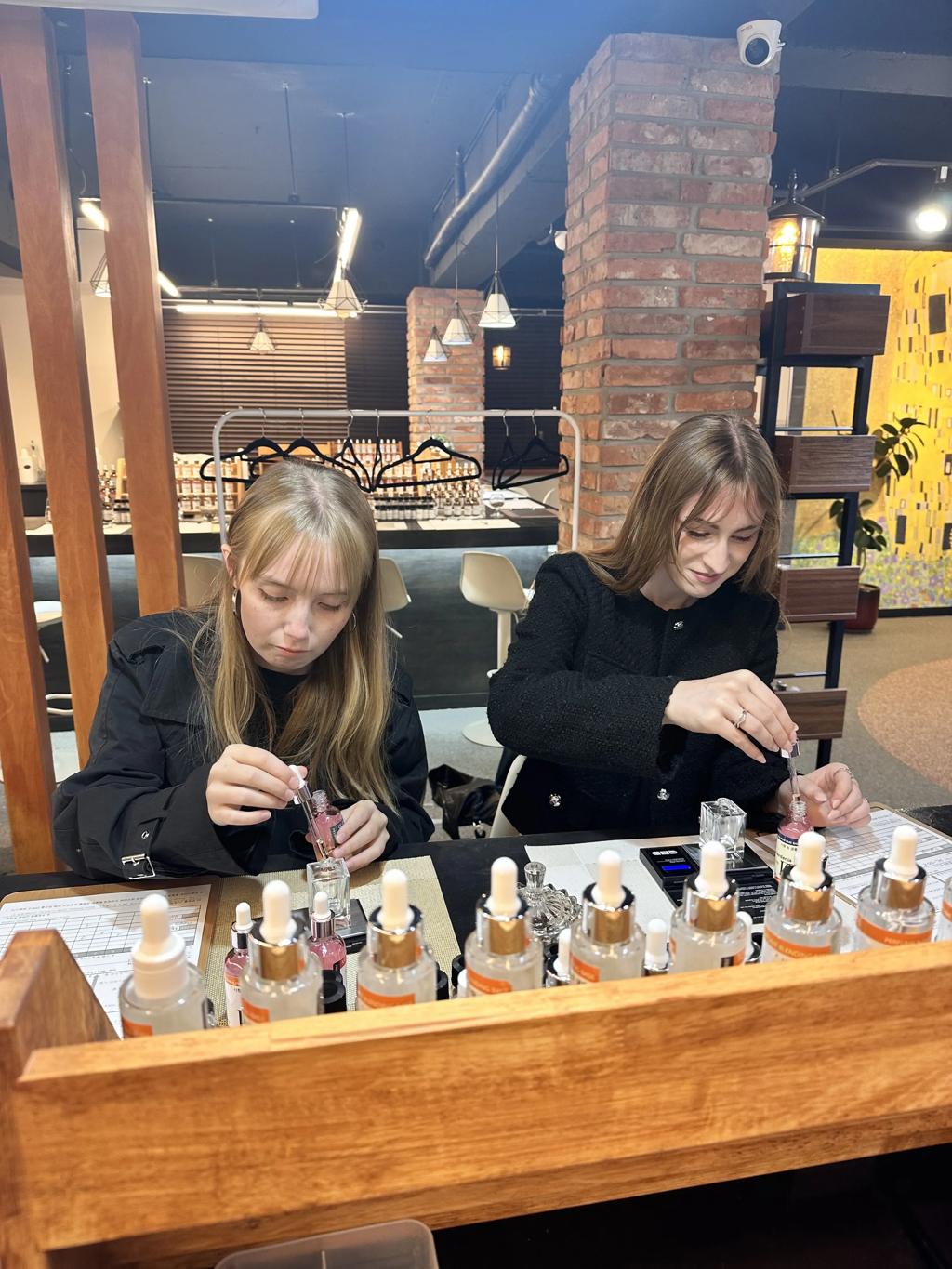
You can buy perfume almost anywhere in the world.
But in Seoul, you can do something much more personal:
CREATE YOUR OWN.
Choose the scents you like.
Compare different fragrance families.
Experiment with combinations.
Adjust the balance.
Then bottle a fragrance that exists because:
YOU CREATED IT.
For travelers, that turns perfume into something more interesting than another souvenir.
Months later, one spray can bring back:
- Seoul
- Bukchon
- Hongdae
- A café
- A person
or a particular moment from your trip.
WHY TRY A PERFUME-MAKING WORKSHOP IN KOREA?
Perfume workshops have become a popular hands-on activity around Seoul.
They're particularly good for:
- Solo Travelers
- Couples
- Friends
- Families
- K-Beauty & Lifestyle Fans
- and anyone looking for:
A SOUVENIR YOU ACTUALLY MADE.
You don't need any previous perfume knowledge.
A typical workshop guides you through the process step by step.
WHAT DO YOU ACTUALLY DO?
Depending on the studio, the experience may include:
- 1
SMELL DIFFERENT FRAGRANCE MATERIALS
- 2
IDENTIFY THE SCENTS YOU LIKE
- 3
LEARN BASIC FRAGRANCE STRUCTURE
- 4
SELECT YOUR INGREDIENTS
- 5
TEST DIFFERENT COMBINATIONS
- 6
ADJUST THE FORMULA
- 7
BLEND YOUR PERFUME
- 8
BOTTLE IT
TAKE YOUR PERFUME HOME.
Some studios offer dozens of fragrance materials, so two travelers taking the same class can leave with completely different perfumes.
For example, Seoul's official tourism guide says Dillyscent uses more than 60 specialized fragrance materials in its signature-fragrance experience.
QUICK SUMMARY
EXPERIENCE
CREATE YOUR OWN PERFUME
- Best For
- Couples · Solo Travelers · Friends · K-Beauty Fans · Creative Travelers · Unique Souvenir Hunters
YOU'LL LEARN
- Fragrance Families
- Scent Selection
- Basic Blending
- Fragrance Balance
and how your own scent comes together.
TYPICAL TIME
ABOUT 60–120 MINUTES
depending on the workshop.
PRICE
APPROX. ₩39,000+
for the permanent traveler-oriented options I can currently verify, with premium Korean-themed experiences costing more. For example, Parfum9 currently lists a 60-minute, 50 mL workshop at ₩39,000, while a current Bukchon K-Perfume experience at Muhwawon starts at ₩69,000.
BEGINNER FRIENDLY
YES.
RESERVATION
RECOMMENDED.
Especially if you require an English-language session.
FEATURED EXPERIENCE 1
MUHWAWON — BUKCHON
BEST FOR A DISTINCTLY KOREAN PERFUME EXPERIENCE
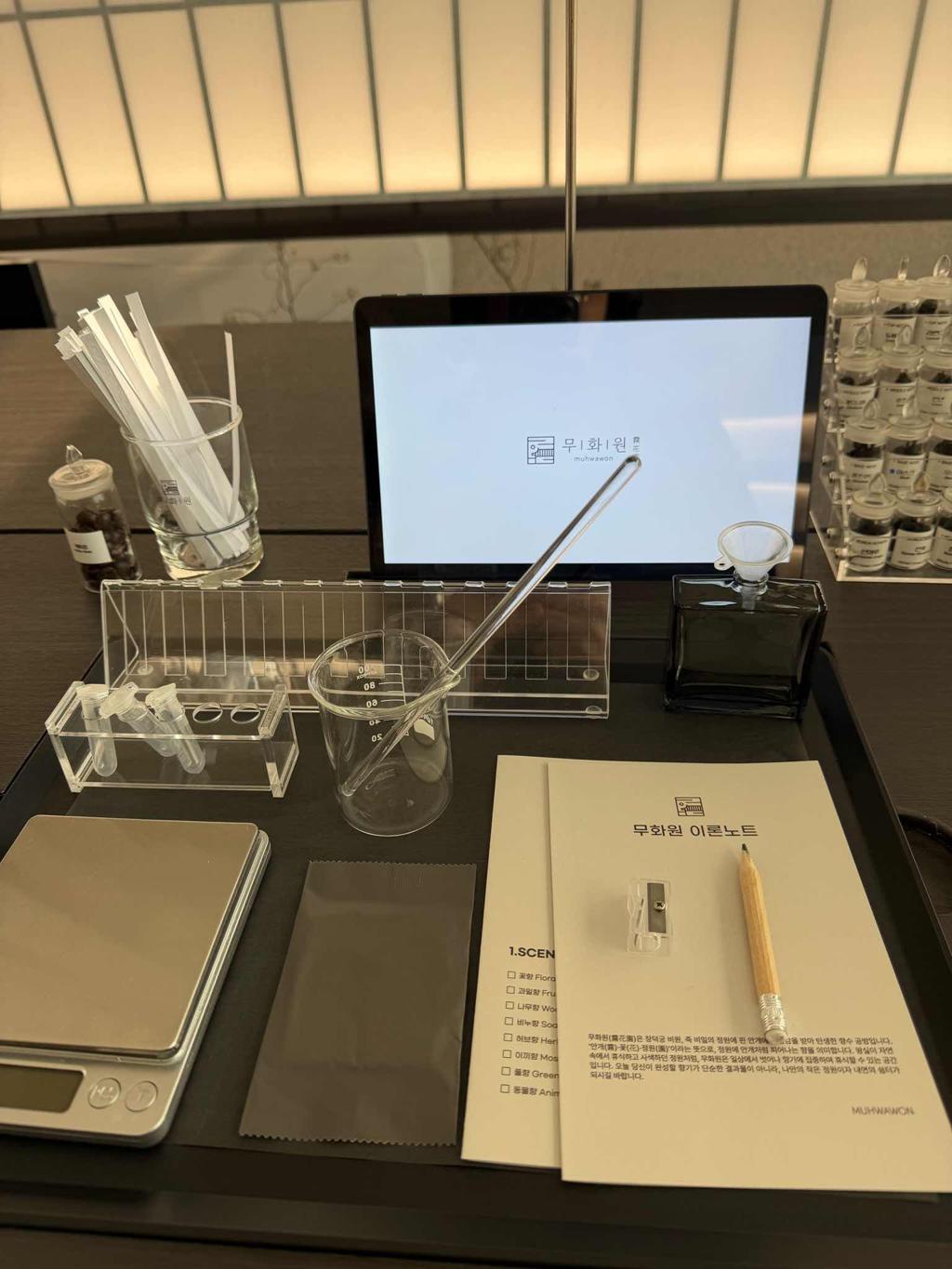
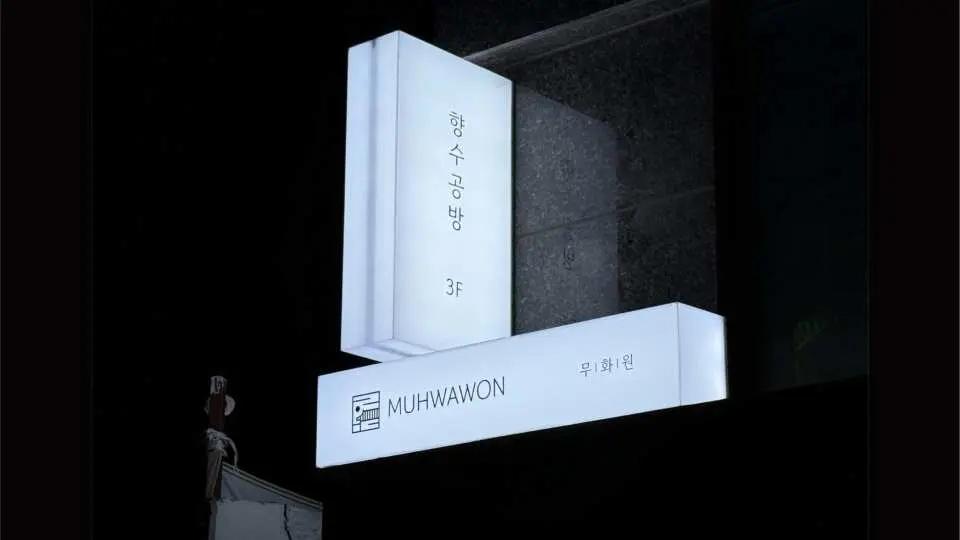
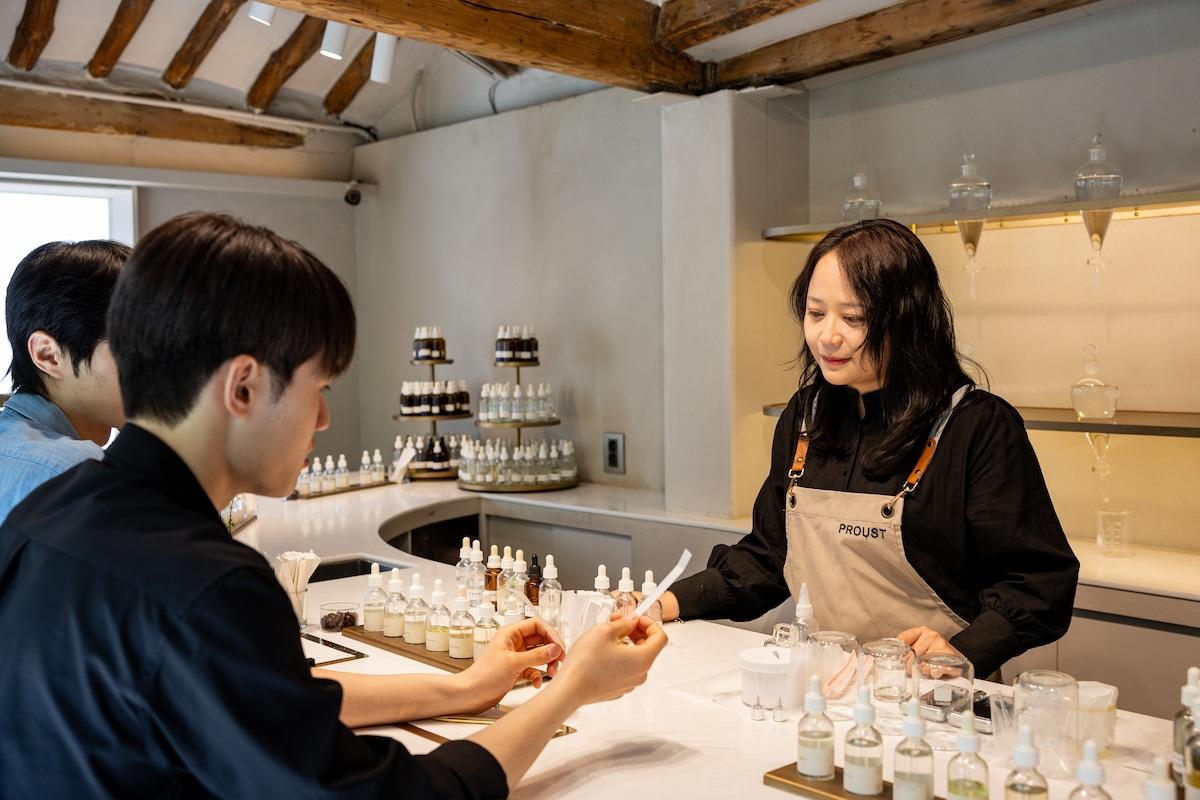
This is the recommended first choice for international visitors.
Because it isn't positioned simply as:
“Come mix perfume.”
The current foreign-visitor program specifically connects fragrance with:
KOREAN NATURE & CULTURE.
Its scent concept includes Korean-inspired elements such as:
- Hanji
- Traditional Herbs
- Temple Incense
and other interpretations of Korea's natural and cultural scents.
That gives it something many generic perfume workshops don't have:
A REASON TO DO IT IN KOREA.
The current English-language Bukchon experience is designed around creating your own K-Perfume and is conducted in English.
CURRENT PRICE
FROM ₩69,000
for the currently listed foreign-visitor program.
- Location
- 3F, 23 Yulgok-ro 6-gilJongno-gu, Seoul · Its location also makes it easy to combine with: · Gyeongbokgung · Changdeokgung · Bukchon Hanok Village · Insadong · and Ikseon-dong.
VERDICT
BEST KOREAN-THEMED EXPERIENCE.
This is the strongest centerpiece for this guide.
FEATURED EXPERIENCE 2
PARFUM9 — HONGDAE
BEST FOR FIRST-TIMERS & CONVENIENCE
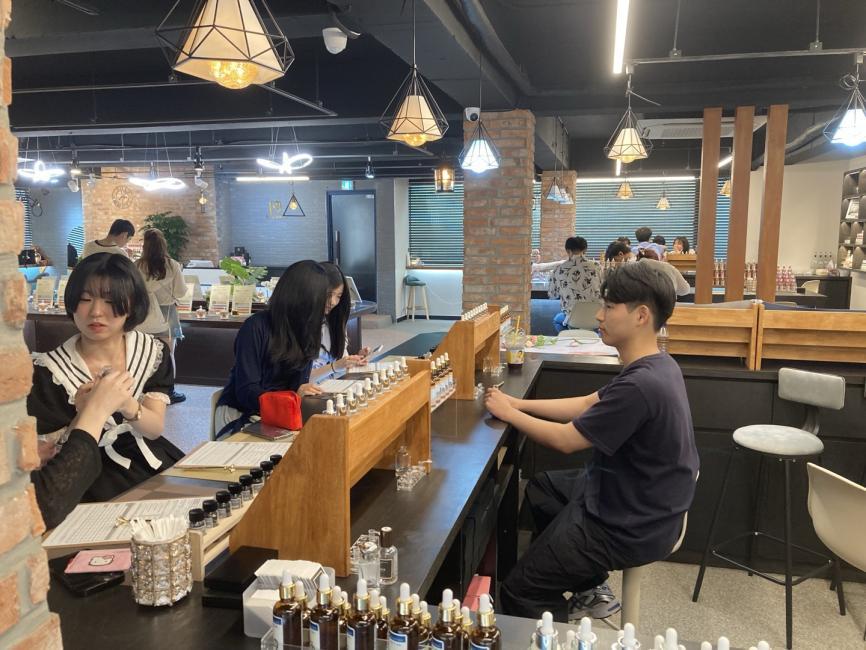
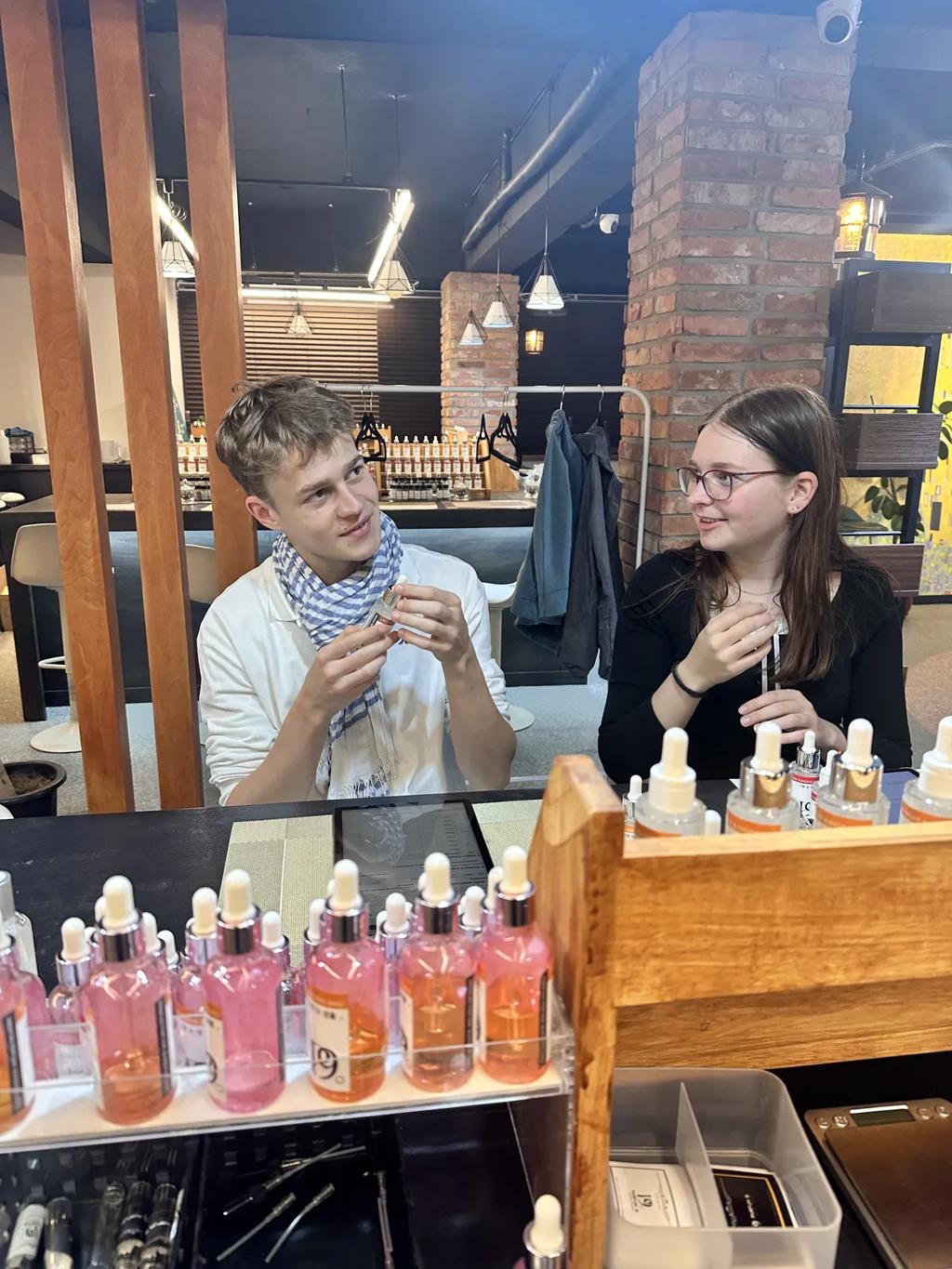
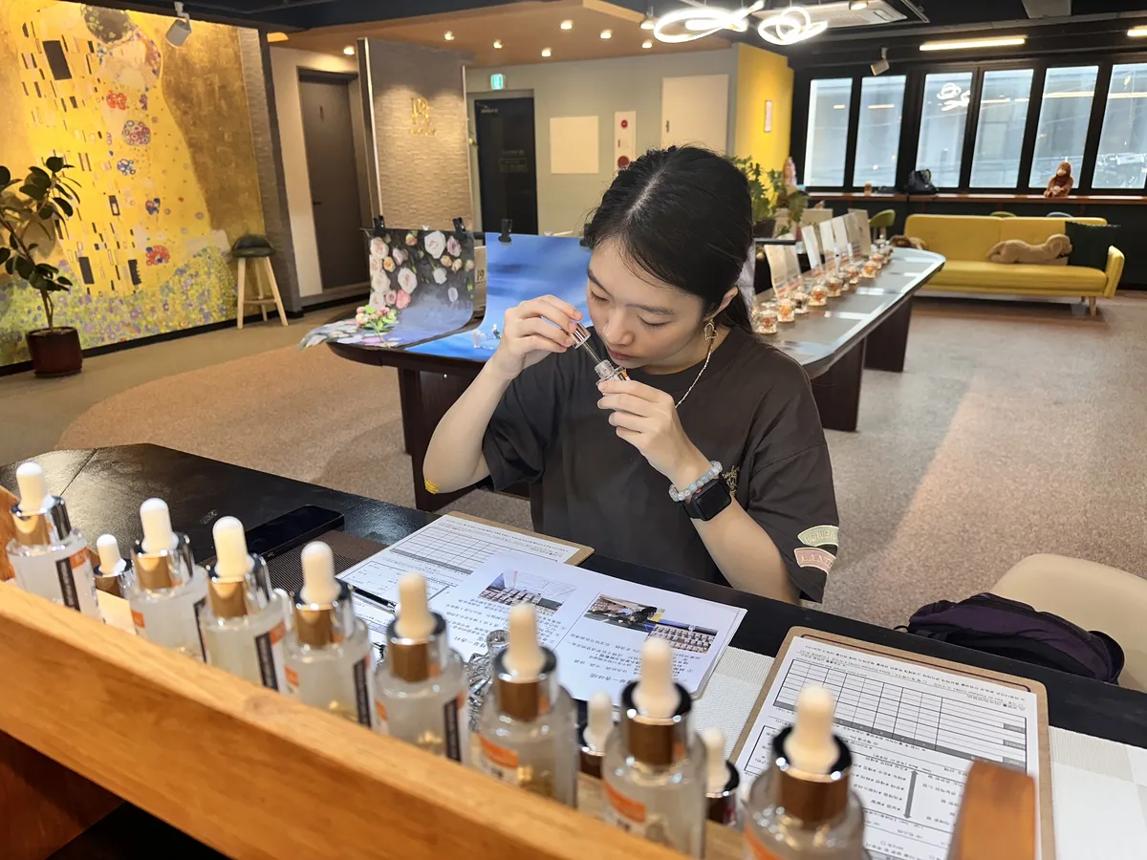
This is a very easy option for ordinary international travelers.
The current workshop is:
APPROX. 60 MINUTES
and you create:
YOUR OWN 50 mL PERFUME.
Current price:
- ₩39,000
- The studio also currently lists support in:
- English
- Chinese
- and
Japanese.
- Location
- 2F, 25 Hongik-ro 5-gilMapo-gu, Seoul · Approximately:
250 m FROM HONGIK UNIVERSITY STATION EXIT 9.
That means you can easily combine the workshop with:
- Hongdae
- Yeonnam-dong
- Shopping
- Cafés
and nightlife.
VERDICT
BEST EASY FIRST-TIME OPTION.
FEATURED EXPERIENCE 3
DILLYSCENT PERFUME & CANDLE STUDIO
Dillyscent is interesting for travelers who want more freedom to explore fragrance materials.
According to Seoul's current official tourism guide, the perfume experience uses:
60+ SPECIALIZED RAW MATERIALS
and follows a professional-style olfactory selection process to create a personal Eau de Parfum.
The studio also offers other one-day activities such as:
- Hand Cream
- Candles
and flower-candle making.
VERDICT
BEST FOR FRAGRANCE EXPLORATION.
This works best as an alternative rather than the main featured experience.
ANOTHER GOOD ENGLISH-FRIENDLY OPTION
SEOLLEIM CANDLE
Seoul's official visitor guide says this workshop offers:
- Perfumery
- Candle Making
- Glass Art
and other handmade activities.
Importantly for international visitors, classes are listed in:
ENGLISH
CHINESE
KOREAN.
So this is useful as a backup choice when language support matters.
WHICH ONE SHOULD YOU CHOOSE?
YOU WANT...
CHOOSE
- Most Korean-feeling experience
- Muhwawon — Bukchon
- Easy first perfume workshop
- Parfum9 — Hongdae
- Lots of fragrance materials
- Dillyscent
- English-friendly craft option
- Seolleim Candle
- Couple experience
- Muhwawon or Parfum9
- Easy Hongdae itinerary
- Heritage + perfume day
- Muhwawon
RECOMMENDED PICK
For this guide, Hongdae is better treated as the convenient alternative rather than the main experience.
Recommended first:
MUHWAWON — BUKCHON
first.
- “Why should I do this while visiting Korea?”
- “Where can I make perfume?”
A fragrance inspired by Korean nature, hanji, herbs and traditional scent culture gives the experience a much stronger Korean context. The current Bukchon program is also explicitly marketed as a K-Perfume experience for visitors.
Then use:
PARFUM9 — HONGDAE
as the simpler, cheaper and more convenient alternative.
THE SOUVENIR IS THE MEMORY
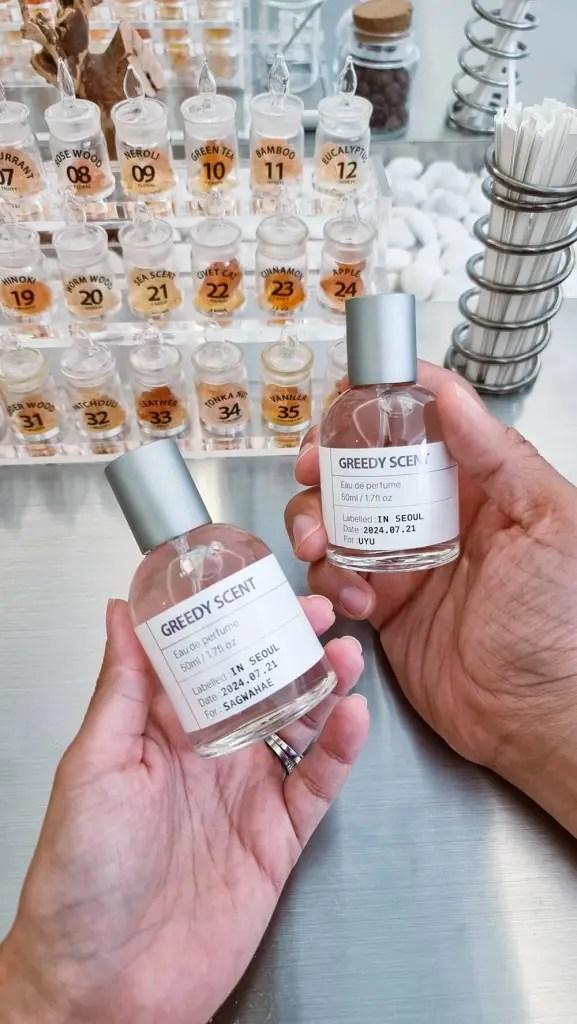
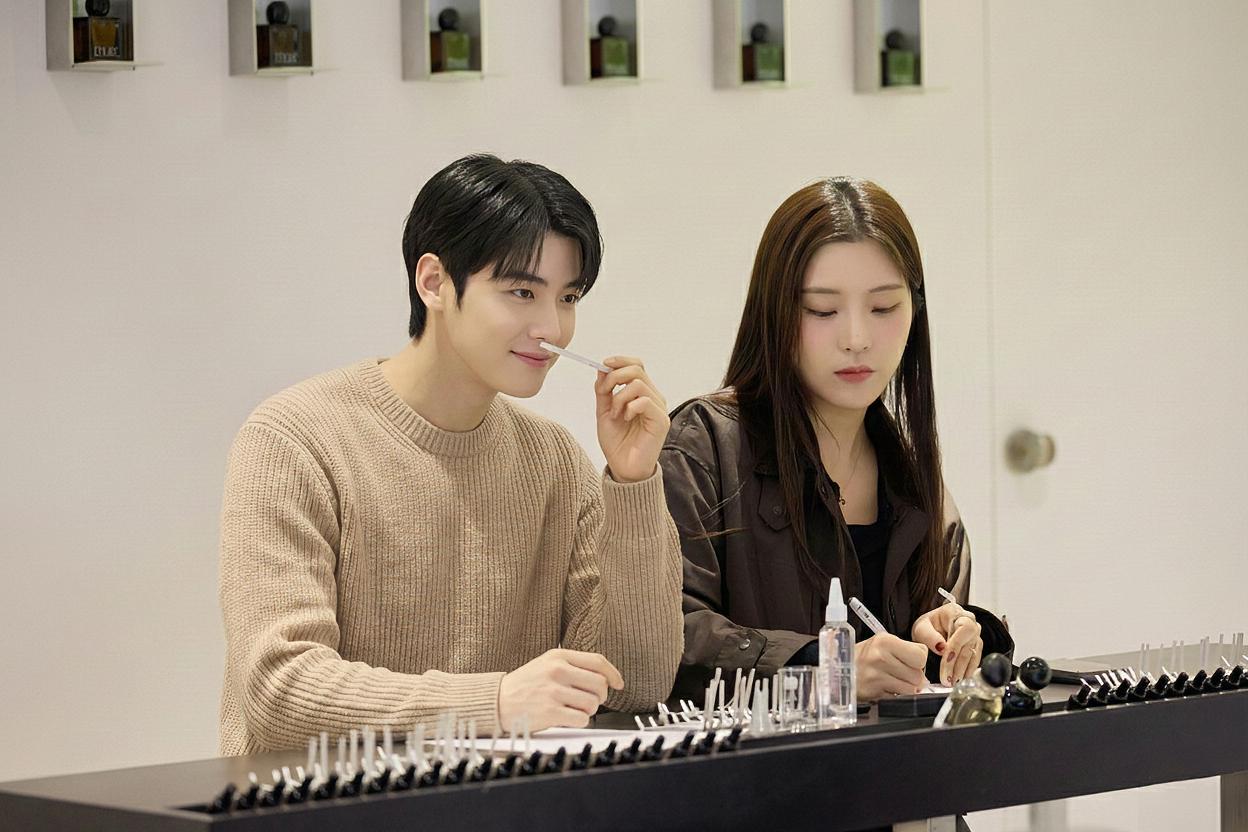
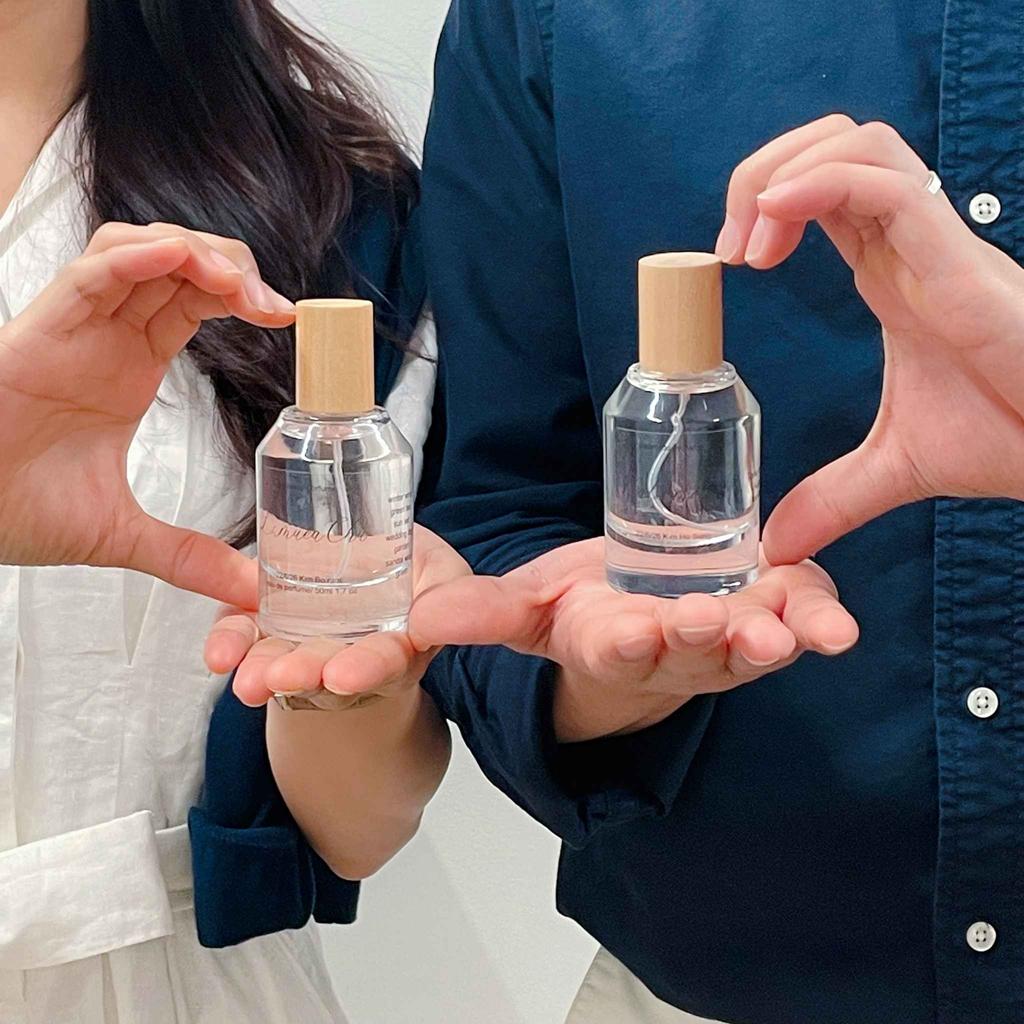
A magnet says:
- “I visited Seoul.”
- A perfume you created can remind you:
- “This is what my Seoul trip smelled like.”
That's why this experience works.
DON'T JUST BUY A KOREAN PERFUME.
MAKE YOUR OWN.
HOW A PERFUME-MAKING CLASS ACTUALLY WORKS
From Your First Scent Test to a Fragrance Made by You
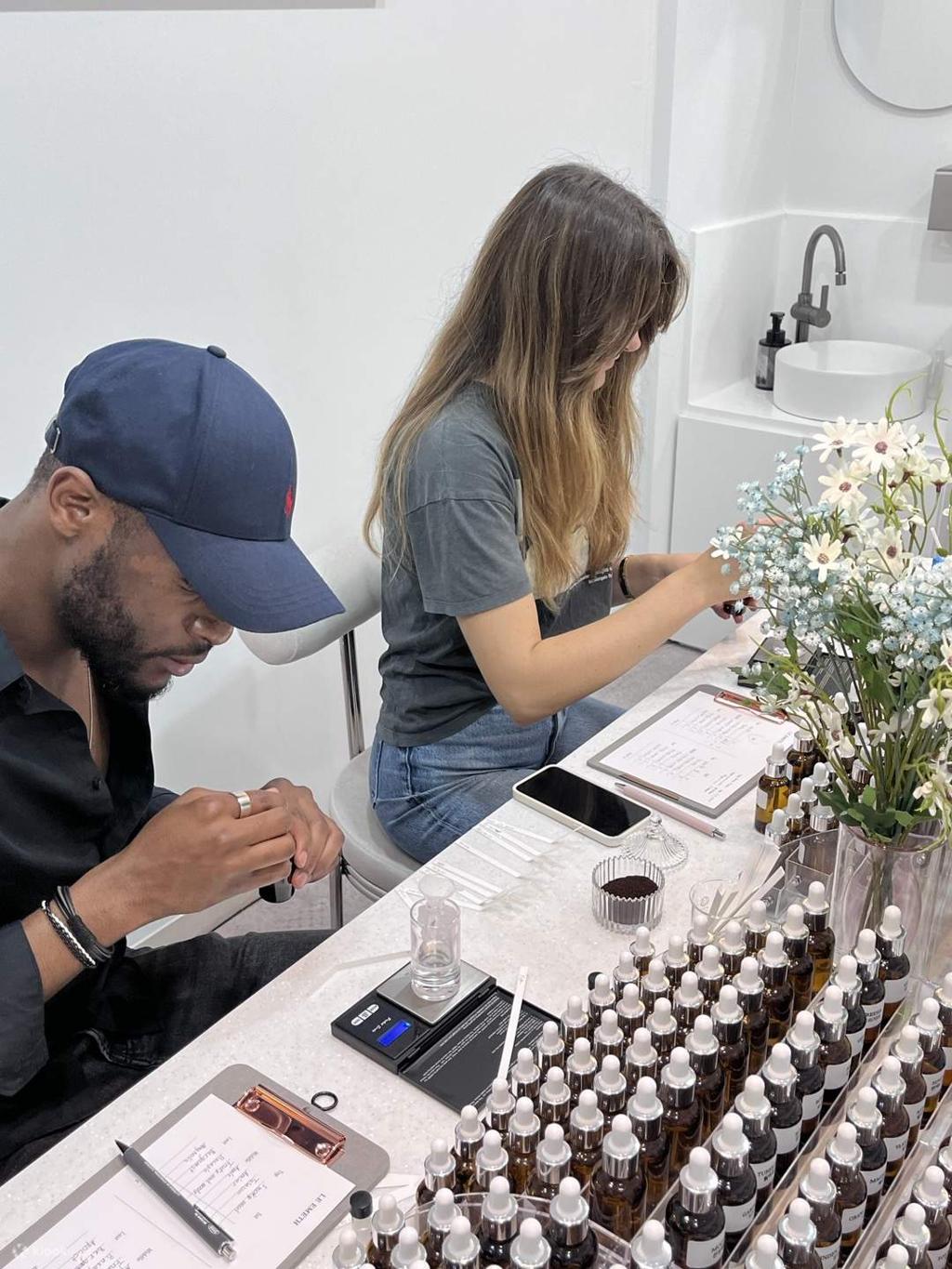
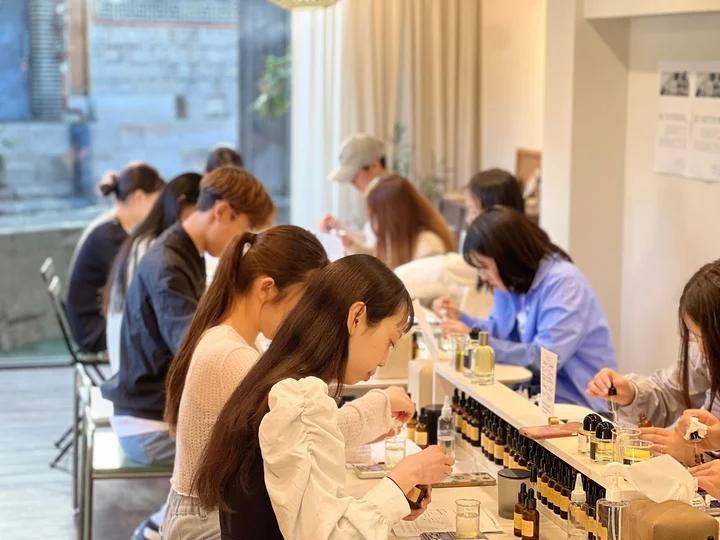
You don't need to know anything about perfume before joining a workshop.
You don't need to understand complicated fragrance terminology.
And you definitely don't need to arrive knowing:
“I want bergamot, iris and sandalwood.”
A good workshop begins with something much simpler:
WHAT SMELLS GOOD TO YOU?
From there, the instructor helps you turn your preferences into a fragrance you can actually wear.
- 1
STEP 1 — DISCOVER WHAT YOU LIKE
The first stage is usually:
SMELL.
You'll be introduced to a selection of fragrance materials or prepared scent bases.
Instead of trying everything randomly, you begin identifying scents that attract you.
You might discover that you prefer:
- Fresh
- Citrus
- Floral
- Fruity
- Green
- Woody
- Musky
or deeper aromatic styles.
DON'T OVERTHINK IT
You don't need to identify every ingredient.
If your reaction is simply:
“I really like this one.”
that's enough to start.
- 1
STEP 2 — LEARN THE FRAGRANCE FAMILIES
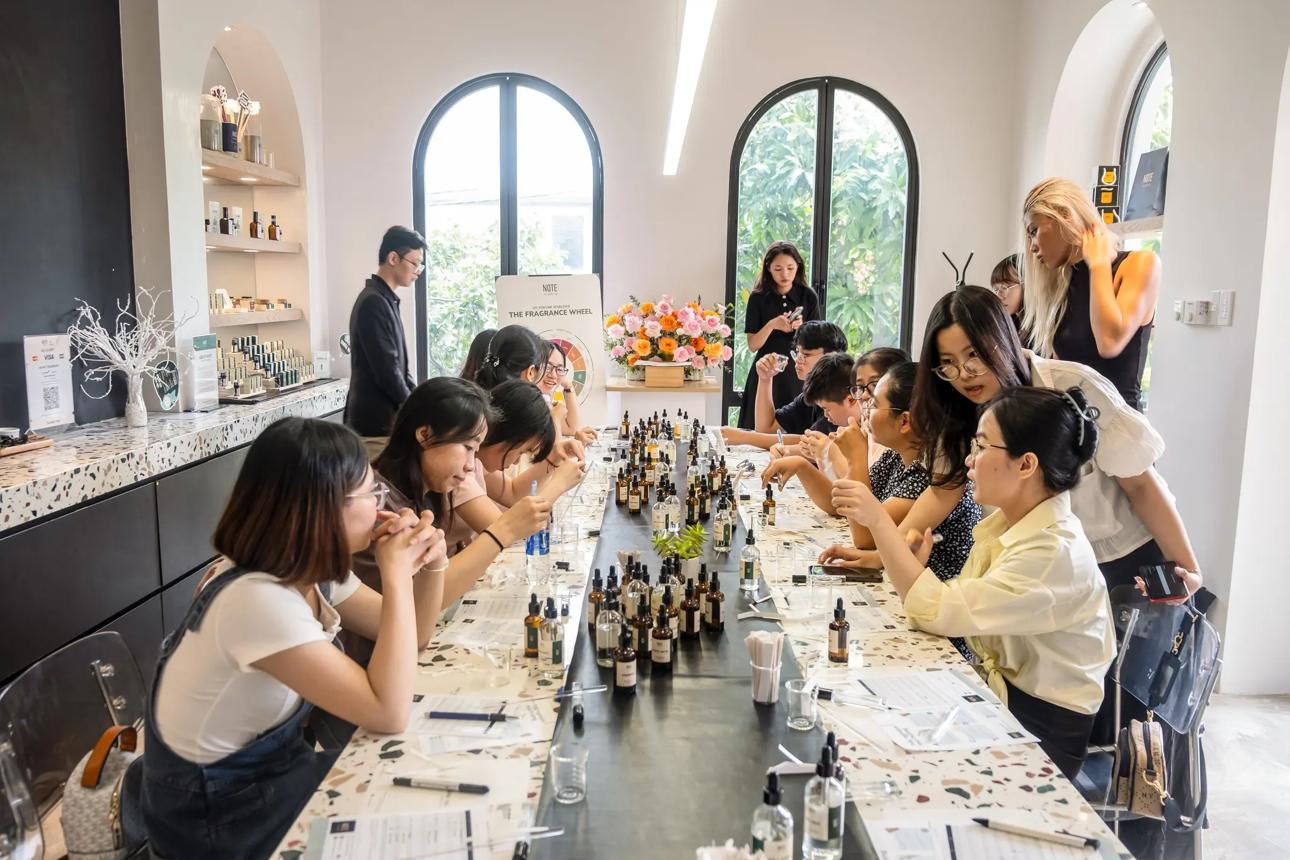
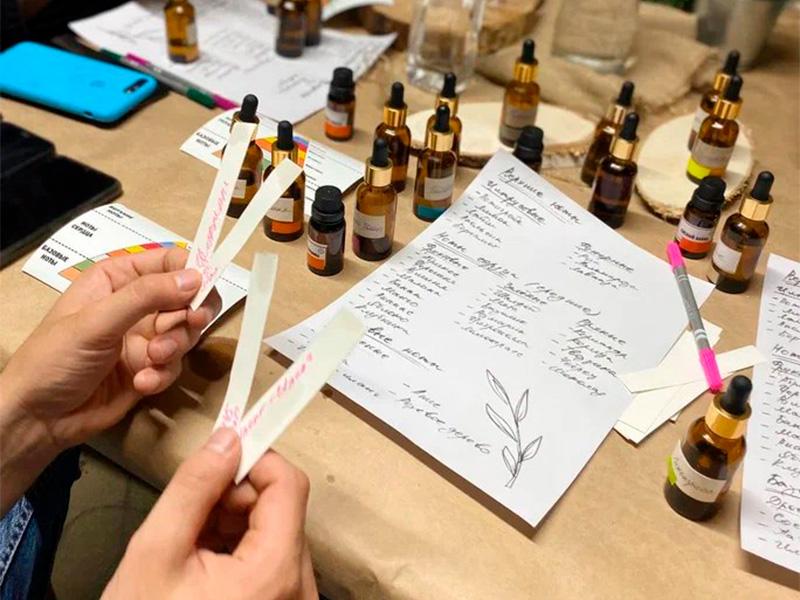
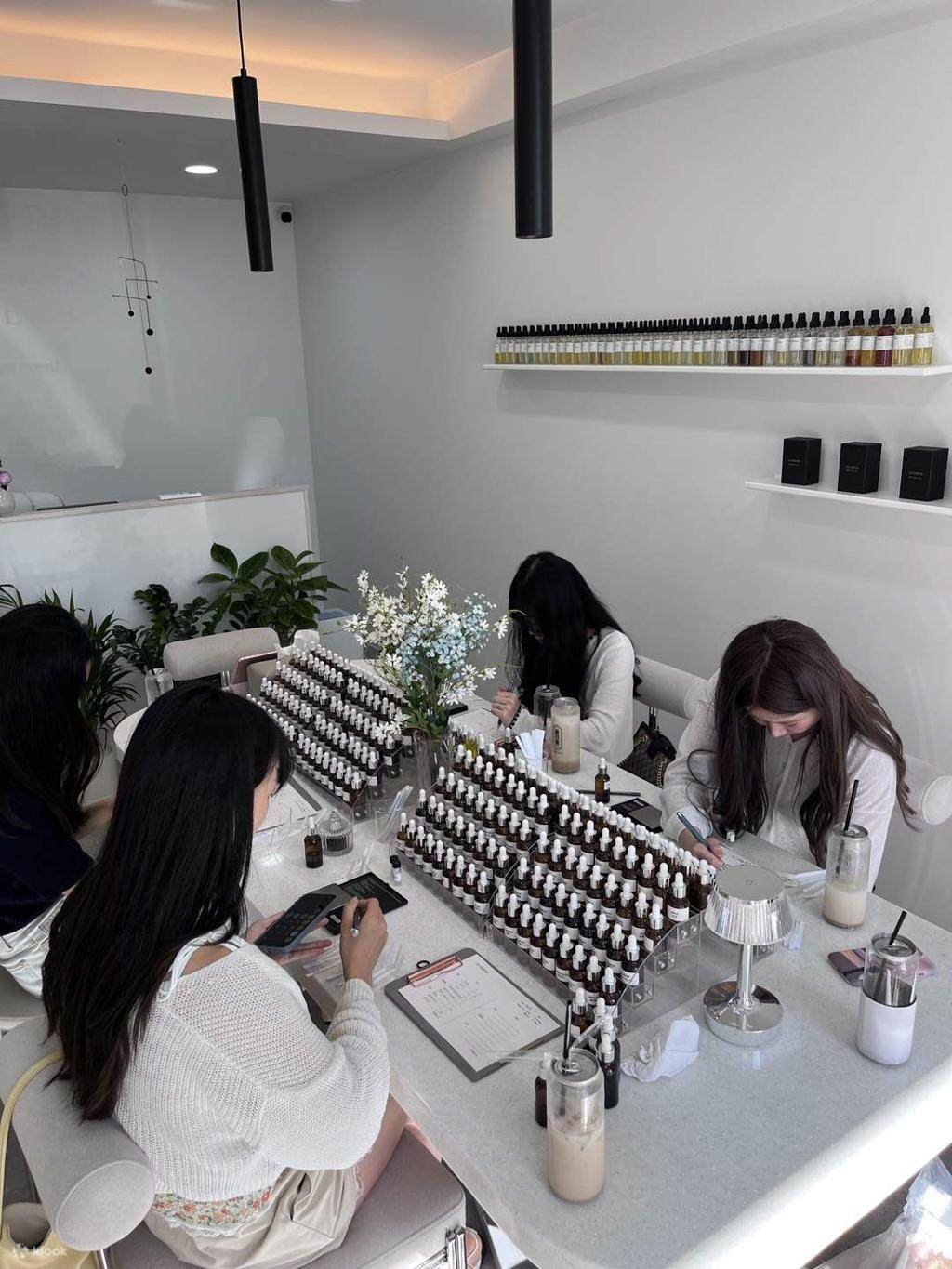
The instructor may organize scents into broad families.
Common examples include:
CITRUS
Fresh, bright and energetic.
Think of impressions such as:
- Lemon
- Bergamot
- Orange
or grapefruit.
FLORAL
One of the largest fragrance families.
Possible impressions include:
- Rose
- Jasmine
- Peony
and other flowers.
FRUITY
Sweeter or juicier fruit-inspired scents.
GREEN
Fresh leaves, grass, herbs or natural green impressions.
WOODY
Warmer or deeper scents associated with materials such as:
- Cedar
- Sandalwood
or forest-like notes.
MUSK
Often soft, clean or skin-like, depending on the material and composition.
AMBER / WARM
Richer, warmer impressions that may include:
- Vanilla
- Resins
- Spices
or sweet balsamic characteristics.
The exact scent families and materials available depend on the studio.
- 1
STEP 3 — UNDERSTAND TOP, MIDDLE & BASE NOTES — This is one of the most useful things to learn in a perfume workshop.
A fragrance doesn't necessarily smell exactly the same from the moment you spray it until several hours later.
Different materials develop and evaporate at different rates.
A simple way to understand the structure is:
TOP → MIDDLE → BASE
TOP NOTES
THE FIRST IMPRESSION
These are often among the first aromas you notice after applying the fragrance.
They can feel:
- Fresh
- Bright
- Light
or energetic.
Citrus and some fresh aromatic notes are common examples.
MIDDLE NOTES
THE HEART OF THE PERFUME
As the initial impression develops, the middle—or heart—becomes more noticeable.
This often gives the perfume much of its personality.
Floral, fruity, green, spicy and other characteristics may appear here depending on the formula.
BASE NOTES
THE LASTING FOUNDATION
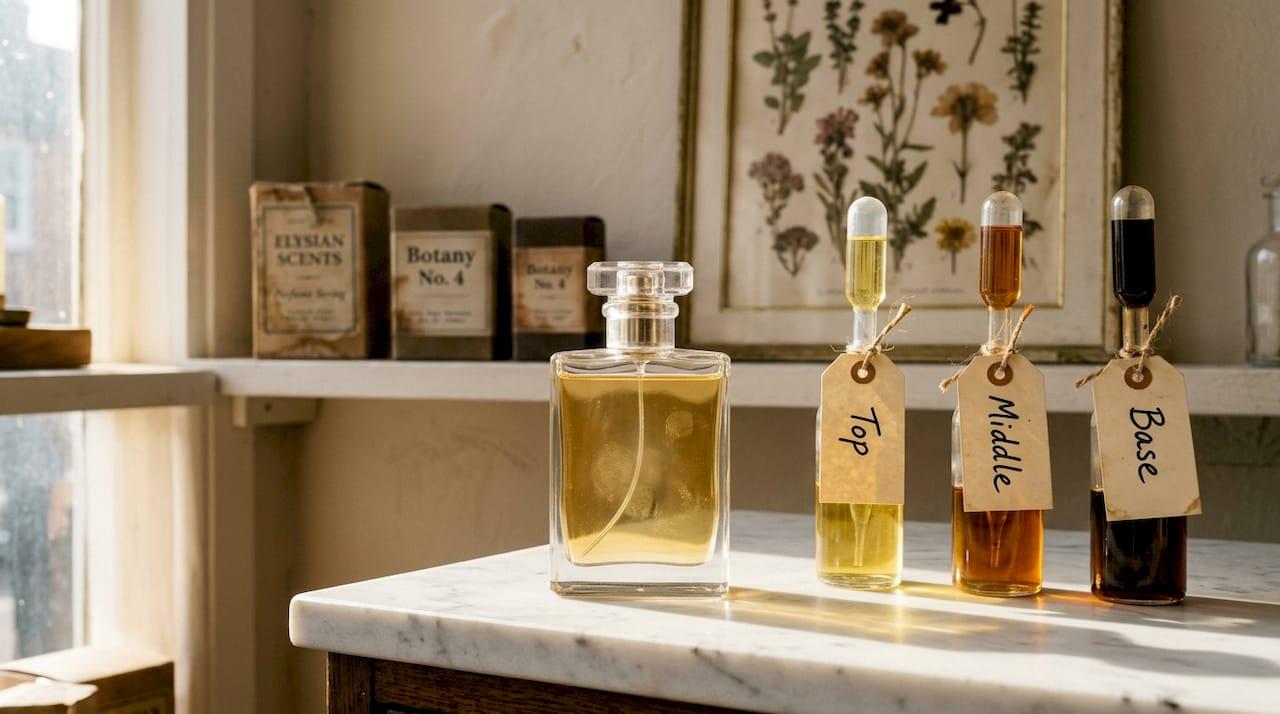
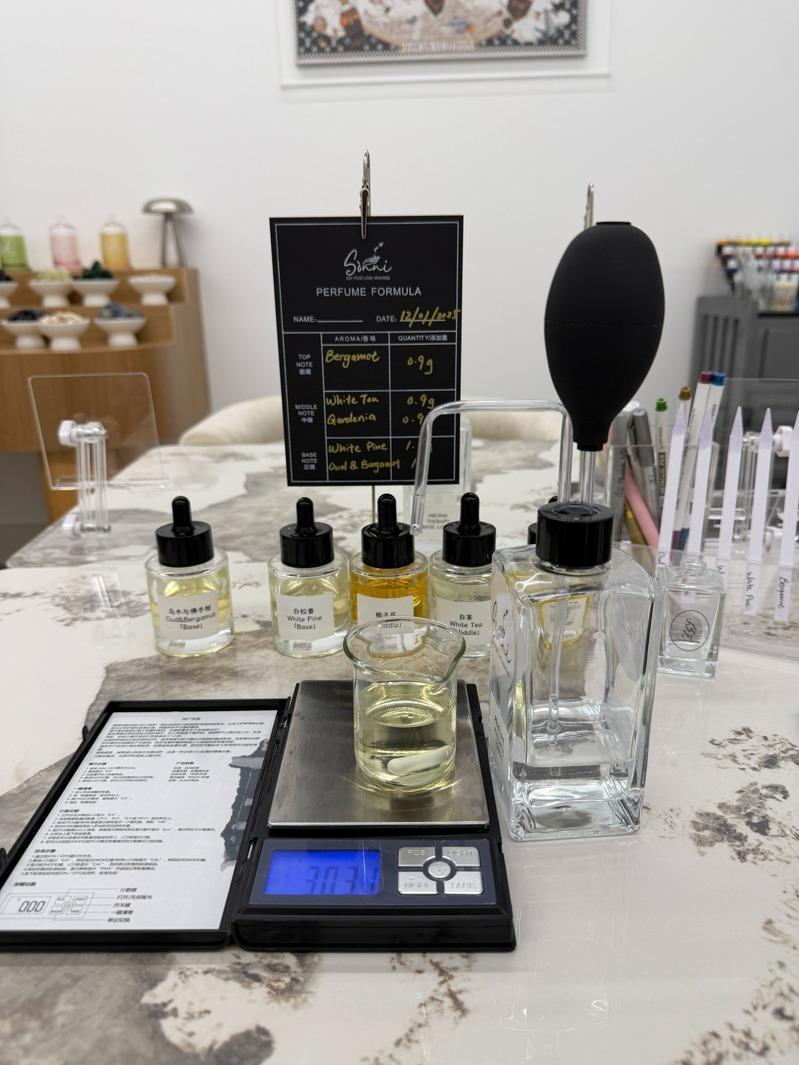
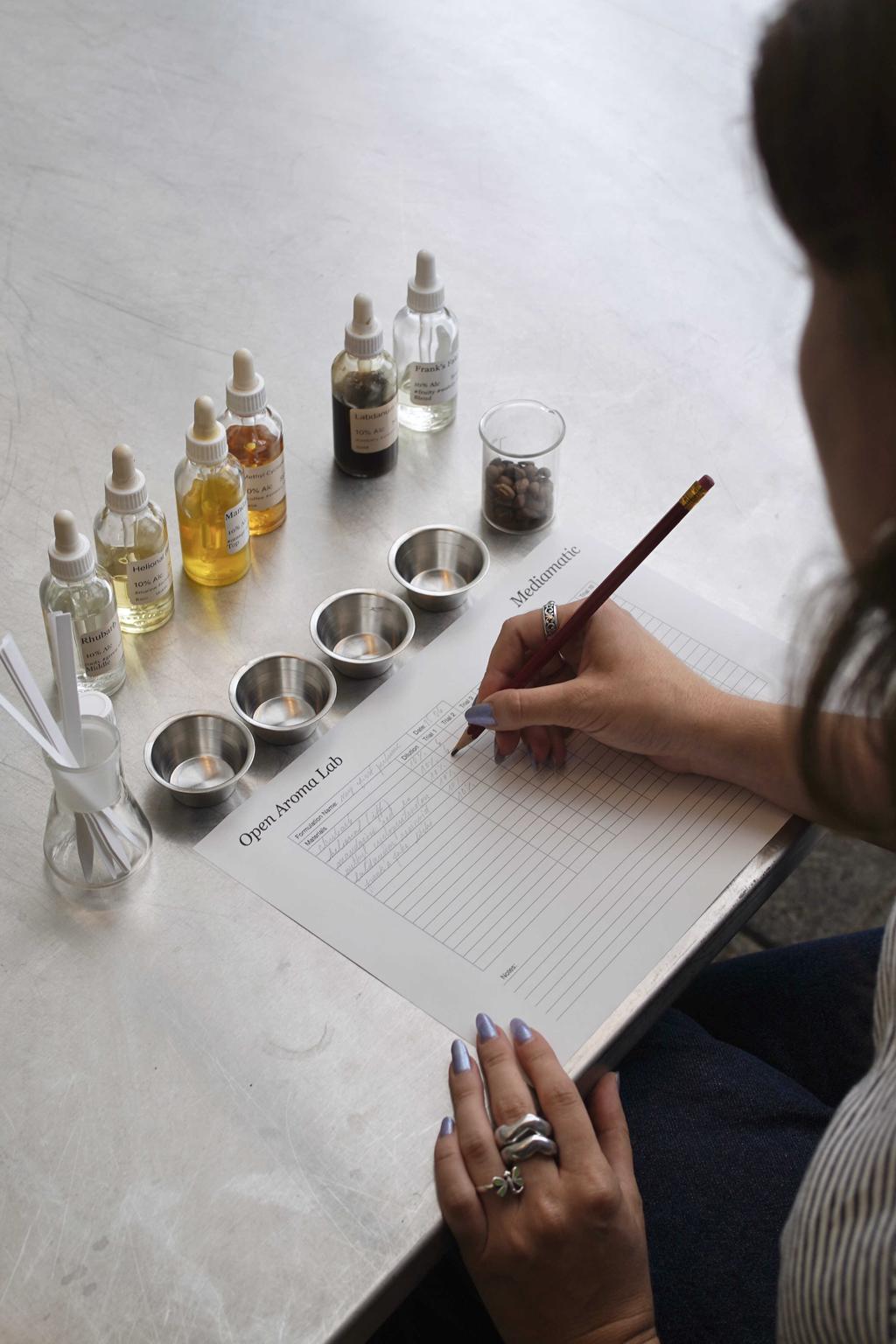
These generally develop more slowly and can remain noticeable longer.
Common base-style impressions include:
- Woods
- Musk
- Amber
and other deeper materials.
But:
DON'T TREAT TOP / MIDDLE / BASE AS A STRICT RECIPE.
Real perfumery is more complex.
For a beginner workshop, this framework simply helps you understand how different parts of a fragrance can work together.
- 1
STEP 4 — USE SCENT STRIPS — You normally don't want to spray dozens of test fragrances directly onto your skin.
Instead, workshops commonly use:
SCENT / BLOTTING STRIPS.
Smell each candidate.
Write down or remember the ones you like.
Then begin narrowing them down.
TRAVEL TIP
Don't smell 30 strips as quickly as possible.
Your nose gets tired.
Take your time and follow the instructor's method.
- 1
STEP 5 — CHOOSE YOUR FAVORITES — Now the huge fragrance selection becomes manageable.
You might narrow it down to something like:
ONE FRESH NOTE
TWO FLORAL NOTES
ONE WOODY NOTE
ONE SOFT MUSK.
But there is no universal correct combination.
Someone else might create:
- Citrus + Green + Wood
- while another traveler chooses:
Floral + Fruit + Musk.
That's the point.
YOUR PERFUME DOESN'T HAVE TO SMELL LIKE ANYONE ELSE'S.
- 1
STEP 6 — CREATE A TEST BLEND
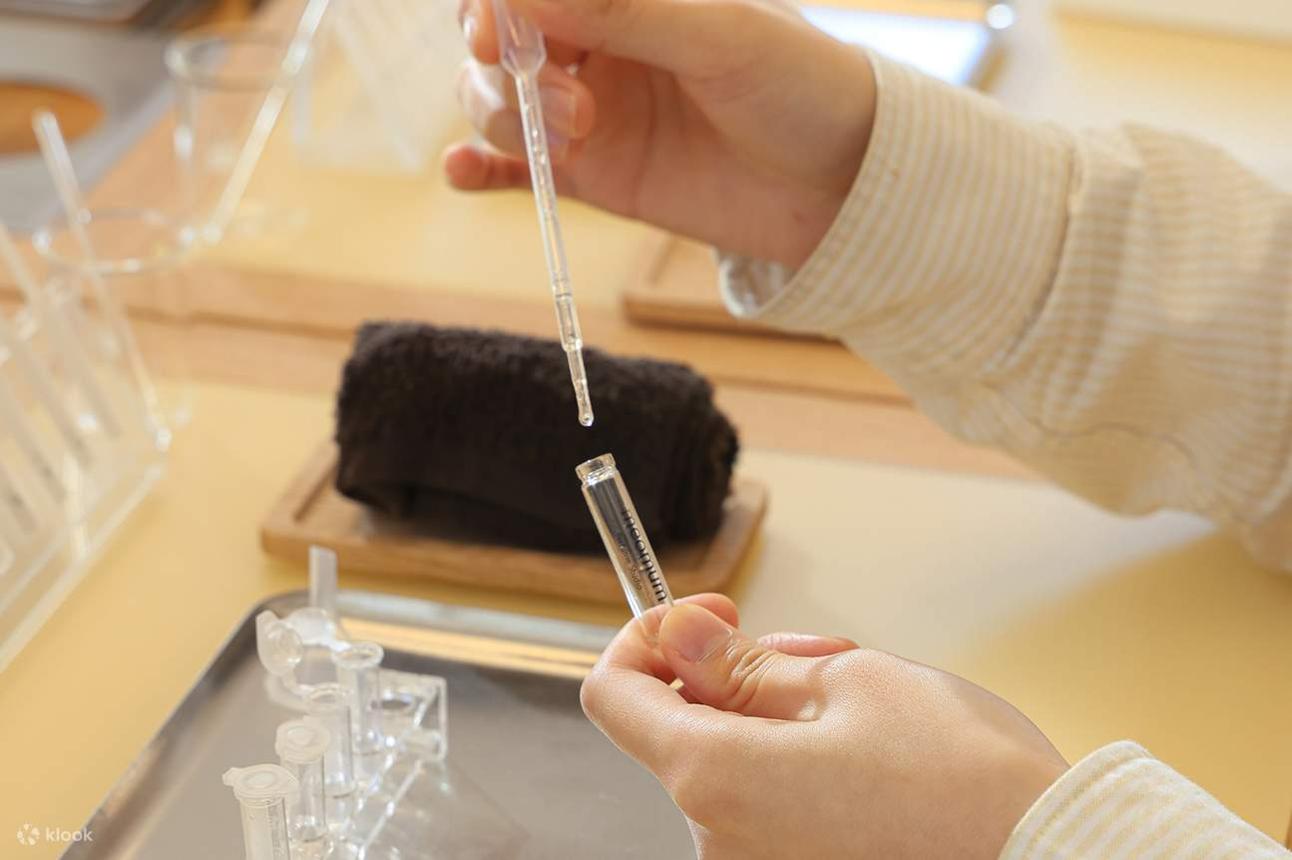
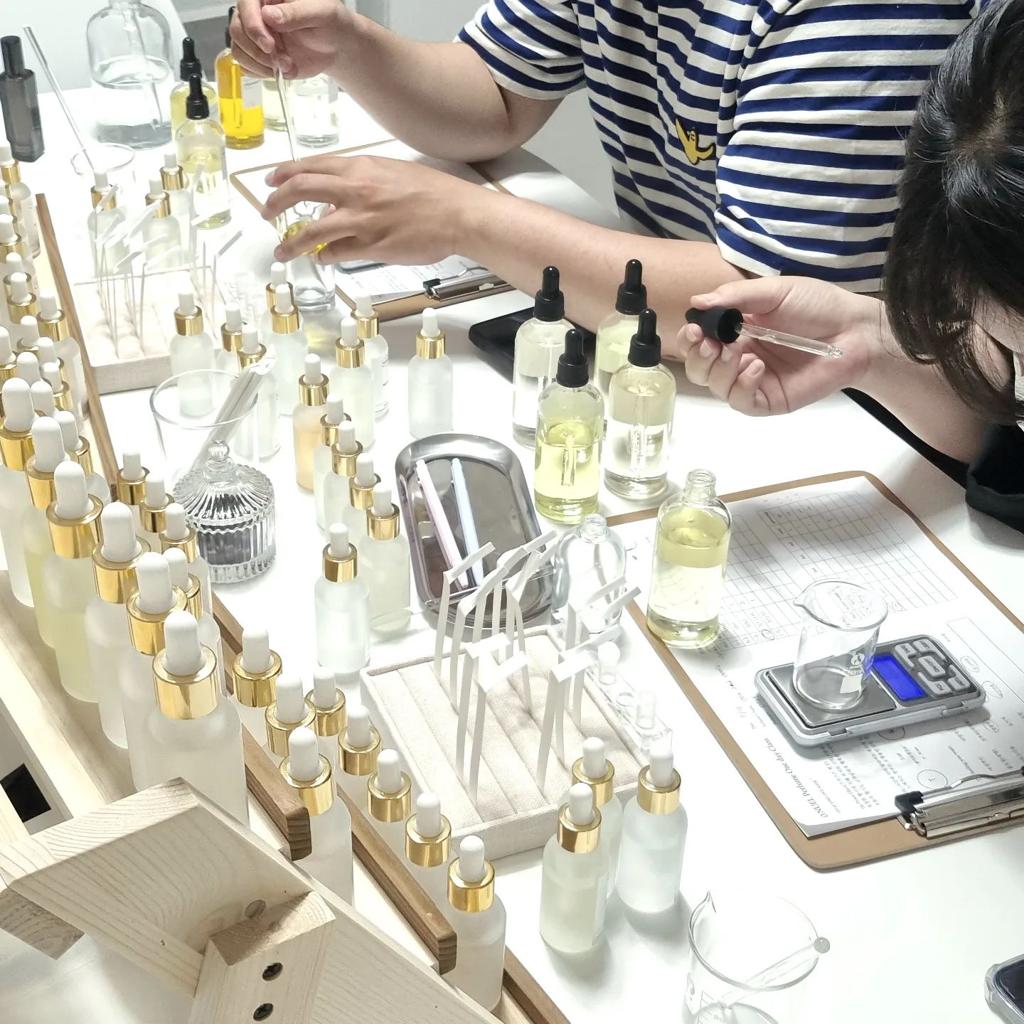
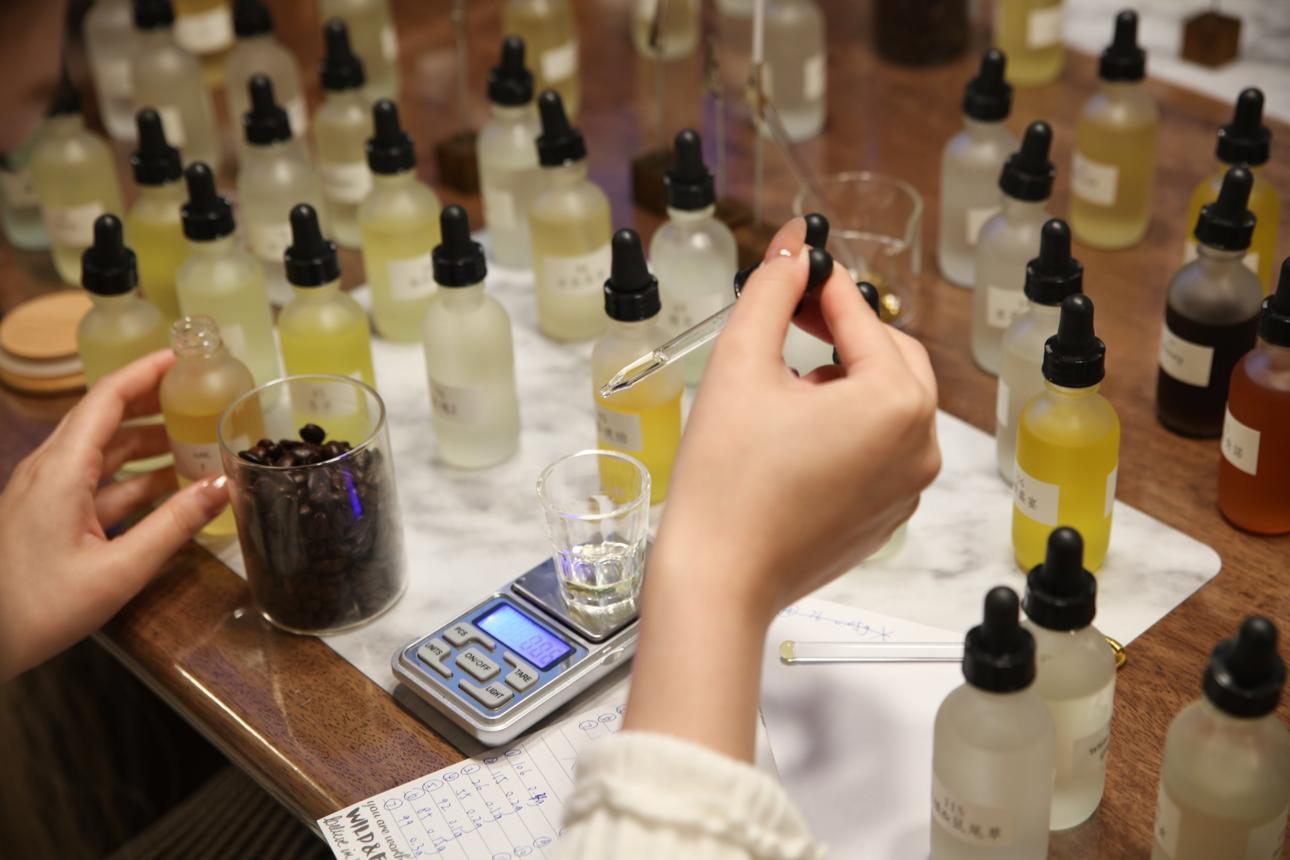
Now you begin combining your selected scents.
Depending on the studio, the instructor may give you:
- Droppers
- Pipettes
- Measuring tools
or another controlled blending method.
You'll follow a formula or ratio rather than simply pouring random amounts together.
This is where you learn an important lesson:
MORE ISN'T ALWAYS BETTER.
A scent you love on its own can overpower everything else if too much is added.
- 1
STEP 7 — ADJUST THE BALANCE
Suppose your first blend smells:
TOO SWEET.
You may need to reduce or balance the sweeter character.
Or perhaps it's:
TOO HEAVY.
You might introduce a fresher element.
Maybe the fragrance feels:
TOO SHARP.
The instructor can help you soften the overall composition.
This process of:
SMELL
ADJUST
SMELL AGAIN
is one of the most enjoyable parts of the workshop.
- 1
STEP 8 — TEST IT AGAIN — Don't judge the fragrance only one second after blending.
Give it a little time.
Smell it on a testing strip again.
Depending on the class, you may also be able to test the final direction on skin.
Perfume can smell different:
ON PAPER
and
ON YOUR SKIN.
Skin chemistry, temperature and the development of the fragrance can affect your perception.
- 1
STEP 9 — RECORD YOUR FORMULA
THIS PART MATTERS.
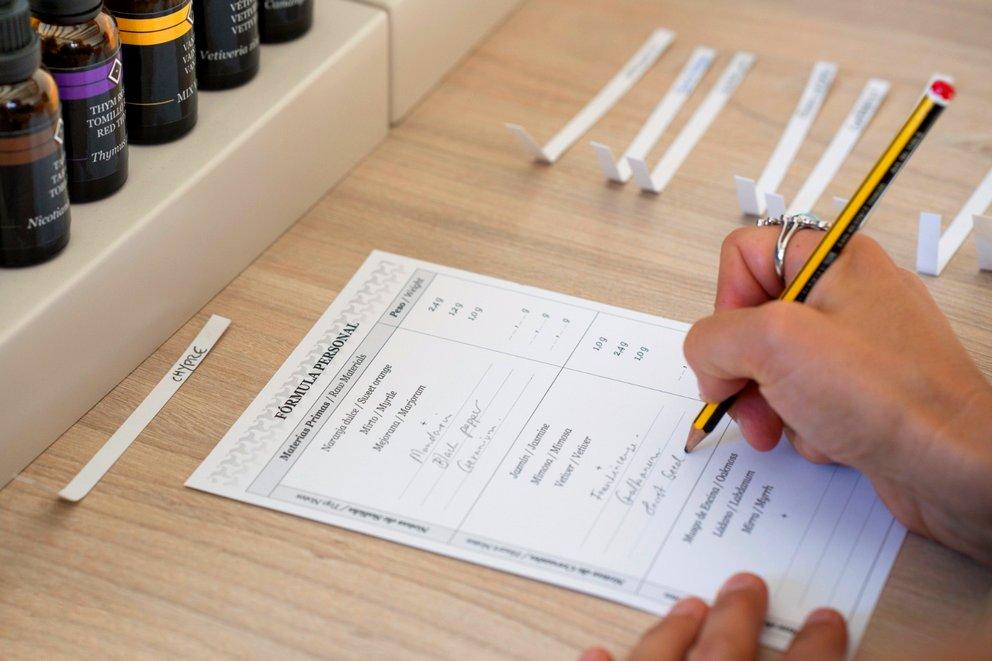
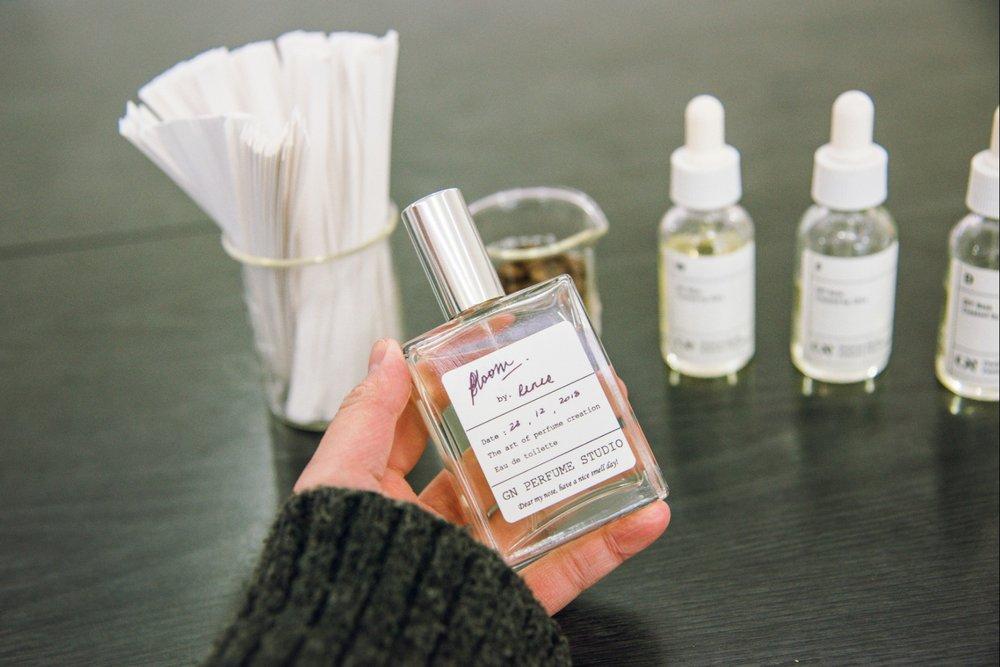
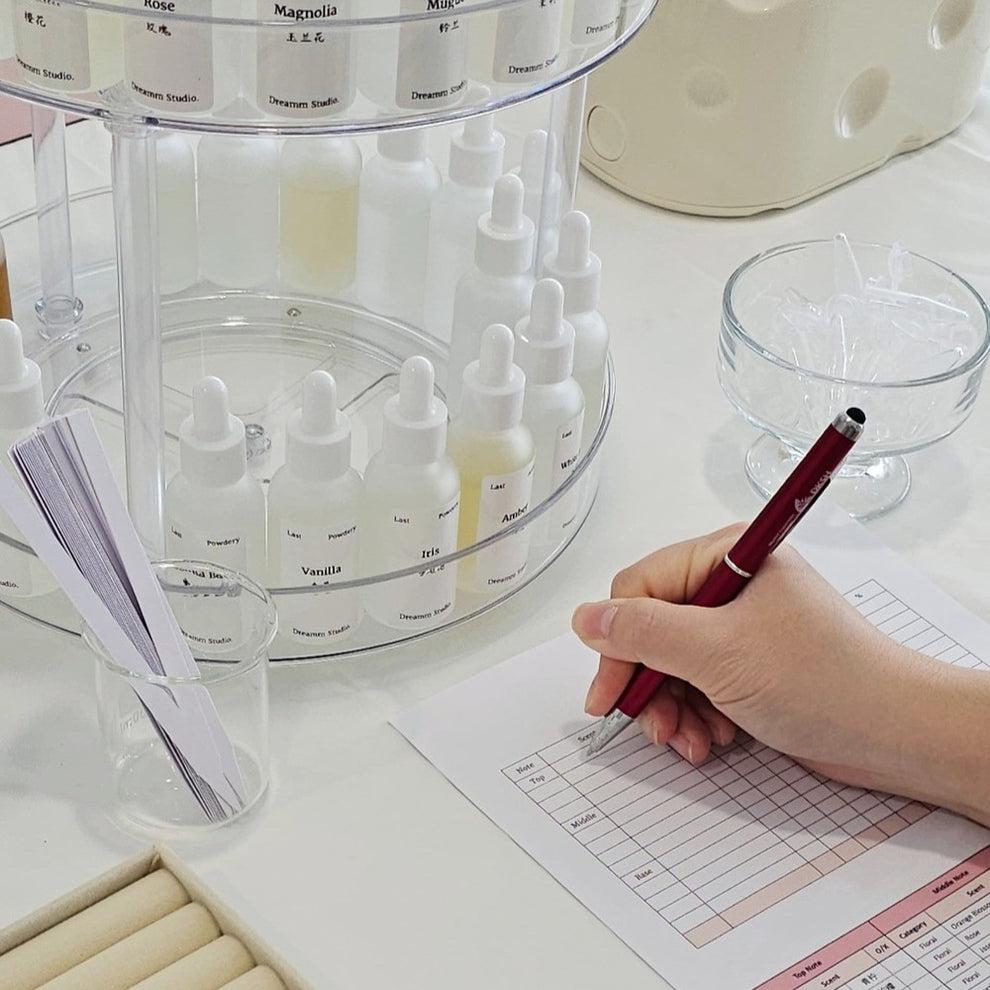
Your final perfume isn't simply:
“A nice smell.”
It's a specific combination and ratio.
Some studios record or provide your formula so that it can potentially be referenced later.
Exactly how formulas are stored—and whether reordering is possible—depends on the studio.
BEFORE LEAVING, ASK:
“CAN I KEEP OR REORDER MY FORMULA?”
Don't assume every workshop provides this service.
- 1
STEP 10 — MAKE THE FINAL PERFUME
Once you're happy with the test:
FINAL BLENDING BEGINS.
The selected fragrance composition is measured into your final bottle according to the workshop's method.
The instructor may handle some technical steps.
That's normal.
A one-day perfume workshop is a guided creative experience—not professional perfumery training.
- 1
STEP 11 — BOTTLE YOUR FRAGRANCE — Now comes the satisfying part.
YOUR PERFUME BECOMES REAL.
Depending on the workshop, you may:
- Fill the bottle
- Choose packaging
- Add a label
or personalize the finished product.
The exact bottle size varies by studio and package.
For example, the current Parfum9 traveler program includes making a 50 mL perfume.
- 1
STEP 12 — NAME YOUR PERFUME
If the workshop allows customization:
GIVE IT A NAME.
Don't call it:
“Perfume No. 1.”
This is where the travel experience becomes personal.
Examples:
SEOUL 09:00
A fresh morning scent.
BUKCHON
Wood, paper and calm traditional atmosphere.
HAN RIVER NIGHT
Clean, cool and modern.
JEJU WIND
Fresh citrus, green and natural impressions.
SEOUL AFTER RAIN
Something cool, green and slightly woody.
You don't need to recreate the literal smell of these places.
Use them as:
INSPIRATION.
WHAT IF YOUR FIRST BLEND IS TERRIBLE?
Good.
That's part of the experience.
You may love three scents individually and discover:
THEY DON'T WORK TOGETHER.
That's why you create a test blend before finalizing the bottle.
The instructor helps you adjust the formula rather than expecting you to understand perfume composition immediately.
CAN TWO PEOPLE MAKE THE SAME PERFUME?
They can choose similar materials.
But once each person starts changing:
- Ingredients
- Ratios
- Intensity
- and balance,
the fragrances can become quite different.
That's why this works particularly well for couples.
COUPLE PERFUME IDEA
Instead of making:
TWO IDENTICAL PERFUMES,
try making:
TWO CONNECTED PERFUMES.
For example:
PERSON A
Fresh + Citrus + Wood
PERSON B
Floral + Soft Musk + Wood
The shared woody character connects them.
But each perfume still has its own personality.
That's a much better couple souvenir than simply buying matching bottles.
HOW MANY SCENTS SHOULD YOU USE?
Don't assume:
MORE INGREDIENTS = BETTER PERFUME.
A complicated mixture can become muddy or confusing.
For a beginner:
LET THE INSTRUCTOR GUIDE THE COMPLEXITY.
The objective isn't to use every fragrance material on the table.
It's to make something you actually want to wear.
GIVE YOUR NOSE A BREAK
After repeatedly smelling fragrance:
OLFACTORY FATIGUE
can make it harder to notice differences.
Take short breaks when instructed.
Fresh air and time can be more useful than aggressively smelling another twenty test strips.
DON'T EXPECT THE PERFUME TO SMELL IDENTICAL FOREVER
A fragrance develops after application.
The impression you get:
IMMEDIATELY
may differ from:
30 MINUTES LATER
and again later in the day.
Some freshly blended perfumes may also benefit from resting according to the studio's instructions.
FOLLOW THE WORKSHOP'S AFTERCARE DIRECTIONS.
THE PROCESS AT A GLANCE
SMELL
DISCOVER YOUR PREFERENCES
CHOOSE FRAGRANCE FAMILIES
SELECT MATERIALS
CREATE A TEST FORMULA
BLEND
SMELL AGAIN
ADJUST
FINALIZE
BOTTLE
TAKE YOUR OWN PERFUME HOME.
TRAVEL TIP
Don't walk into the workshop saying:
“Make me something that smells expensive.”
Bring a memory or feeling instead.
For example:
“I want something that reminds me of walking through a quiet hanok neighborhood after rain.”
That gives the instructor a much more interesting direction to work with.
And it turns the workshop from:
MIXING FRAGRANCE
into:
CREATING A MEMORY OF KOREA.
CREATE A SCENT THAT REMINDS YOU OF KOREA
Turn a Place, Season or Memory from Korea into Your Own Fragrance
A custom perfume becomes much more interesting when you stop asking:
- “Which fragrance smells the nicest?”
- and start asking:
“WHAT DO I WANT TO REMEMBER?”
Your perfume doesn't need to smell literally like Seoul, Jeju or a hanok.
Instead, use a Korean place or memory as the creative direction for your fragrance.
Think about:
- Temperature
- Season
- Light
- Nature
- Architecture
- Food
- People
and how the place made you feel.
Then translate that feeling into scent.
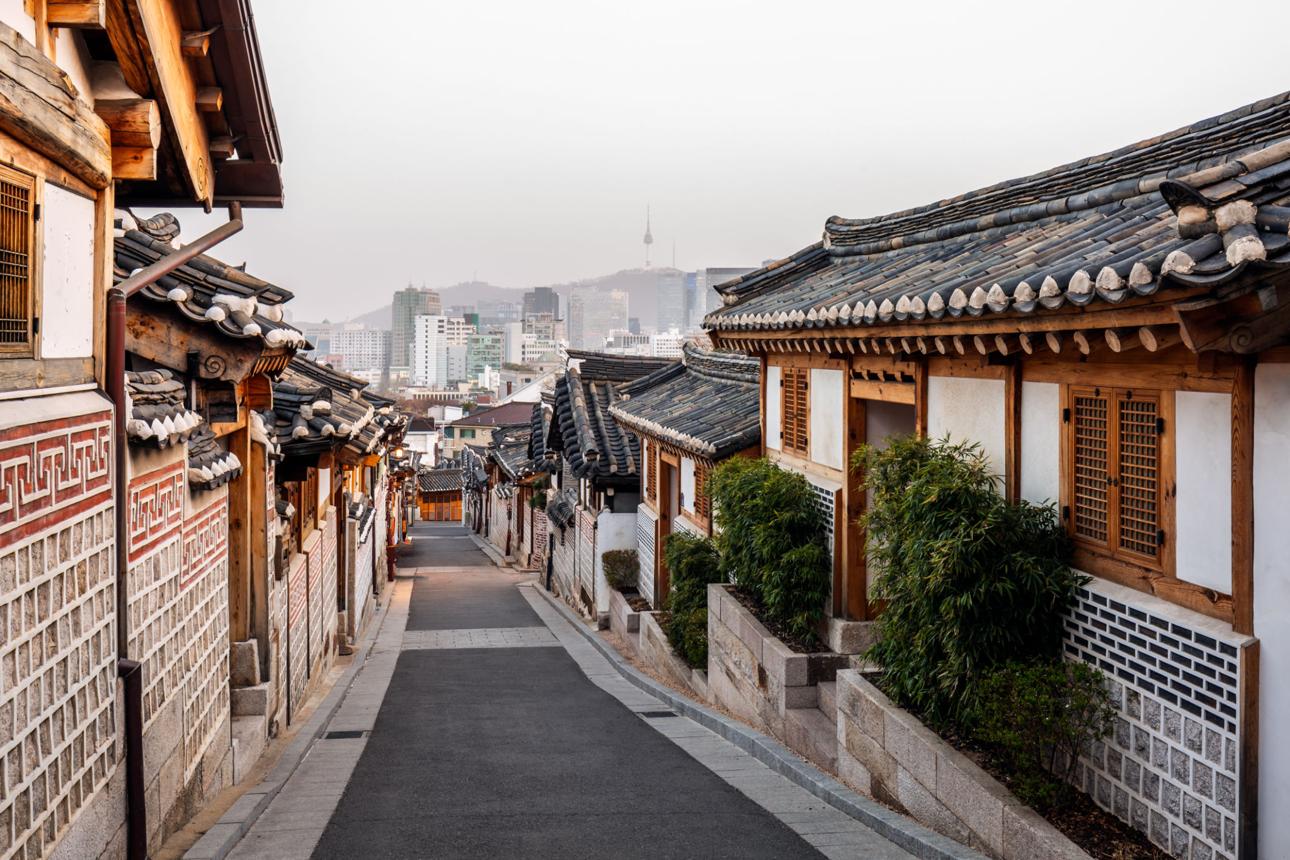
IDEA 1 — BUKCHON MORNING
QUIET · WOODY · CLEAN
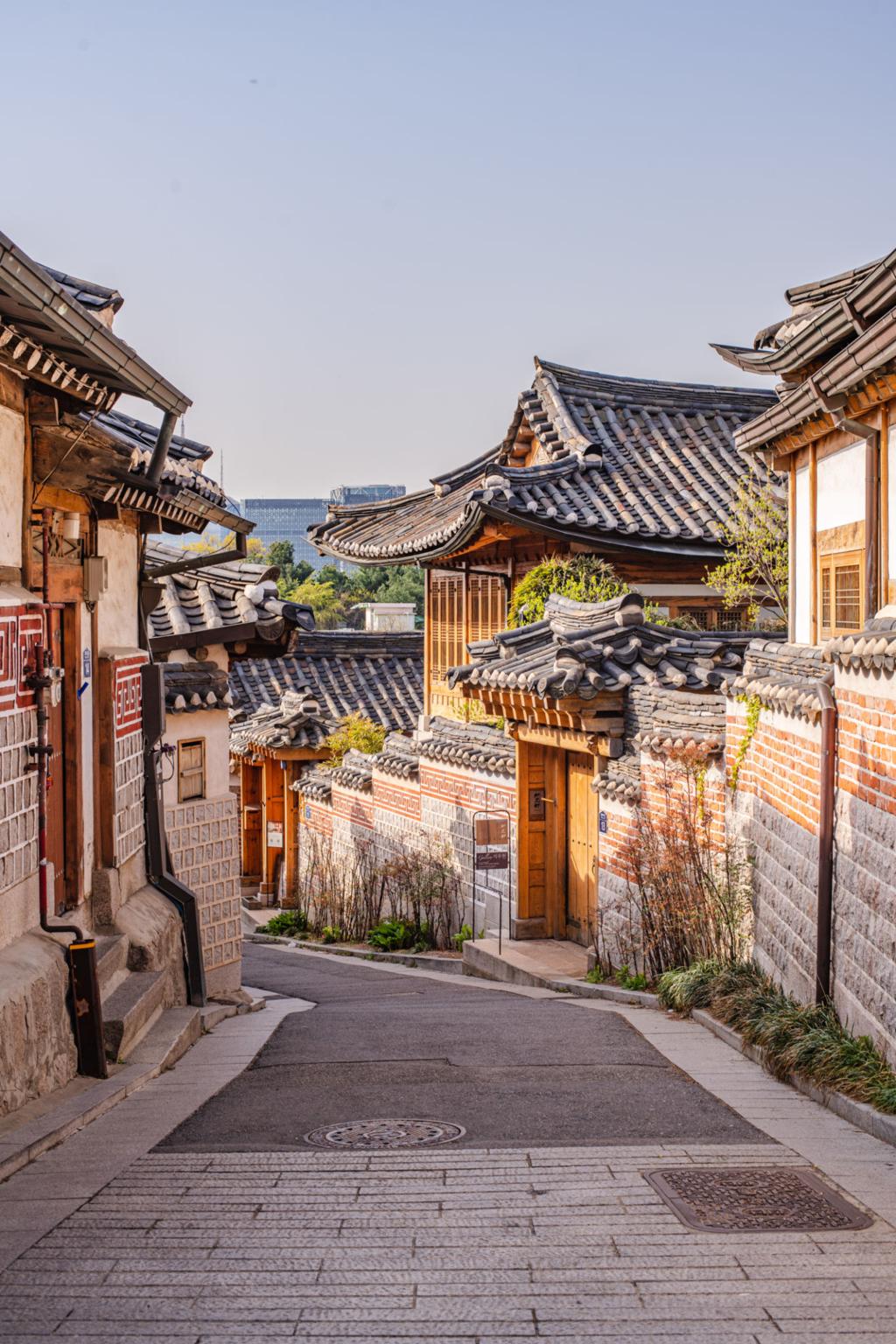
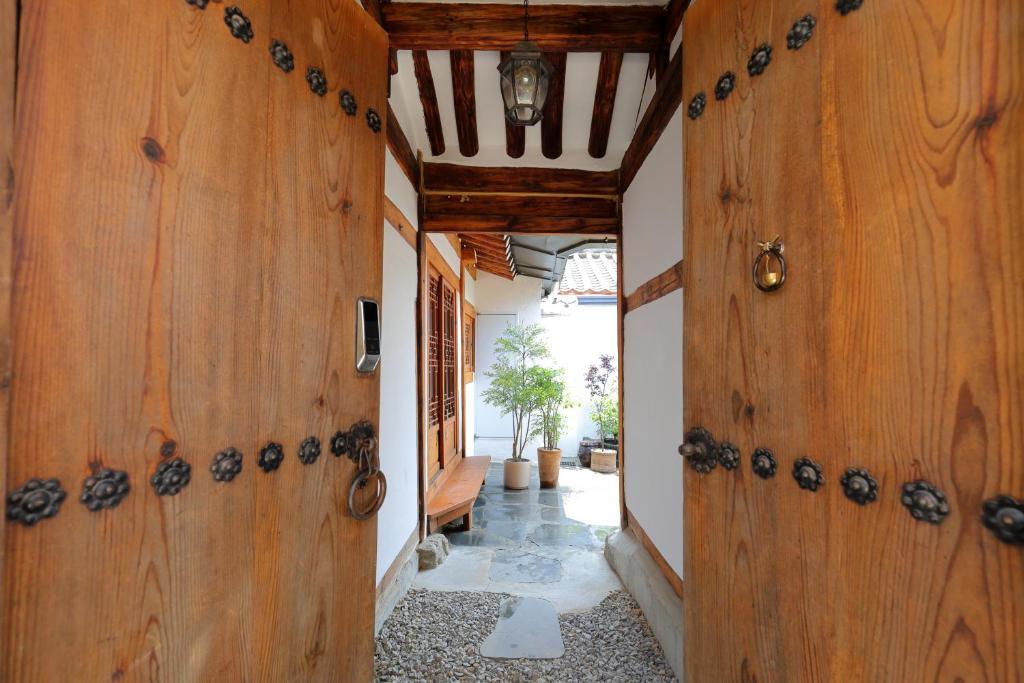
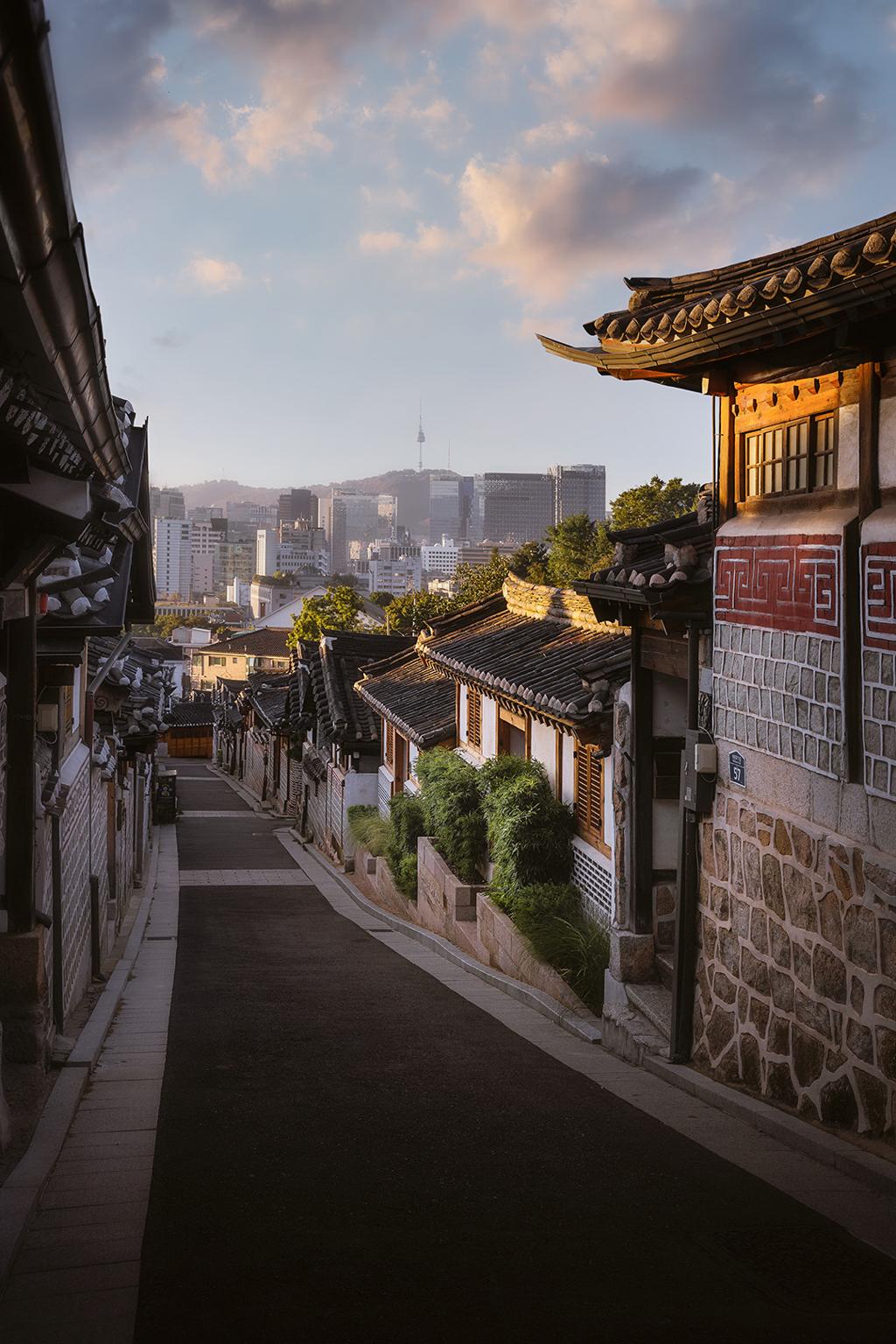
Imagine walking through Bukchon before the streets become busy.
Traditional wooden doors.
Stone walls.
A quiet courtyard.
Cool morning air.
Instead of trying to make something that literally smells like a hanok, start with a mood:
WOODY
SOFT
DRY
CLEAN
Possible fragrance directions could include woody, herbal, musky or subtle incense-like impressions, depending on the materials available at your workshop.
MOOD
- Calm
- Traditional
- Minimal
- Warm
NAME IT:
BUKCHON 8:00 AM
IDEA 2 — SEOUL AFTER RAIN
FRESH · GREEN · COOL
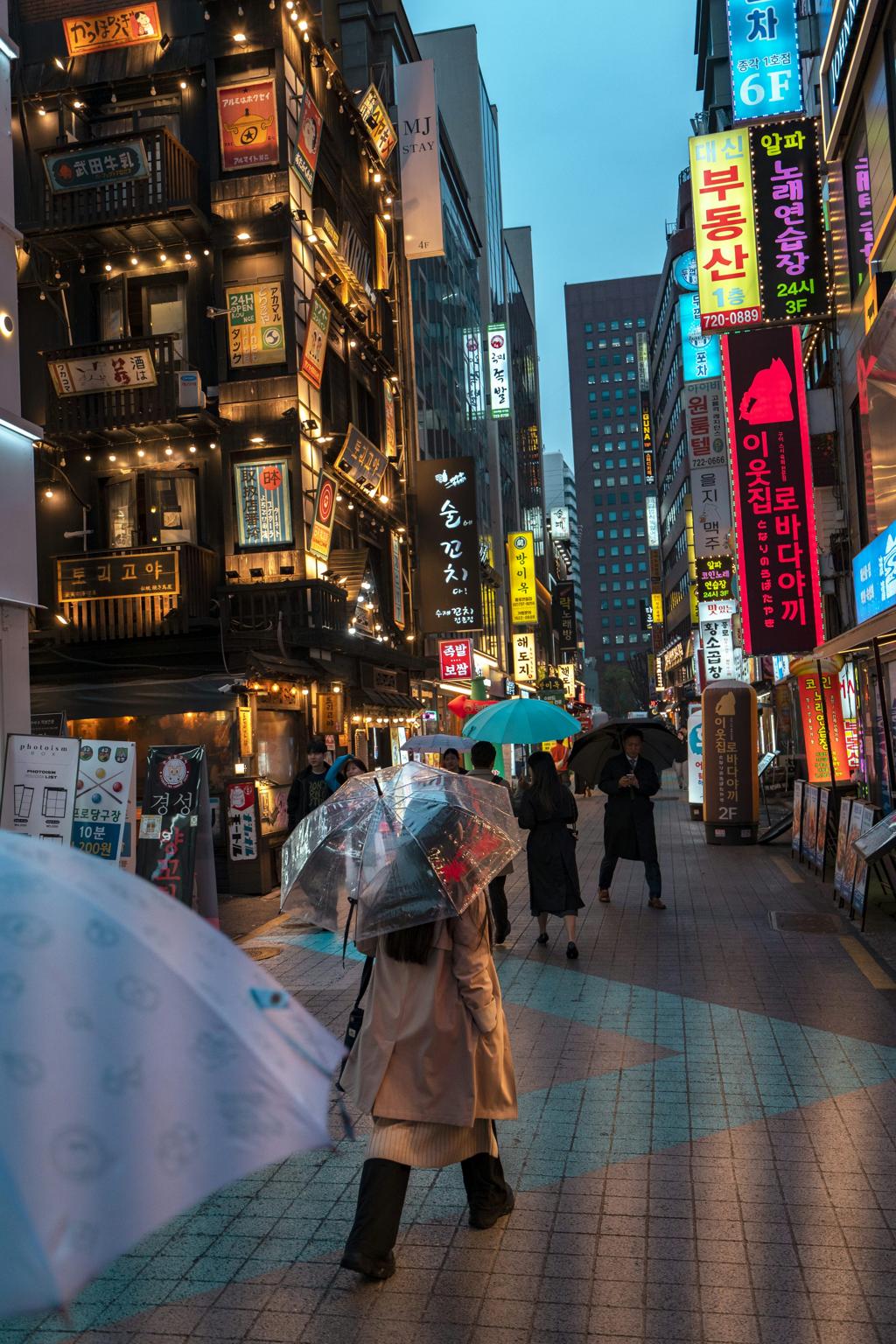
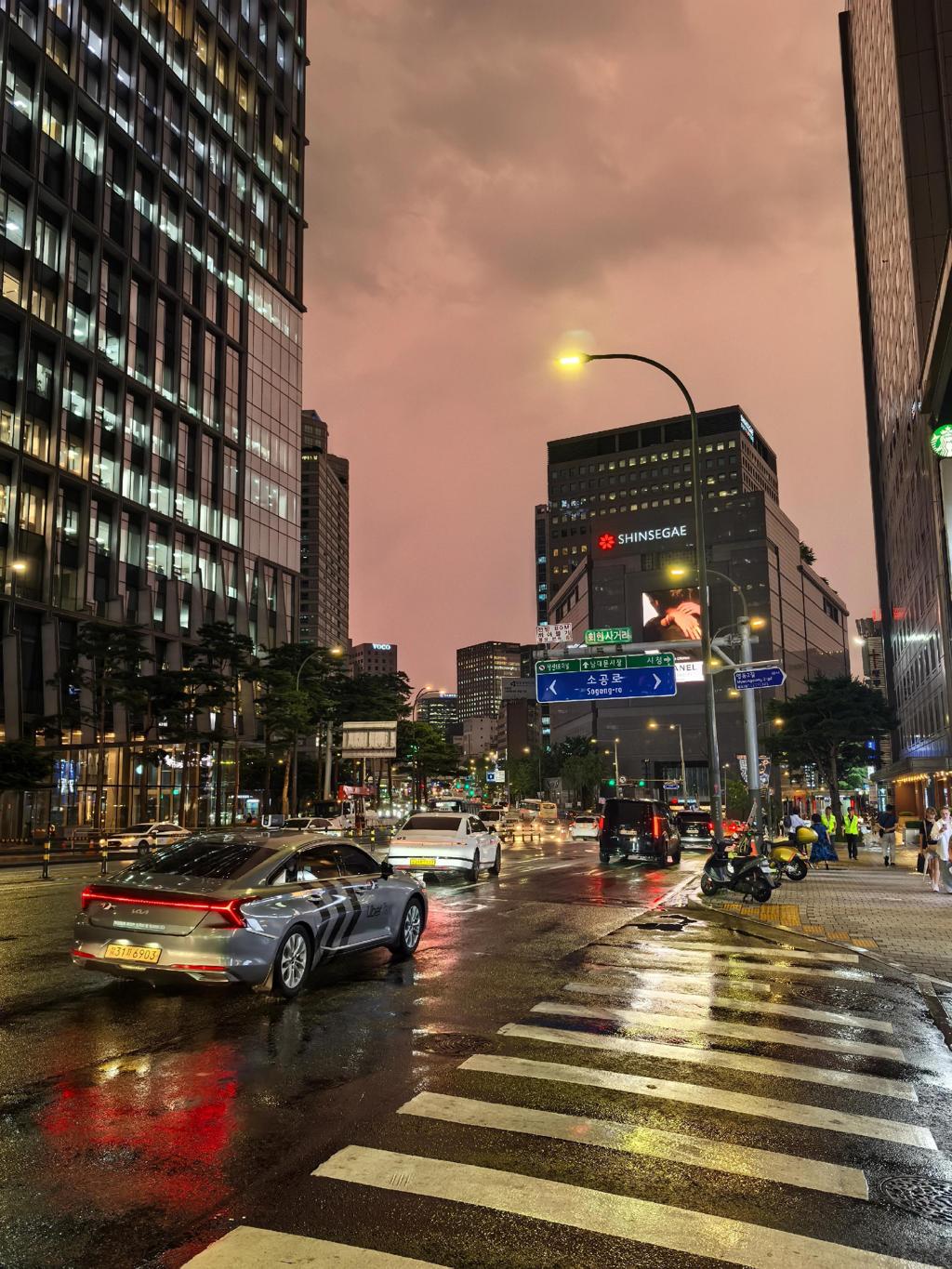
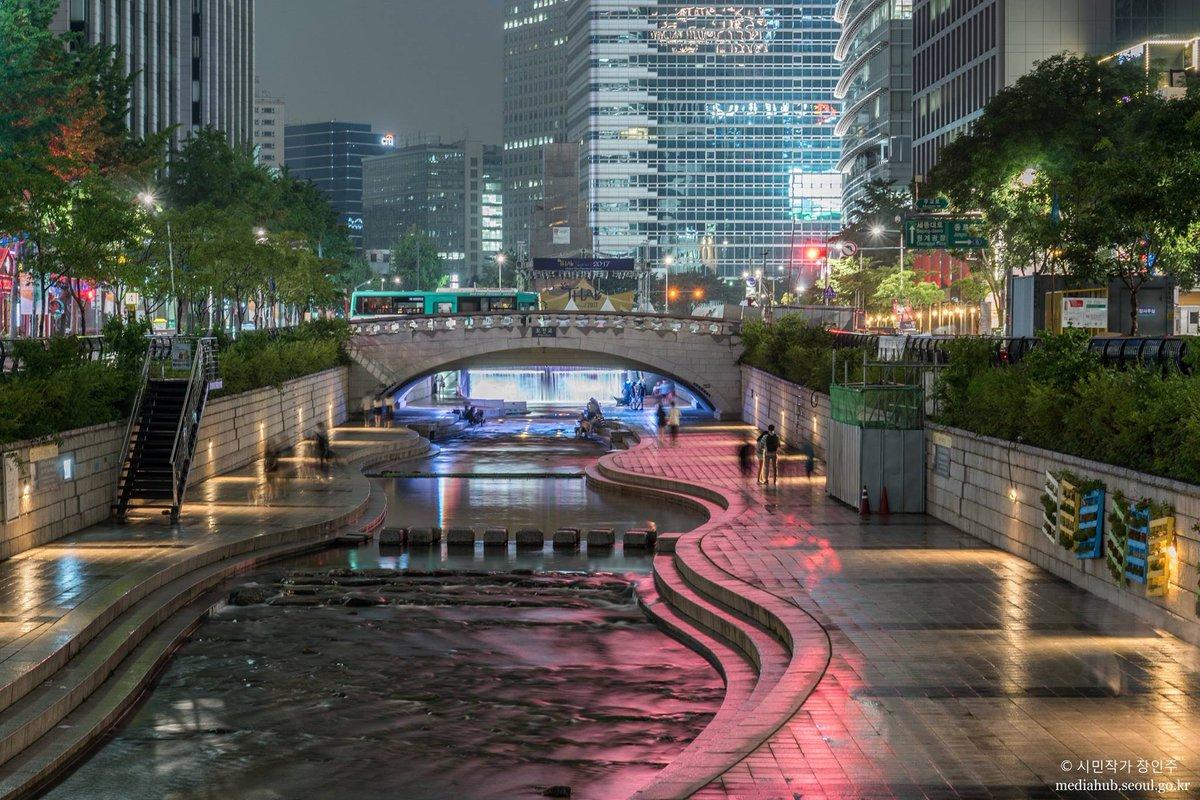
Think of Seoul immediately after summer rain.
Wet pavement.
Trees.
Cooler air.
The city lights beginning to reflect on the street.
For this mood, explore fragrance directions such as:
- Green
- Fresh
- Aquatic
- Herbal
or light woody notes.
The result doesn't need to imitate rainwater.
You're trying to capture:
THE FEELING AFTER THE RAIN STOPS.
NAME IT:
SEOUL AFTER RAIN
IDEA 3 — JEJU WIND
CITRUS · GREEN · AIRY
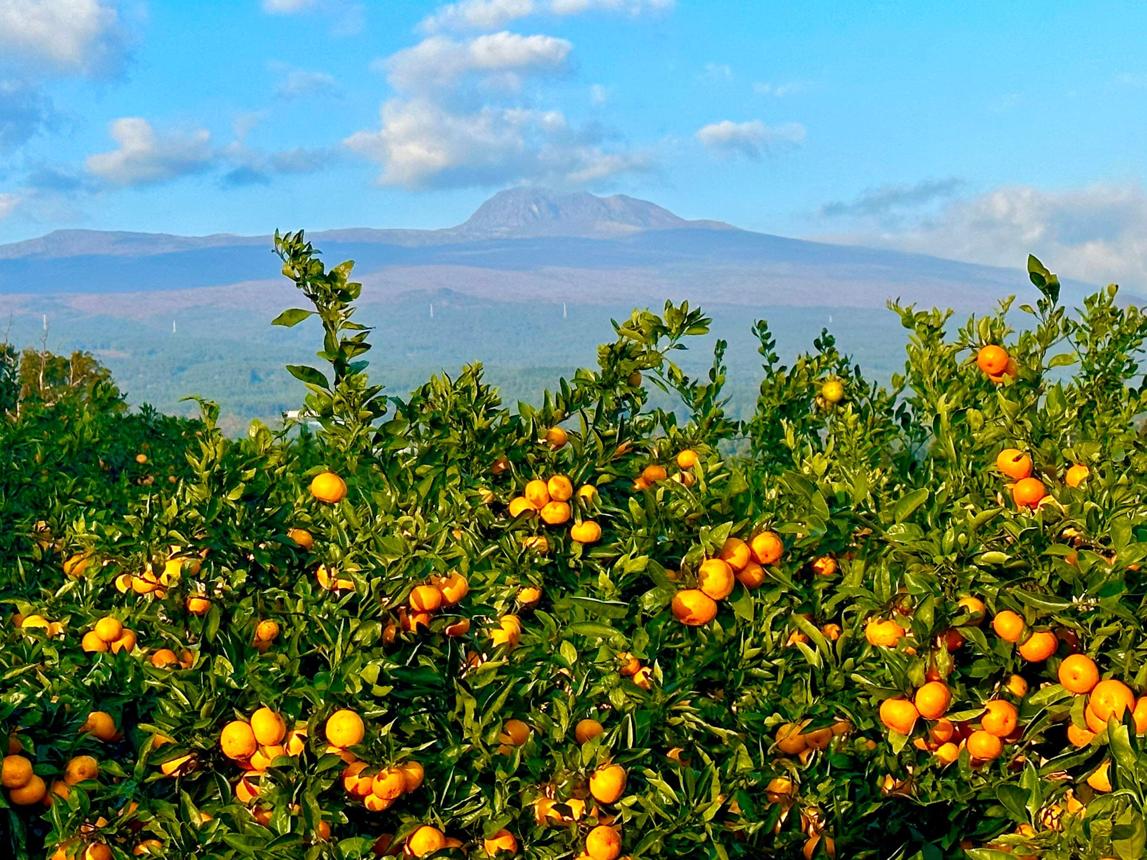
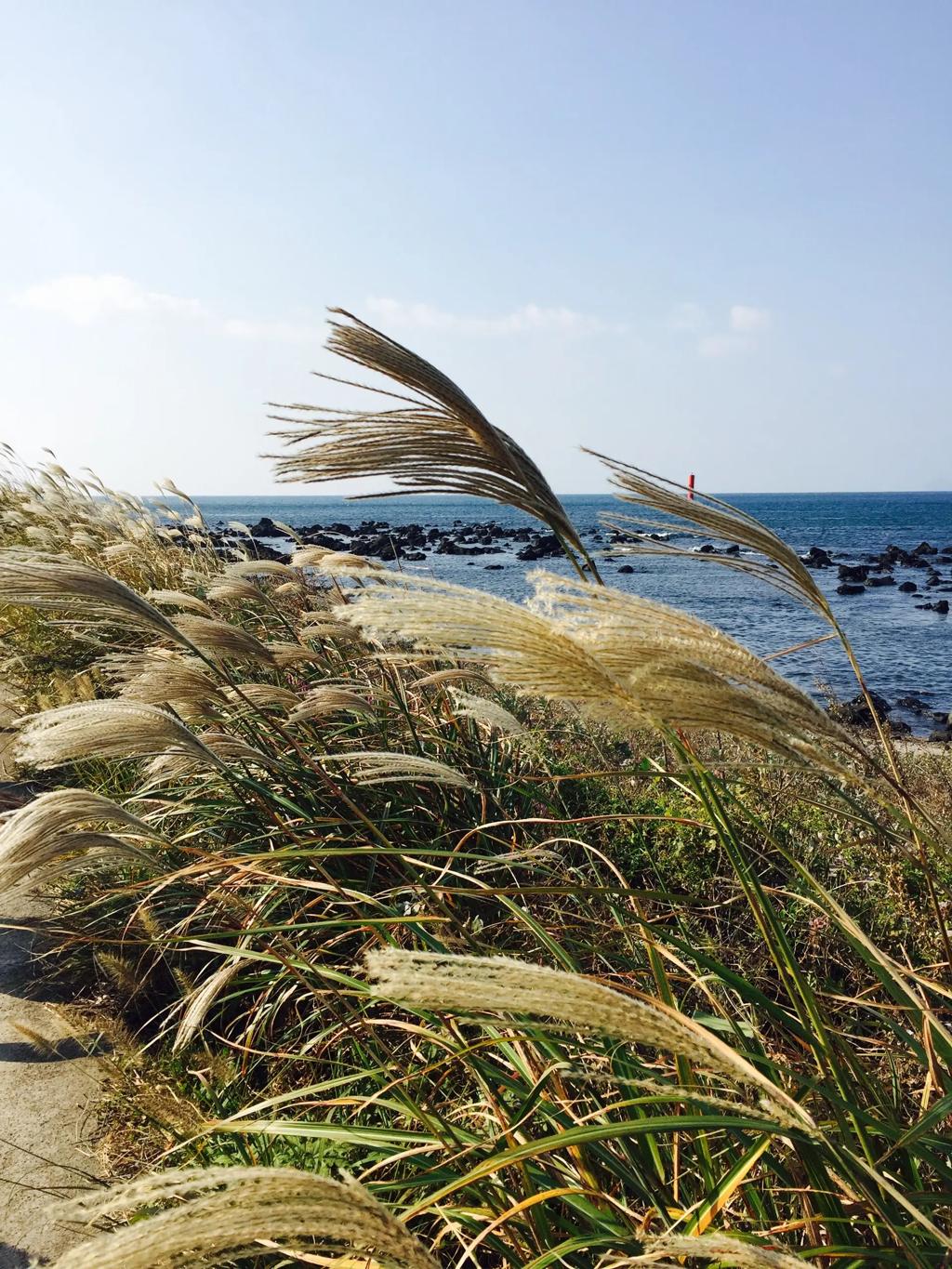
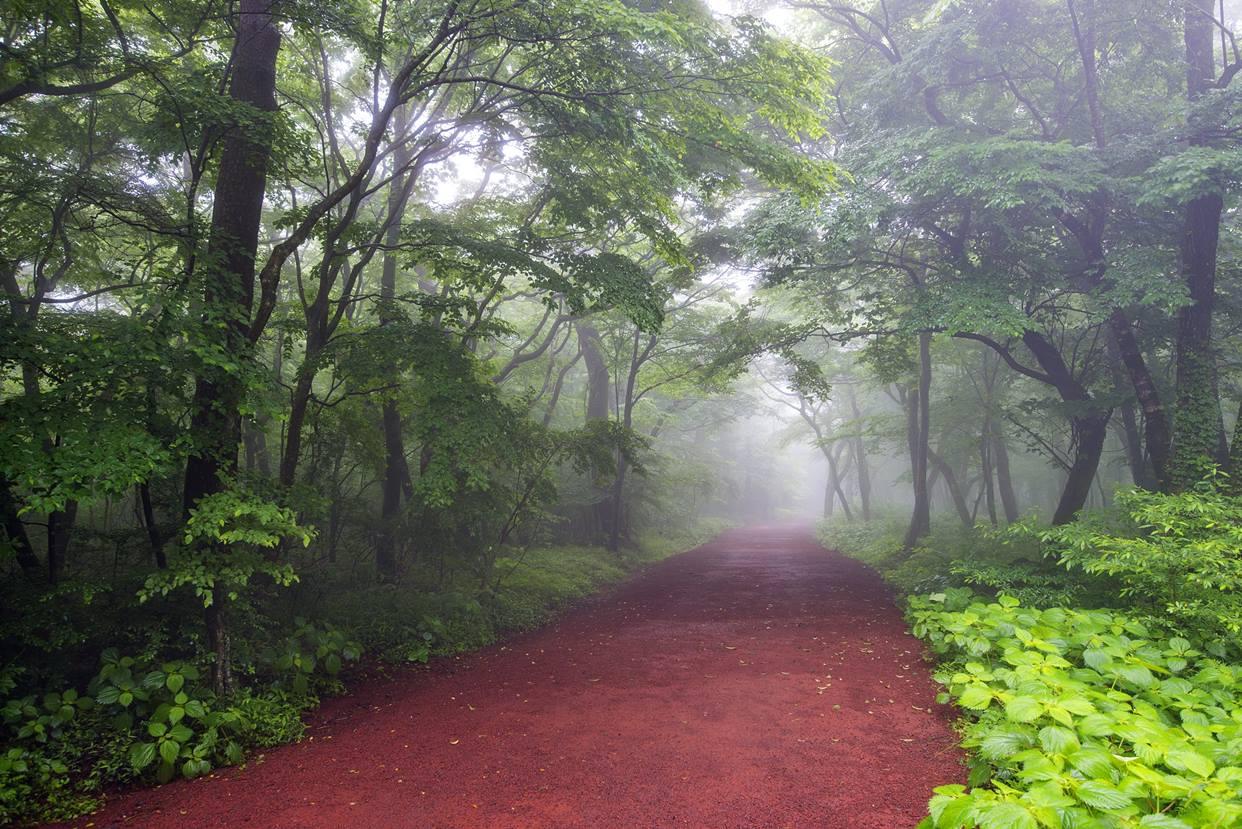
Jeju gives you a completely different starting point.
Think about:
- Tangerine Orchards
- Sea Air
- Green Fields
- Forests
and volcanic landscapes.
A Jeju-inspired fragrance could move toward:
CITRUS
GREEN
FRESH
with a subtle woody foundation.
DON'T DO THIS
Don't pour every “Jeju-like” fragrance into one bottle.
Pick one main memory.
For example:
JEJU TANGERINE ORCHARD
or:
JEJU FOREST AFTER RAIN.
One clear idea usually creates a stronger perfume than trying to represent the entire island.
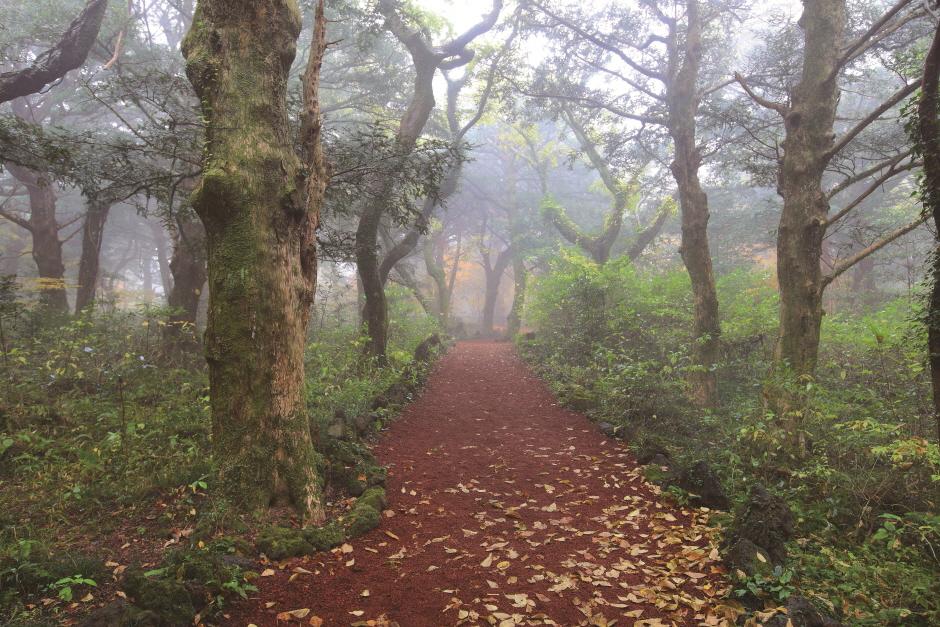
IDEA 4 — KOREAN FOREST
GREEN · WOODY · EARTHY
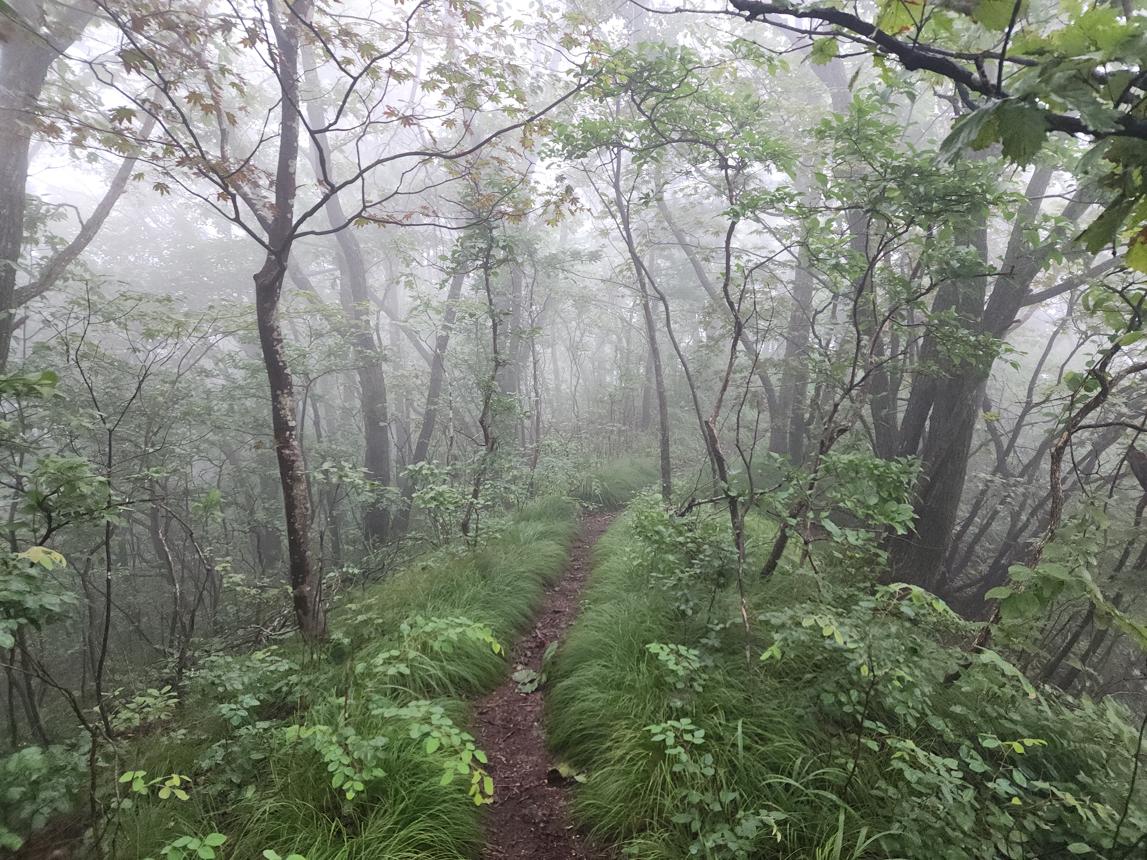
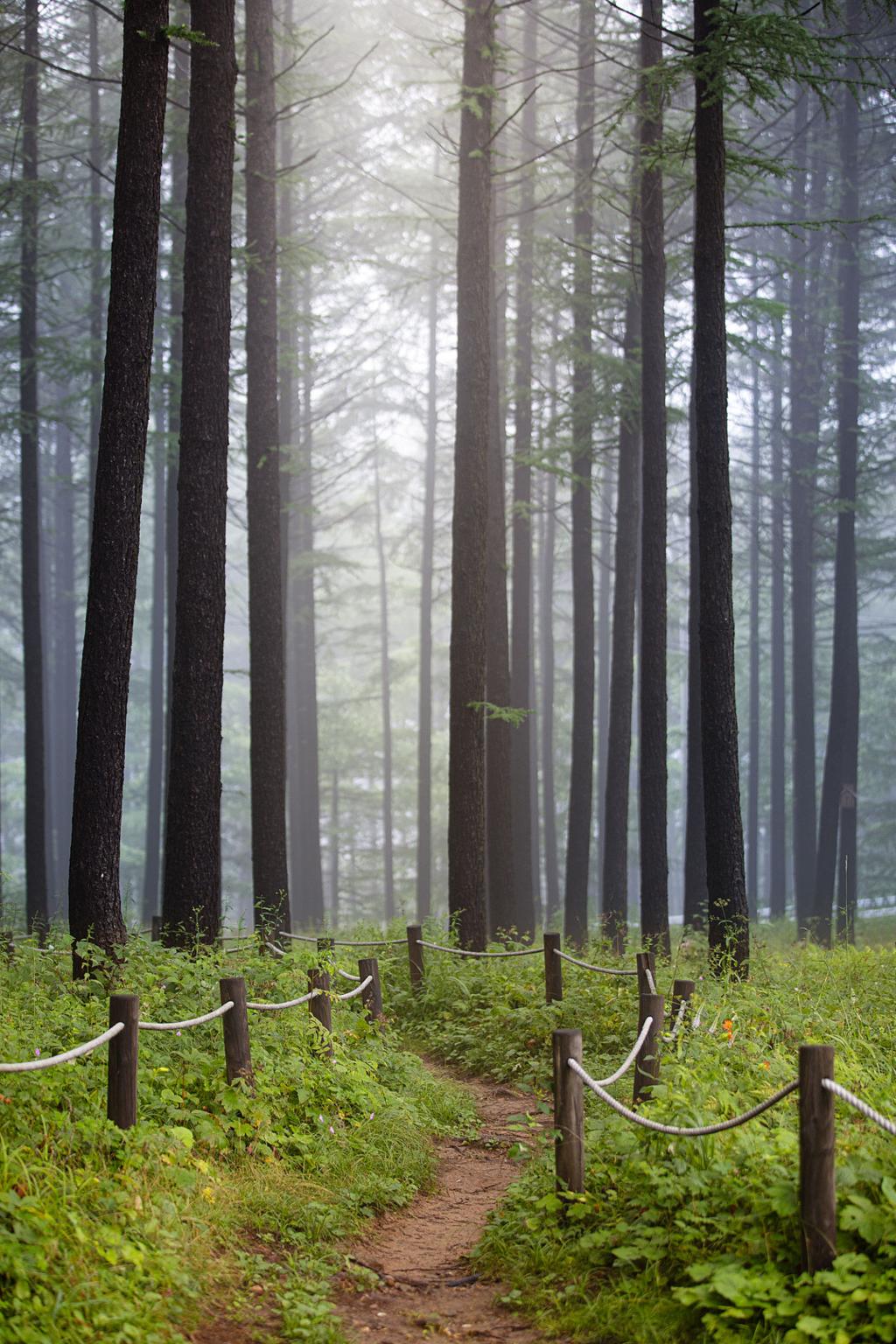
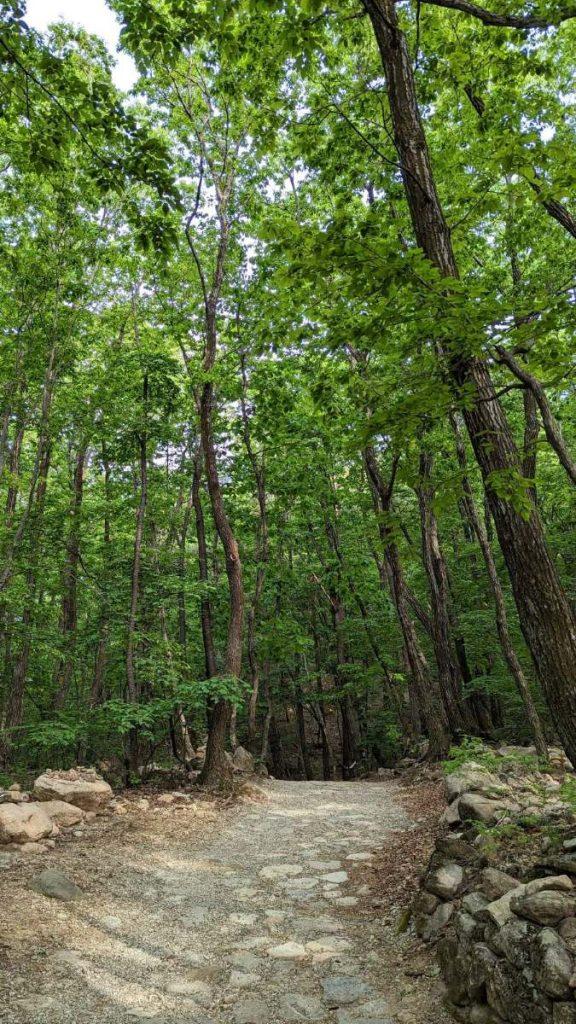
Korea isn't only neon streets and cafés.
Much of the country is mountainous.
A hiking trail surrounded by forest can inspire a completely different fragrance.
Possible directions:
- Pine-like freshness
- Leaves
- Herbs
- Wood
- Earthy impressions
and clean air.
MOOD
QUIET + NATURAL + GROUNDED.
This works particularly well if hiking or Korea's mountains were an important part of your trip.
NAME IT:
KOREAN FOREST
or something more personal:
BUKHANSAN MORNING.
IDEA 5 — HANJI
DRY · SOFT · MINIMAL
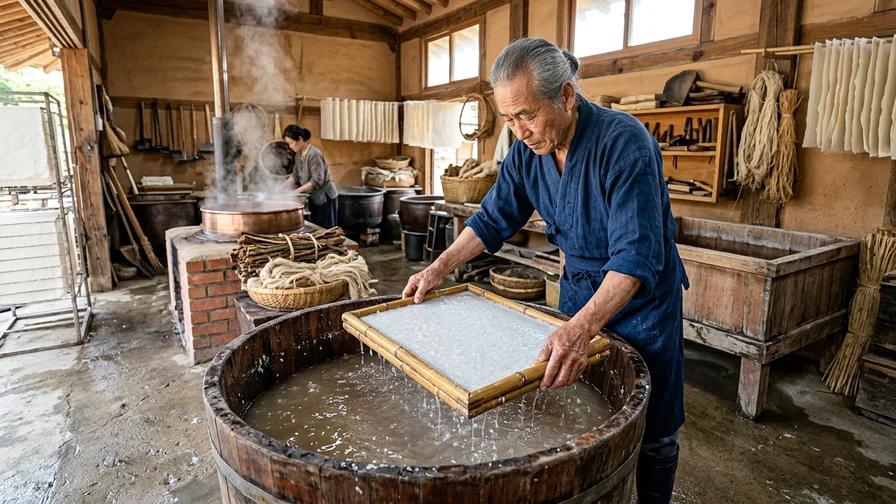
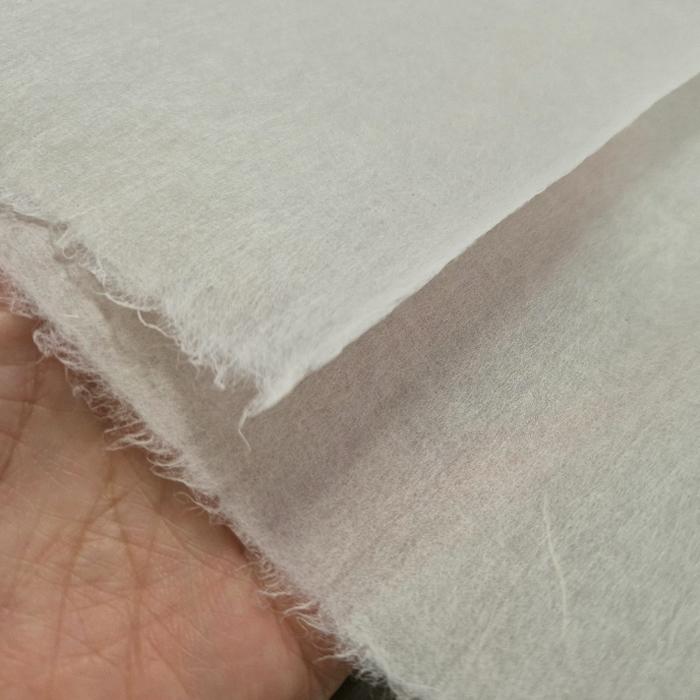
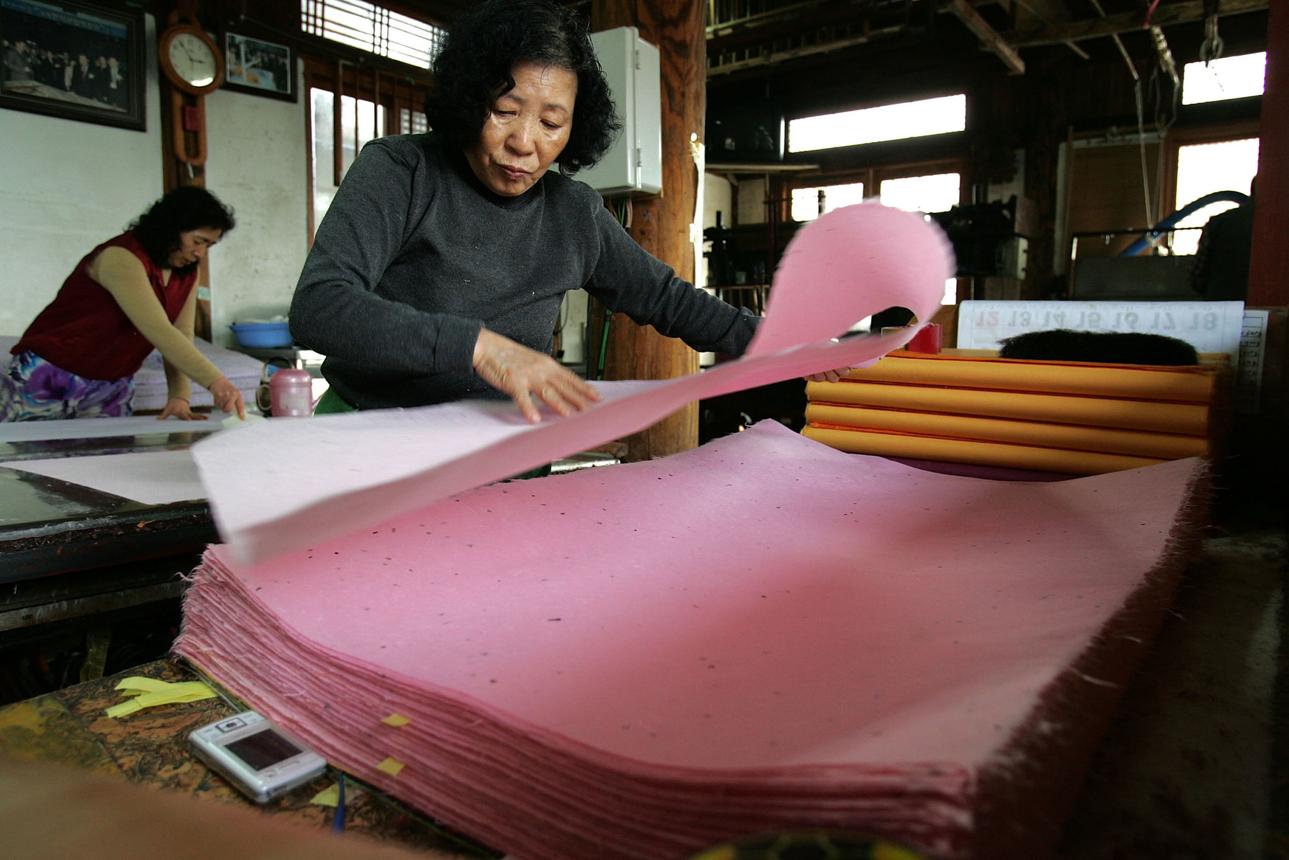
This is a much more unusual direction.
Traditional Korean paper — hanji — can inspire a fragrance concept built around:
- Paper
- Wood
- Dryness
- Softness
and understated natural impressions.
You aren't trying to spray something that literally smells like a sheet of paper.
Think instead:
TEXTURE AS FRAGRANCE.
This idea works particularly well with the Korean-themed perfume experience in Bukchon, where hanji is among the Korean cultural inspirations used in the fragrance concept.
IDEA 6 — TEMPLE MORNING
WOOD · HERBS · INCENSE
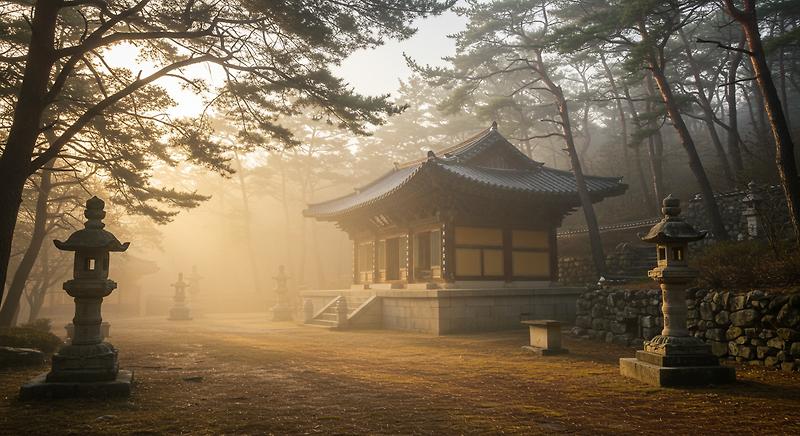
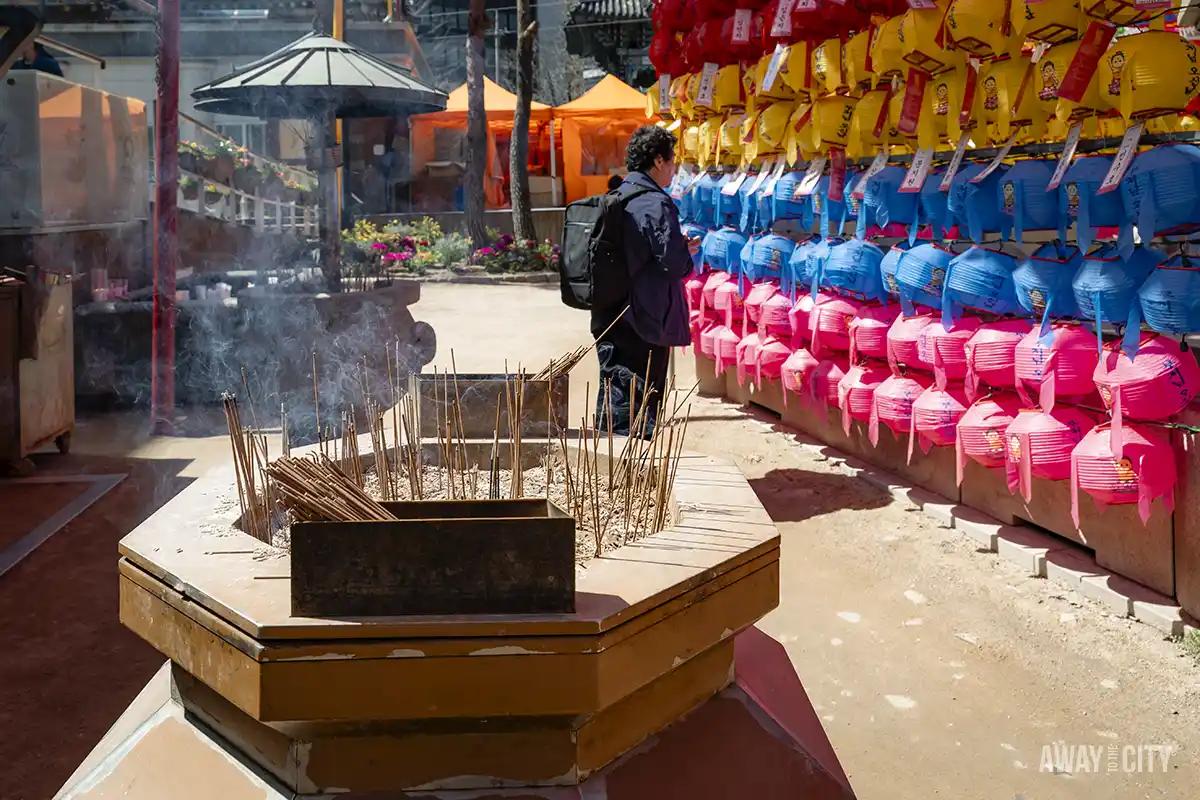
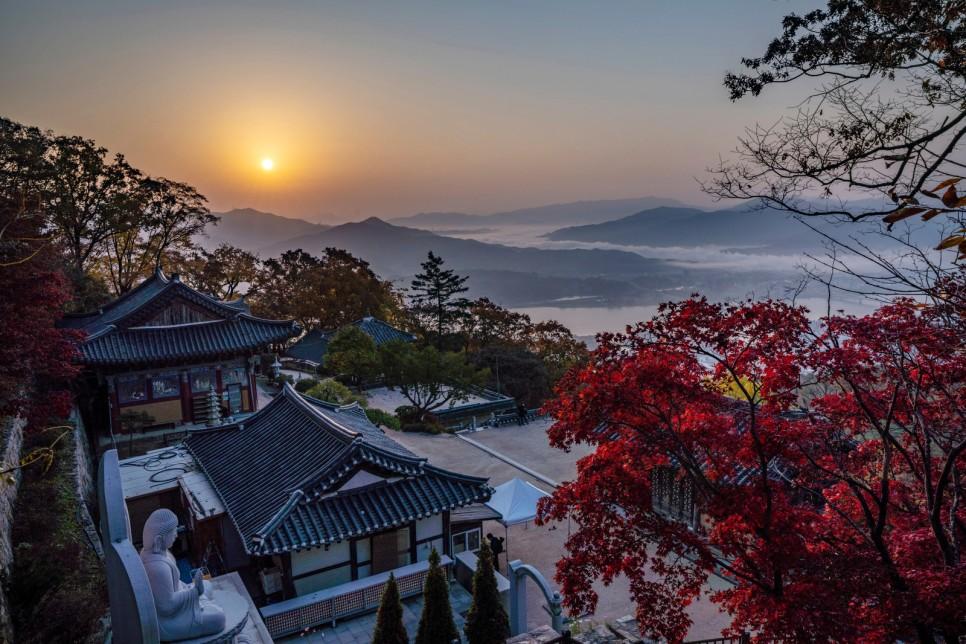
A Korean Buddhist temple has a completely different atmosphere from central Seoul.
Wooden architecture.
Mountain air.
Incense.
Trees.
Quiet.
A temple-inspired fragrance might explore:
- Wood
- Herbal Notes
- Incense-like impressions
and restrained warmth.
IMPORTANT
Don't automatically make it extremely smoky.
The goal is:
PEACEFUL TEMPLE MORNING
not:
A ROOM FULL OF INCENSE SMOKE.
IDEA 7 — KOREAN TEA HOUSE
SOFT · HERBAL · WARM
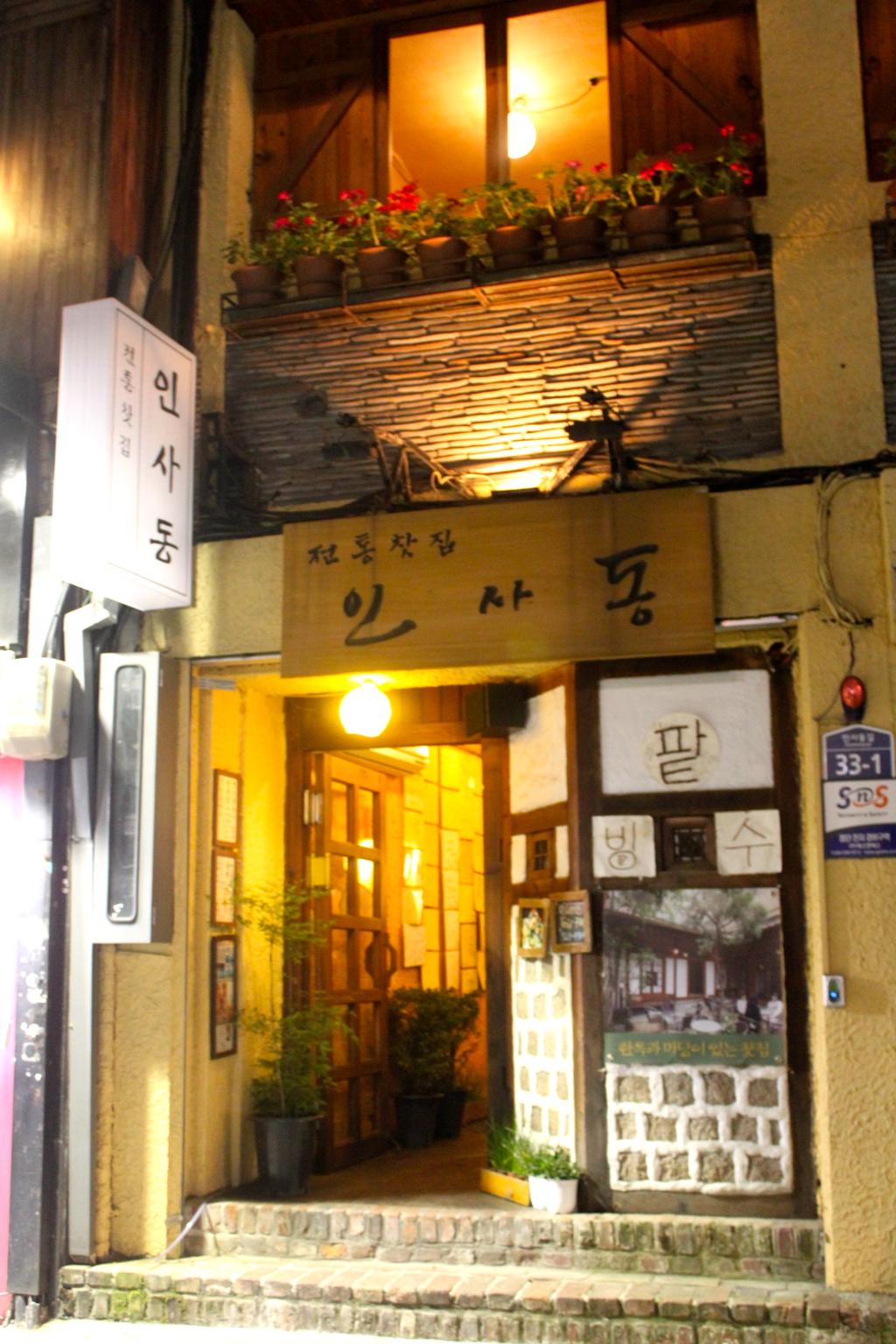
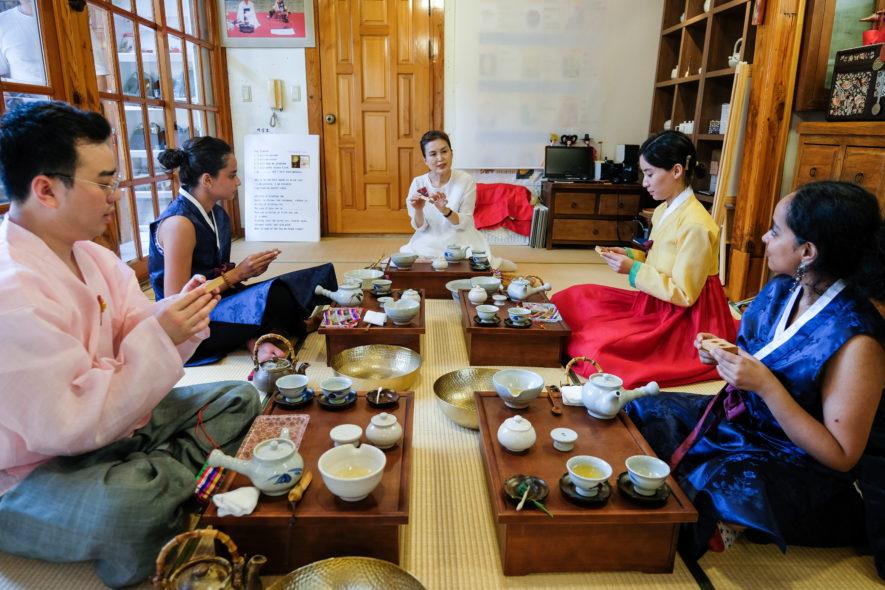
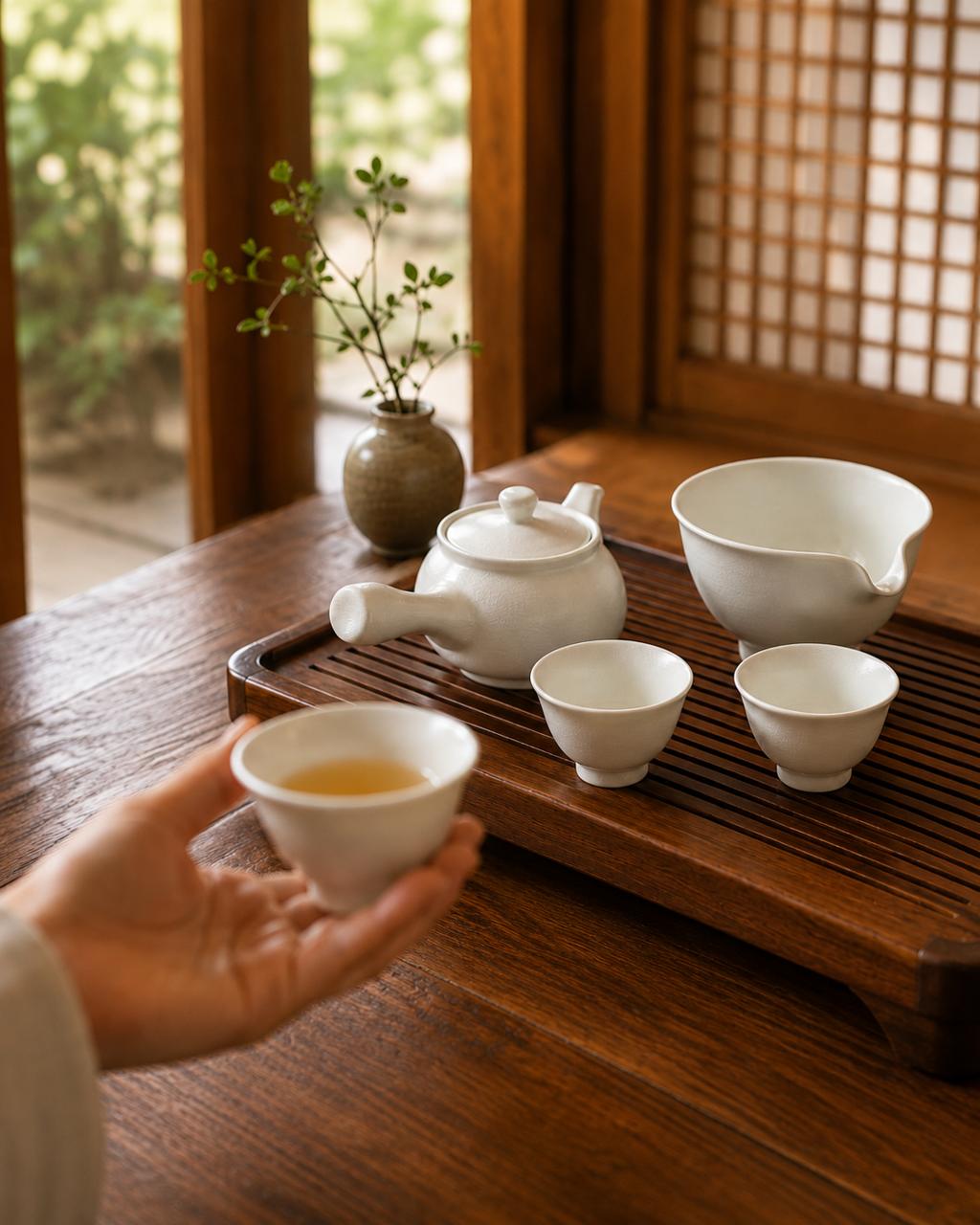
Imagine sitting inside a quiet traditional tea house in Insadong.
Warm tea.
Wood.
Herbs.
A calm interior.
This can inspire something:
SOFT
HERBAL
WARM
and slightly woody.
Depending on the materials available, your instructor can help translate the idea without making the fragrance smell like a beverage.
NAME IT:
INSADONG TEA
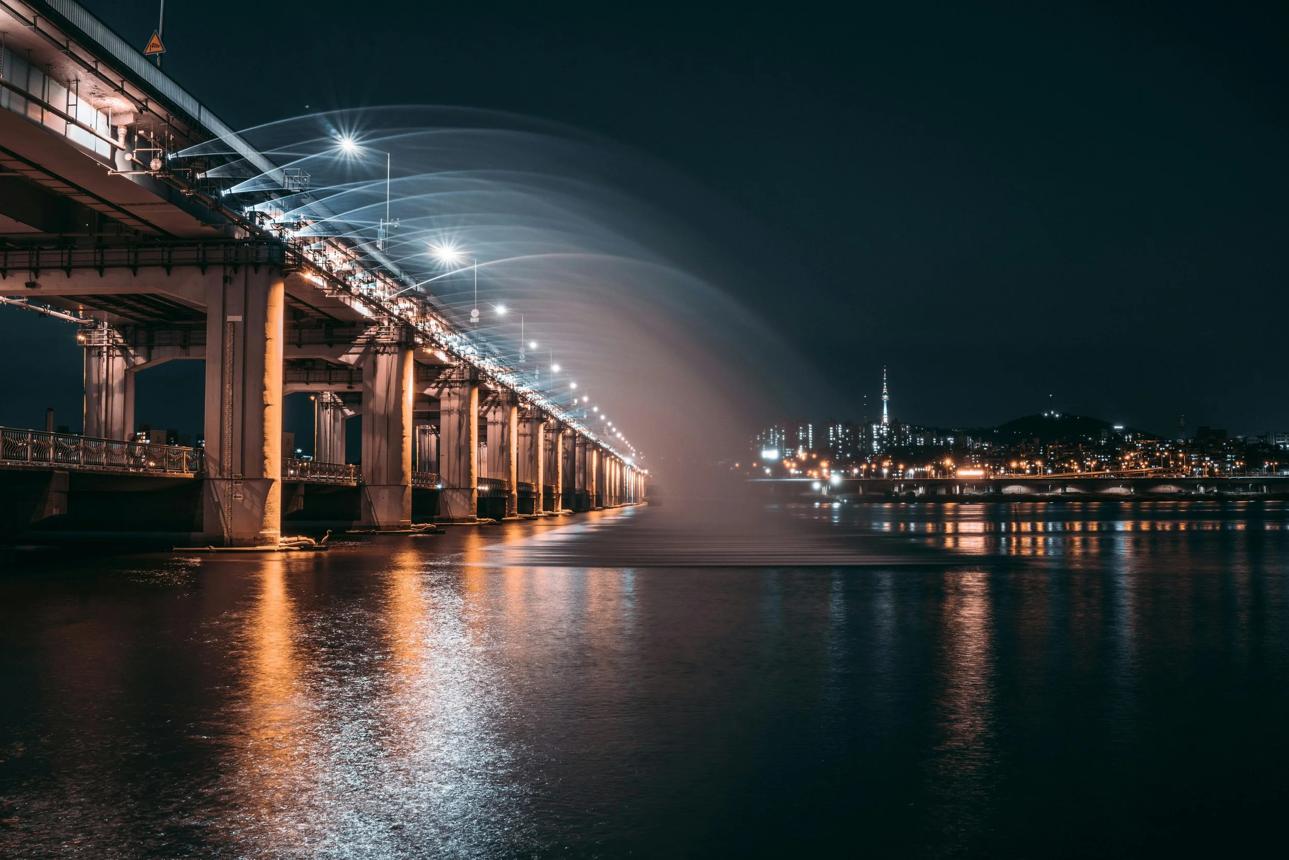
IDEA 8 — HAN RIVER NIGHT
CLEAN · COOL · MODERN
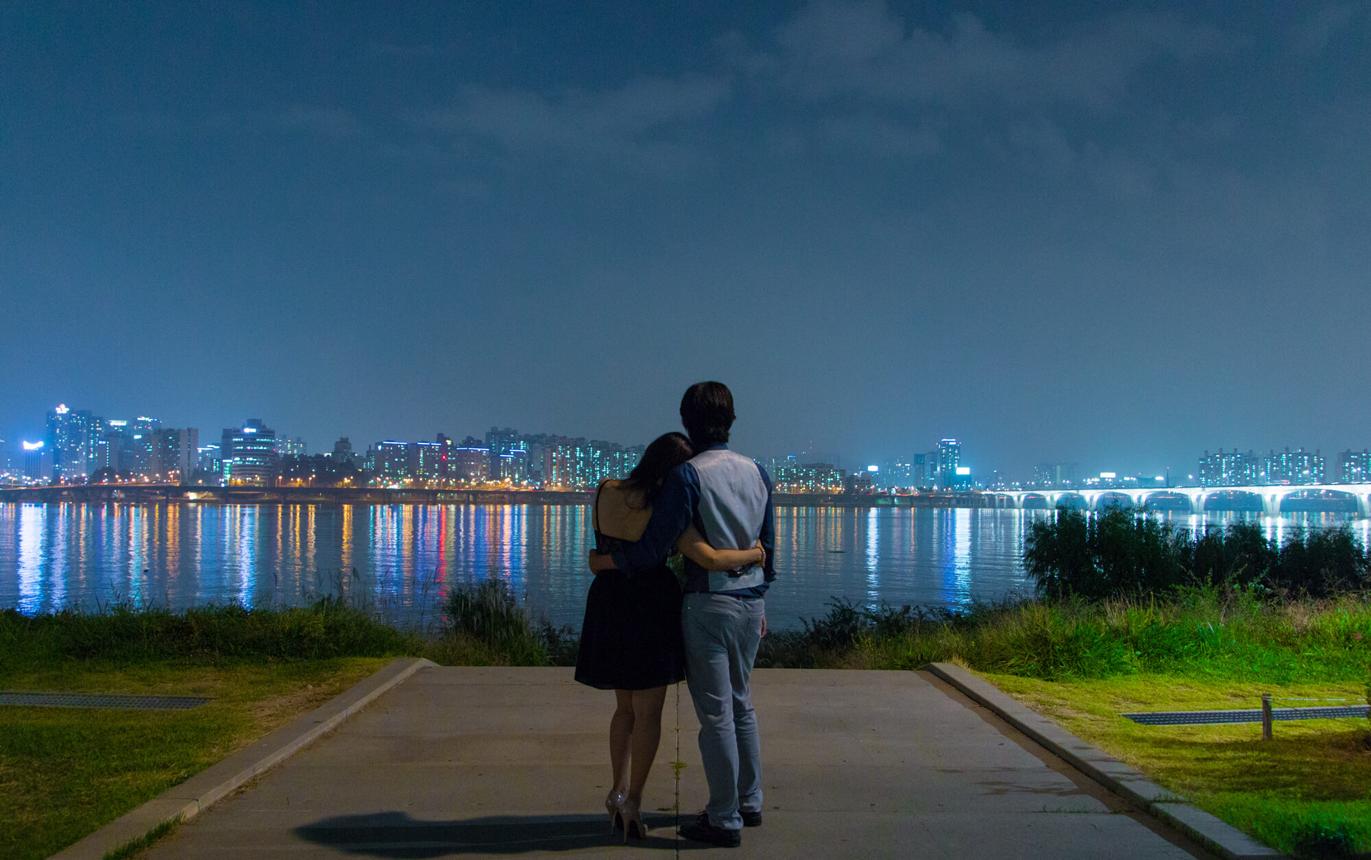
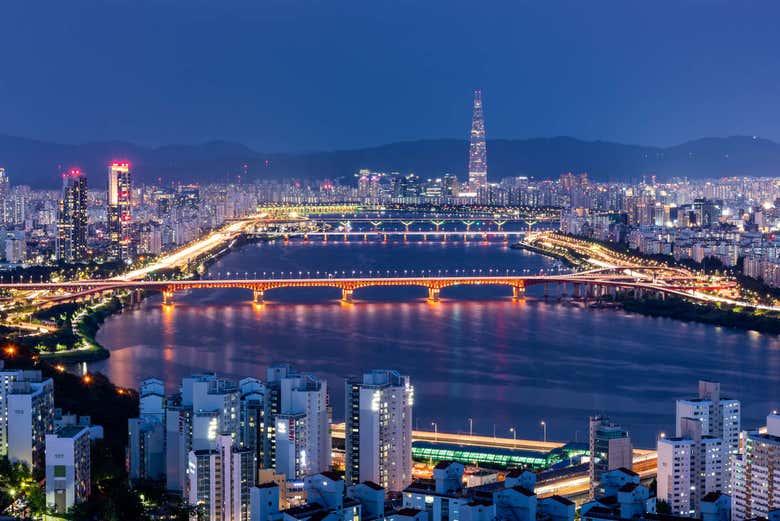
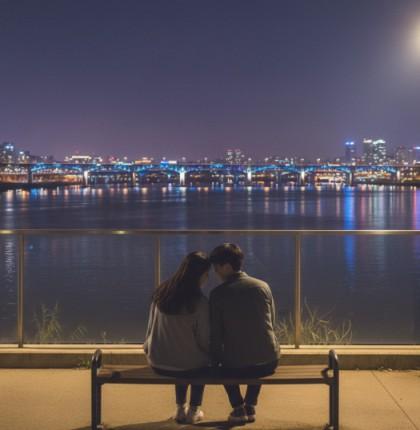
Not every Korean-inspired perfume needs to feel traditional.
Think:
Seoul skyline.
River breeze.
Bridges illuminated at night.
Convenience-store picnic.
Friends sitting beside the river.
For this fragrance, you might explore:
- Fresh
- Clean
- Cool
and slightly musky or woody directions.
MOOD
MODERN SEOUL.
NAME IT:
HANGANG 11:00 PM
IDEA 9 — SPRING IN SEOUL
FLORAL · LIGHT · FRESH
Cherry blossoms are an obvious inspiration.
But don't automatically make:
“CHERRY BLOSSOM PERFUME.”
Instead, think about the whole spring atmosphere:
- Flowers
- Fresh Air
- Soft Green
- Sunlight
and warmer days returning.
The fragrance can be:
LIGHT + FLORAL + FRESH
without becoming overly sweet.
IDEA 10 — AUTUMN IN KOREA
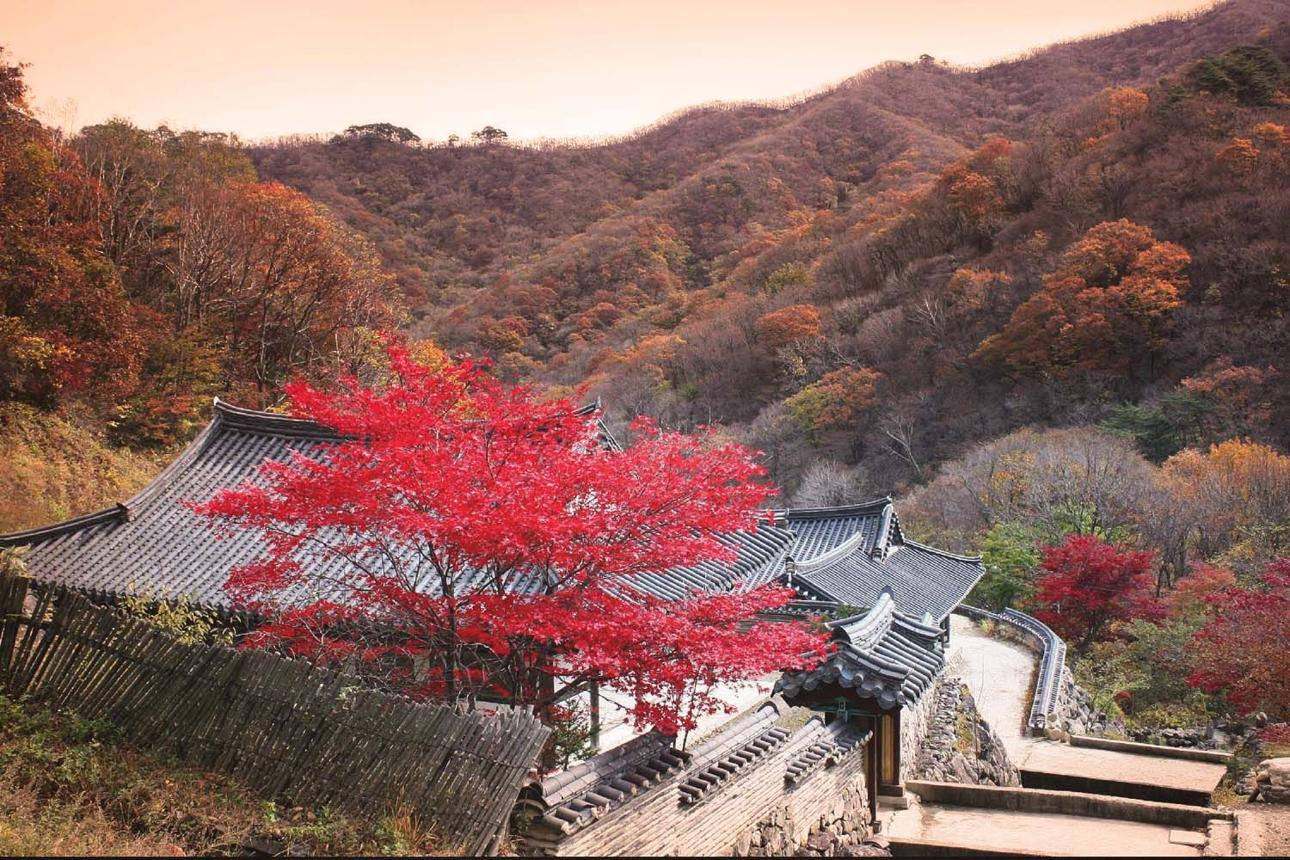
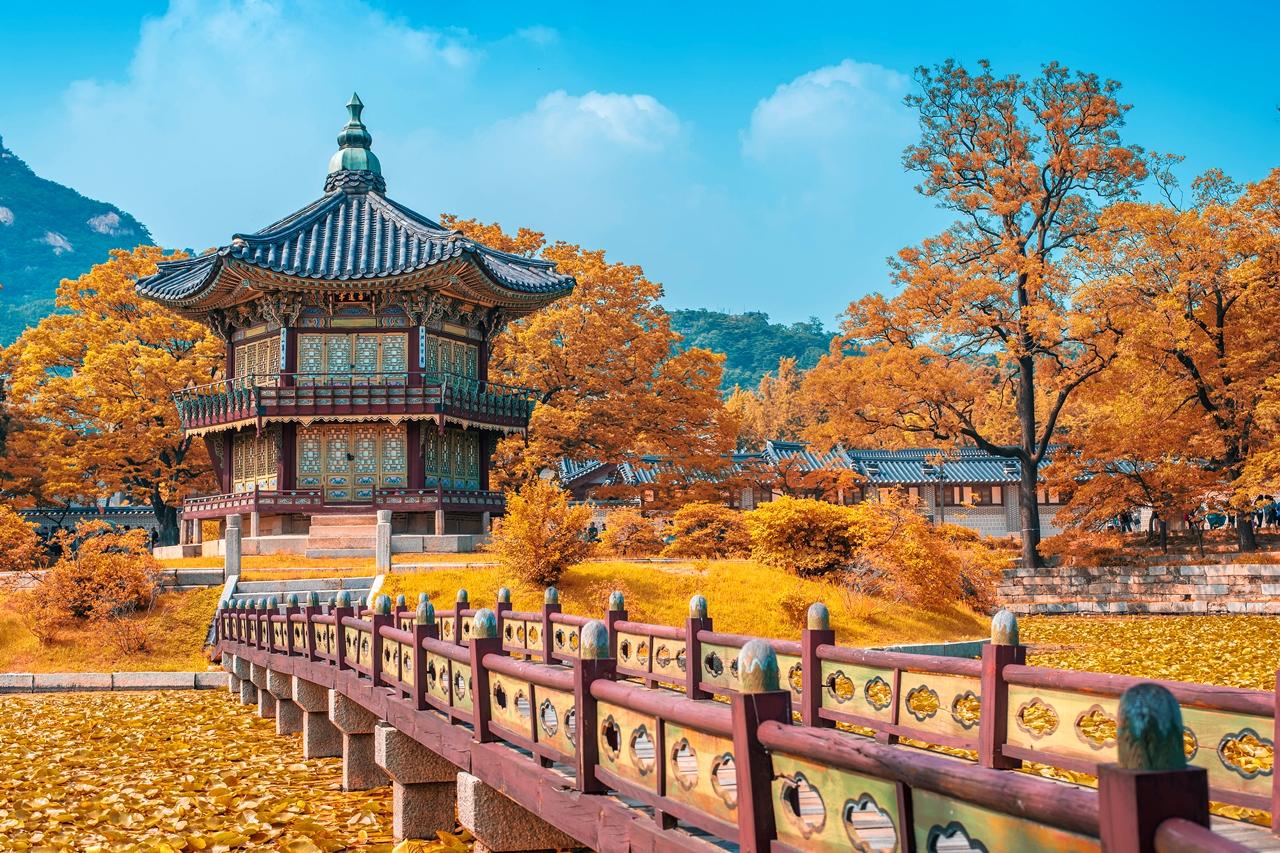
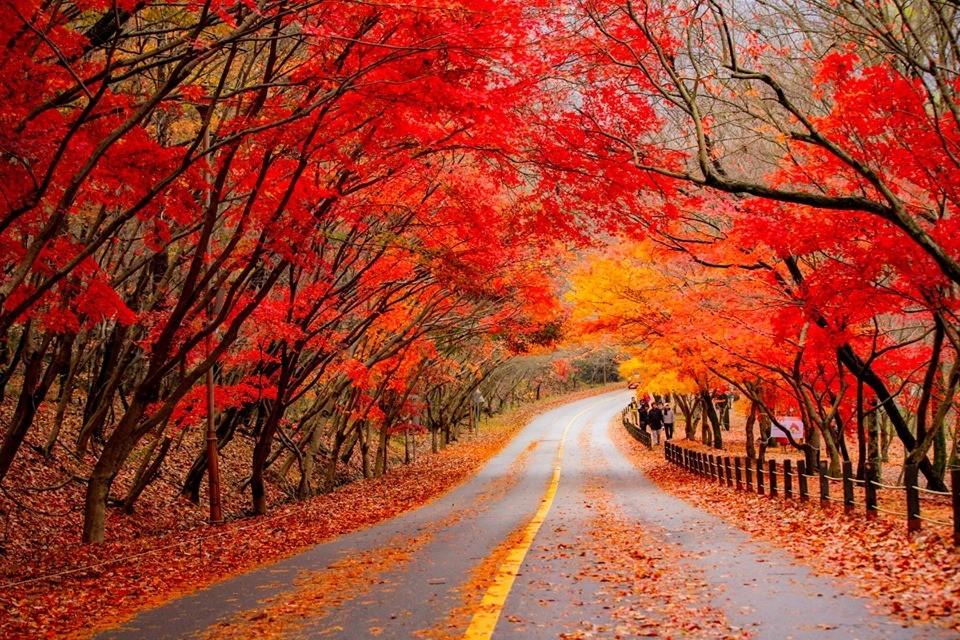
WOODY · WARM · DEEPER
Korean autumn gives you:
- Red Leaves
- Mountain Trails
- Cool Air
- Wood
and warmer seasonal foods and cafés.
A fragrance inspired by this season might move toward:
WOOD
WARM SPICE
SOFT MUSK
or deeper aromatic directions.
NAME IT:
SEOUL OCTOBER.
Simple.
And very personal if that's when you visited.
WHAT ABOUT A K-POP-STYLE PERFUME?
You can.
But Avoid trying to create:
“A perfume that smells like my favorite idol.”
Instead ask:
WHAT MOOD DO YOU WANT?
CLEAN + MINIMAL
SWEET + PLAYFUL
DARK + WOODY
FRESH + SPORTY
FLORAL + ELEGANT
That's a direction a fragrance instructor can actually work with.
TURN YOUR TRIP INTO A PERFUME
Here's an easy way to do it.
Choose:
- 1
ONE PLACE
Seoul / Jeju / Bukchon / Hangang / a mountain
- 1
ONE MOMENT
Morning / Rain / Sunset / Night / Spring / Autumn
- 1
THREE FEELINGS
For example:
- Quiet
- Fresh
- Warm
- 1
ONE MAIN FRAGRANCE DIRECTION
Citrus / Floral / Green / Woody / Musky
- 1
LET THE INSTRUCTOR HELP BUILD IT.
EXAMPLE
Suppose you tell the instructor:
“My favorite memory was walking through Bukchon early in the morning. It was cool and quiet, and I loved the wooden hanok buildings.”
That's much more useful than:
- “I want perfume.”
- The fragrance direction could begin with:
SOFT WOOD
CLEAN / GREEN CHARACTER
SUBTLE MUSK
and then be adjusted according to what you actually enjoy smelling.
DON'T FORCE THE KOREAN THEME
This matters.
You came to Korea.
That doesn't mean your perfume must contain:
- Ginseng
- Pine
- Tea
- Incense
- and Jeju Tangerine
all at once.
If the fragrance you genuinely love is:
ROSE + MUSK
make rose + musk.
The perfume is supposed to remind you of your trip because:
YOU MADE IT HERE.
That's already enough.
MAKE A COUPLE MEMORY
For couples, choose:
ONE SHARED MEMORY.
For example:
SEOUL AFTER RAIN.
Then create two interpretations.
PERFUME A
Fresh + Green + Wood
PERFUME B
Fresh + Floral + Musk
Same memory.
Different person.
That's much more interesting than making identical perfumes.
MAKE A FAMILY TRAVEL SCENT
This also works surprisingly well for families.
Each person chooses:
THEIR FAVORITE MEMORY OF KOREA.
One chooses:
- Jeju
- Another:
- Seoul Night
- Another:
- Korean Forest
You go home with several different versions of the same family trip.
5 KOREA SCENT IDEAS
If a traveler has no idea where to start, give them these five:
MEMORY
FRAGRANCE DIRECTION
MOOD
- Bukchon Morning
- Woody + Soft + Clean
- Traditional & Calm
- Seoul After Rain
- Green + Fresh + Woody
- Cool & Urban
- Jeju Wind
- Citrus + Green + Fresh
- Natural & Bright
- Temple Morning
- Wood + Herbal + Incense-like
- Quiet & Grounded
- Han River Night
- Clean + Cool + Musk
- Modern & Relaxed
These aren't perfume formulas.
THEY'RE STARTING POINTS.
Your actual formula should be built with the instructor using the materials available at that workshop.
TAKE A PHOTO BEFORE YOU LEAVE
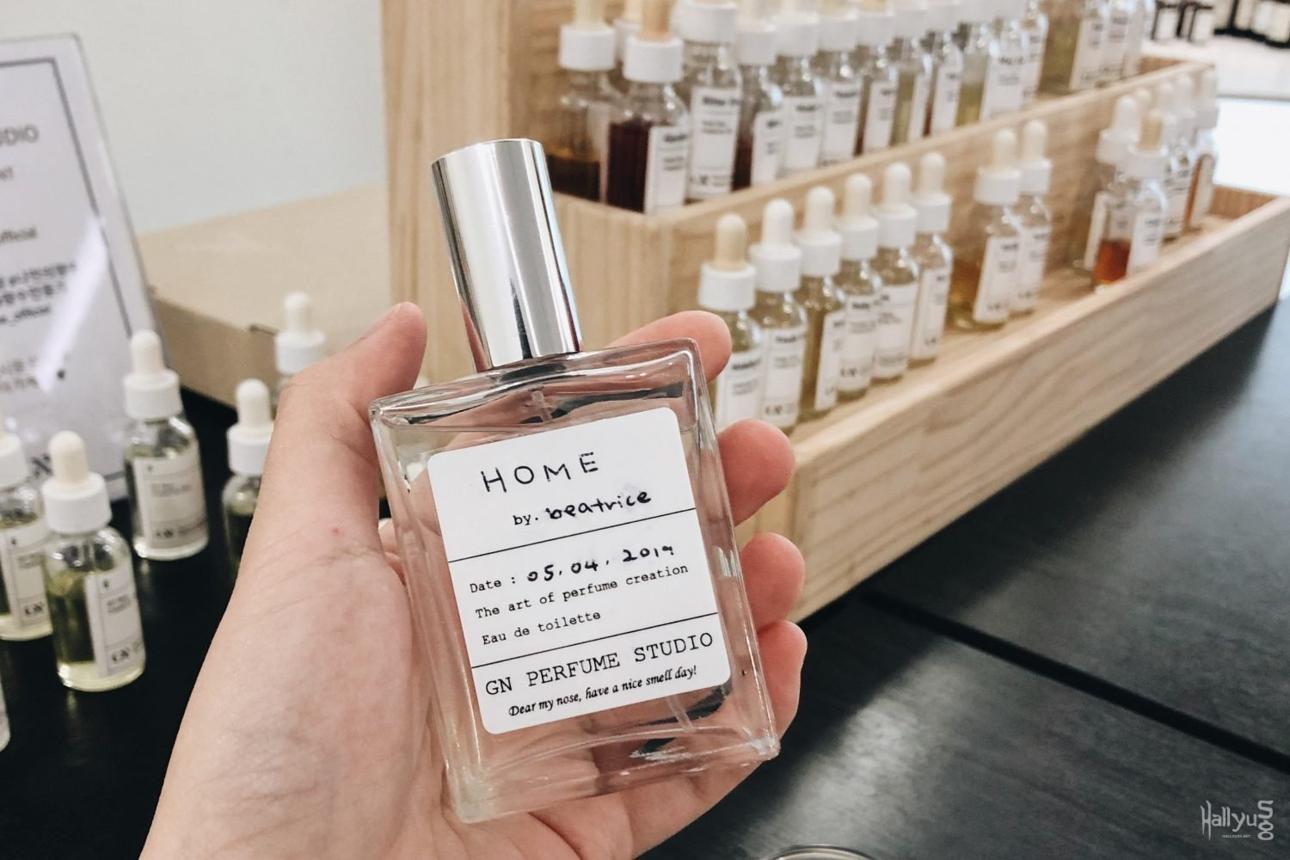
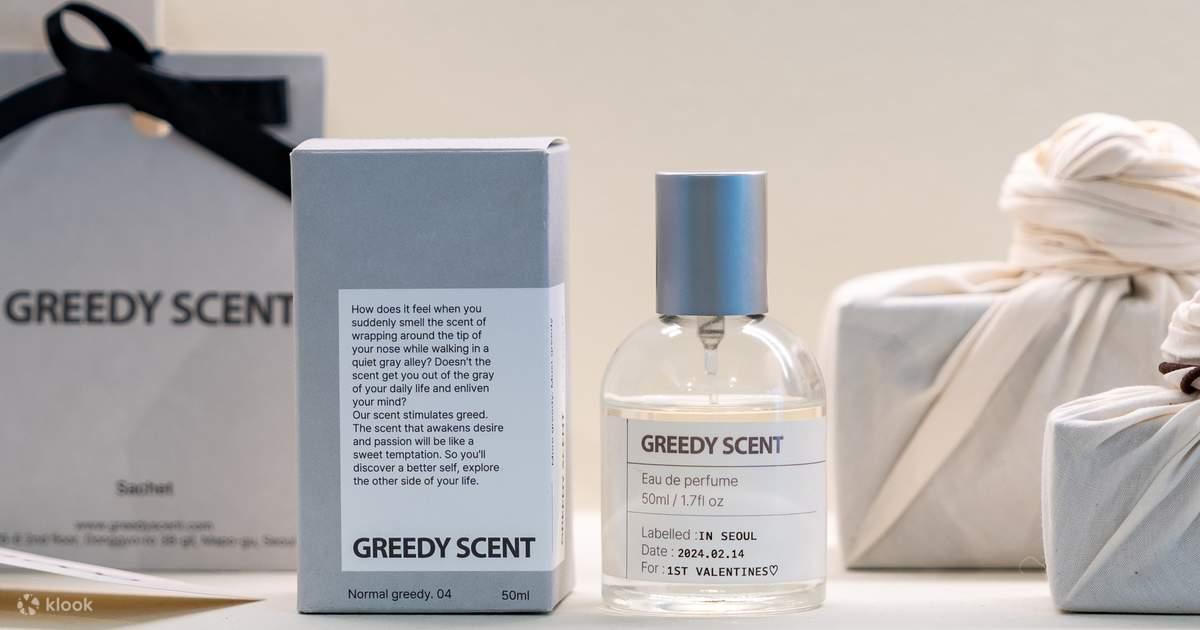
Before leaving the studio:
Take one photo of:
YOUR FINISHED PERFUME
with something that identifies the trip.
Maybe:
- A Bukchon Street
- A Seoul Café
- Your Subway Card
- A Han River View
- or simply:
SEOUL IN THE BACKGROUND.
Months later, you'll remember exactly where the bottle came from.
TRAVEL TIP
The best souvenir isn't always something traditionally Korean.
Sometimes it's something that could only have been created because:
YOU WERE IN KOREA AT THAT MOMENT.
Your perfume doesn't need to smell like Korea to everyone else.
IT ONLY NEEDS TO SMELL LIKE KOREA TO YOU.
BEFORE YOU BOOK + PLAN YOUR PERFUME DAY IN SEOUL
- Price
- ,
- Language
- ,
- Reservation
- s, Flying with Perfume & the Best Seoul Routes
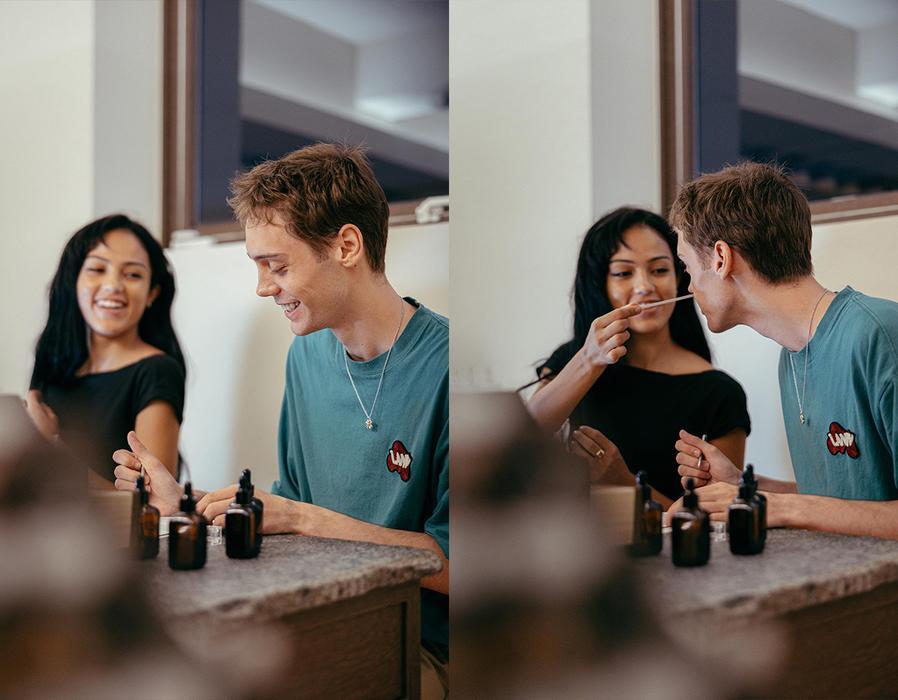
A perfume-making workshop is one of the easiest experiences to fit into a Seoul itinerary.
You don't need special skills.
You don't need an entire day.
And unlike many travel activities:
YOU TAKE THE EXPERIENCE HOME WITH YOU.
But before booking, choose the workshop based on the kind of Seoul experience you want—not simply the cheapest price.
WHICH WORKSHOP SHOULD YOU CHOOSE?
Keep the choice simple.
MUHWAWON — BUKCHON
BEST FOR:
A KOREAN-THEMED EXPERIENCE
Choose this if you want your fragrance experience connected to Korean culture and the atmosphere of traditional Seoul.
The current foreign-visitor program uses Korean-inspired fragrance ideas and is conducted in English.
CURRENT PRICE
FROM ₩69,000
depending on the selected program.
AREA
BUKCHON / ANGUK
COMBINE WITH:
- Bukchon Hanok Village
- Changdeokgung
- Insadong
- Ikseon-dong
VERDICT
BEST OVERALL EXPERIENCE FOR INTERNATIONAL VISITORS.
PARFUM9 — HONGDAE
BEST FOR:
EASY + AFFORDABLE + CONVENIENT
Choose this if you want a straightforward custom-perfume experience during a Hongdae day.
The currently listed workshop is approximately:
60 MINUTES
and includes:
50 mL CUSTOM PERFUME.
Current listed price:
- ₩39,000
- Foreign-language support currently includes:
- English
- Chinese
- Japanese
AREA
HONGDAE
Approximately 250 m from:
Hongik University Station Exit 9
VERDICT
BEST VALUE / EASY FIRST-TIME OPTION.
QUICK COMPARISON
MUHWAWON
PARFUM9
- Best for
- Korean cultural experience
- Easy perfume-making
- Area
- Bukchon
- Hongdae
- Character
- Korean-inspired
- Personal signature scent
- Current price
- From ₩69,000
- ₩39,000
- Parfum9 bottle
- —
- 50 mL
- Language advantage
- English visitor program
- EN / CN / JP listed
- Combine with
- Heritage & Insadong
- Hongdae & Yeonnam
- Recommended
- ⭐ Best experience
- ⭐ Best value
RESERVE BEFORE YOU GO
ADVANCE RESERVATION IS RECOMMENDED.
This is especially important if:
- You need English
- You're visiting as a couple/group
- You have a fixed itinerary
or you're booking a popular weekend time.
Don't travel across Seoul assuming an English-language workshop will be available as a walk-in.
HOW MUCH TIME SHOULD YOU ALLOW?
Even if your booked class says:
60 MINUTES
don't schedule another reservation exactly 60 minutes later.
Allow time for:
- Finding the studio
- Check-in
- Scent selection
- Blending
- Questions
- Packaging
and photos.
TRAVEL TIP
For a typical workshop:
KEEP ABOUT 2 HOURS FREE.
Then you don't need to rush the most enjoyable part—adjusting your fragrance.
WHAT SHOULD YOU WEAR?
Nothing special.
Regular travel clothes are fine.
But perfume is all about smell, so avoid arriving covered in:
STRONG PERFUME.
If possible, don't apply a powerful fragrance immediately before the class.
It can make it harder to evaluate the materials you're testing.
DON'T OVERLOAD YOUR NOSE BEFOREHAND
On the way to your workshop:
DON'T TEST 25 PERFUMES AT A DEPARTMENT STORE.
Your sense of smell can become fatigued.
Save your nose for the actual experience.
SOLO TRAVELER?
ABSOLUTELY.
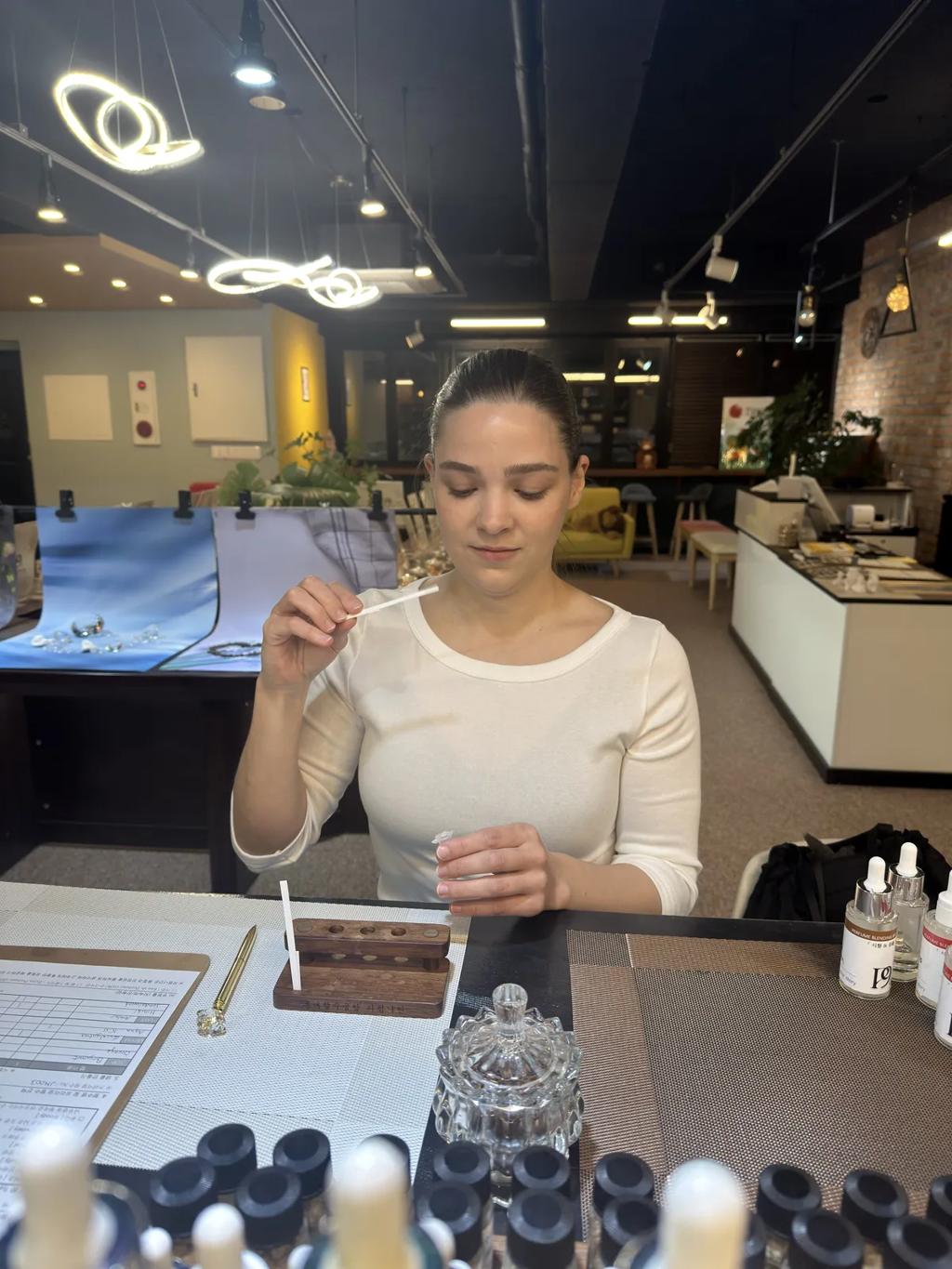
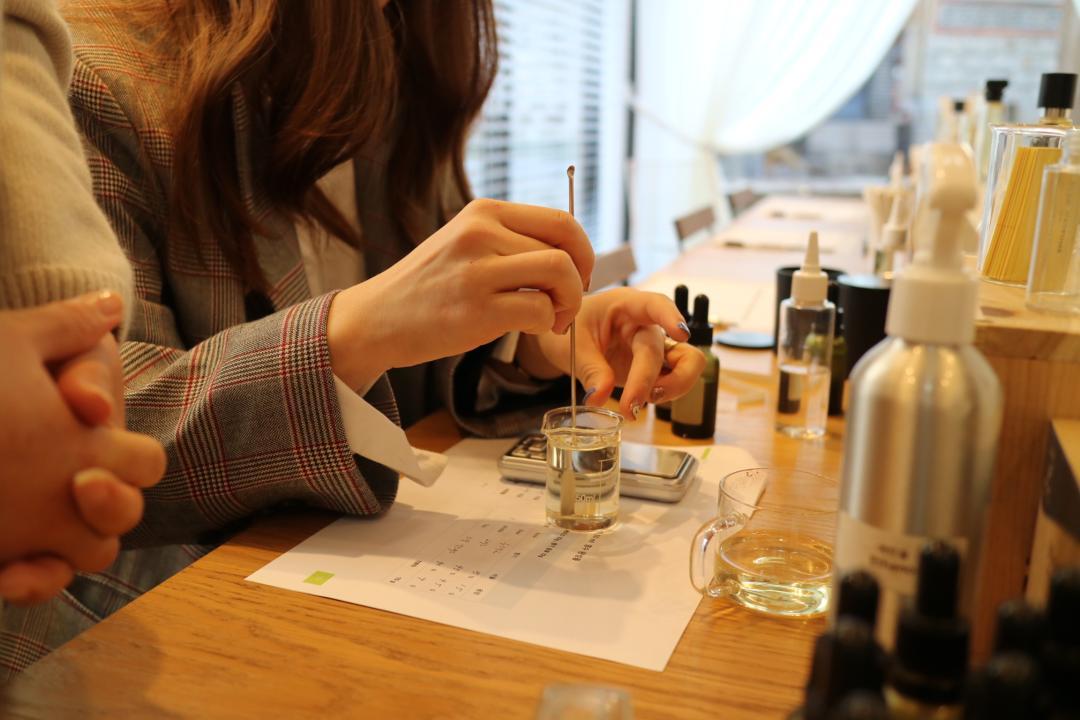
This is actually a very good solo activity.
Unlike some experiences that feel designed around groups, perfume-making naturally focuses on:
YOUR OWN PREFERENCES.
You aren't waiting for someone else to make the activity interesting.
COUPLES?
EVEN BETTER.
You have several options.
OPTION A
Make completely different perfumes.
OPTION B
Choose one shared Seoul memory and make two interpretations.
OPTION C
Create scents with one shared note connecting both perfumes.
Then instead of buying:
MATCHING SOUVENIRS,
you create:
MATCHING MEMORIES.
CAN CHILDREN JOIN?
This varies by studio and program.
Do not assume every perfume-making workshop has the same minimum age or guardian rules.
If you're traveling as a family:
CHECK THE AGE POLICY BEFORE RESERVING.
Also remember that fragrance materials can be irritating or unsuitable for some participants, so follow the studio's safety instructions.
CAN YOU TAKE THE PERFUME ON A PLANE?
Usually, the important issue is the normal aviation rule for liquids.
For international air travel, perfume is treated as a liquid.
CARRY-ON BAGGAGE
For most international security systems, individual liquid containers in cabin baggage generally must not exceed:
100 mL.
That's one reason a 50 mL workshop bottle is a convenient travel size.
But airport and airline requirements can differ.
ALWAYS CHECK YOUR DEPARTURE AIRPORT AND AIRLINE'S CURRENT RULES.
CHECKED BAGGAGE
Larger toiletry/perfume containers may be possible in checked baggage subject to aviation, airline and dangerous-goods restrictions.
For a handmade perfume:
CLOSE IT SECURELY.
KEEP IT IN ITS ORIGINAL PACKAGING IF POSSIBLE.
PROTECT THE GLASS BOTTLE.
PLACE IT IN A SEALED BAG.
Don't simply throw a glass perfume bottle between two shirts and hope for the best.
IMPORTANT — PERFUME CONTAINS ALCOHOL
Perfume isn't treated exactly like a bottle of water.
It typically contains alcohol and therefore can fall under aviation rules for toiletry articles containing flammable liquids.
If you're carrying several bottles or unusually large quantities:
CHECK YOUR AIRLINE BEFORE FLYING.
For the ordinary single workshop-sized bottle, simply follow the applicable airport and airline instructions.
LET THE PERFUME REST IF INSTRUCTED
Your workshop may give you instructions about when to begin using the perfume.
Follow them.
Freshly blended fragrance can develop after mixing.
If the instructor says:
“Let it rest before regular use,”
don't immediately spray half the bottle that evening.
ROUTE 1 — RECOMMENDED PICK
BUKCHON PERFUME DAY
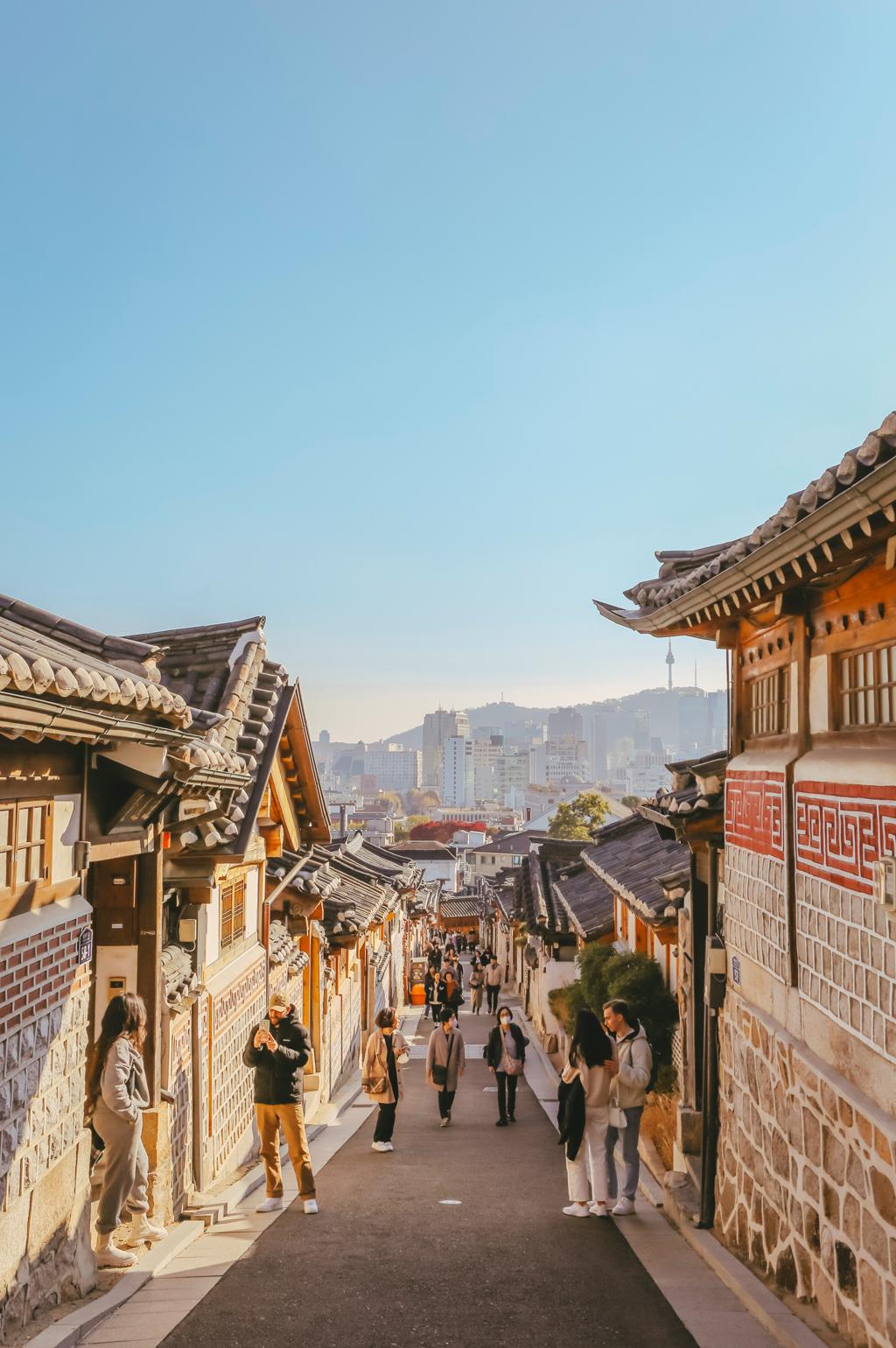
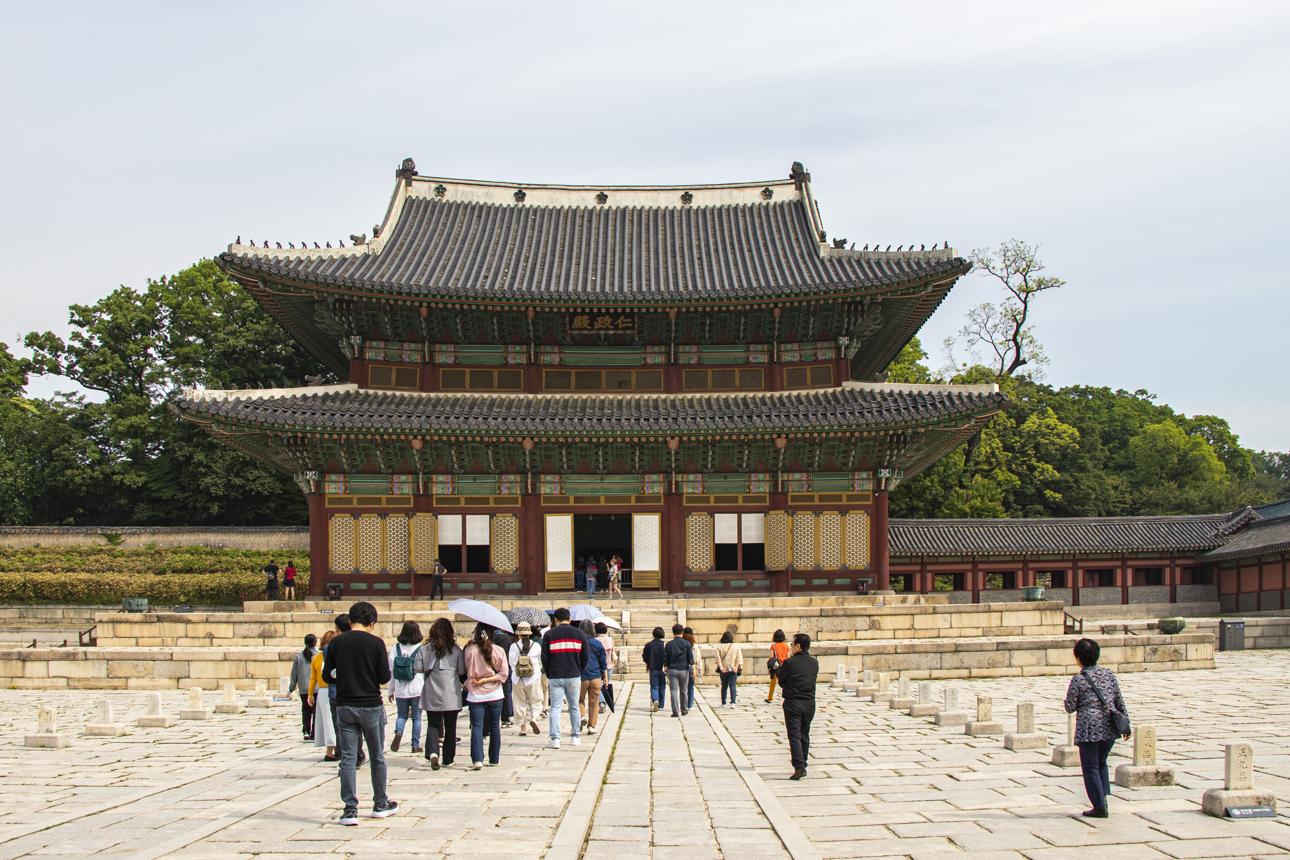
This is the recommended route for the guide.
MORNING
CHANGDEOKGUNG
Explore one of Seoul's major royal palaces.
BUKCHON
Walk through the hanok area.
Look at:
- Wood
- Stone
- Paper
- Courtyards
and the atmosphere around you.
This is useful inspiration for the perfume you're about to make.
LUNCH
ANGUK / BUKCHON
AFTERNOON
MUHWAWON PERFUME WORKSHOP
Now create your own Korean-inspired fragrance.
Instead of arriving with no idea what to make, you already spent the morning experiencing the neighborhood.
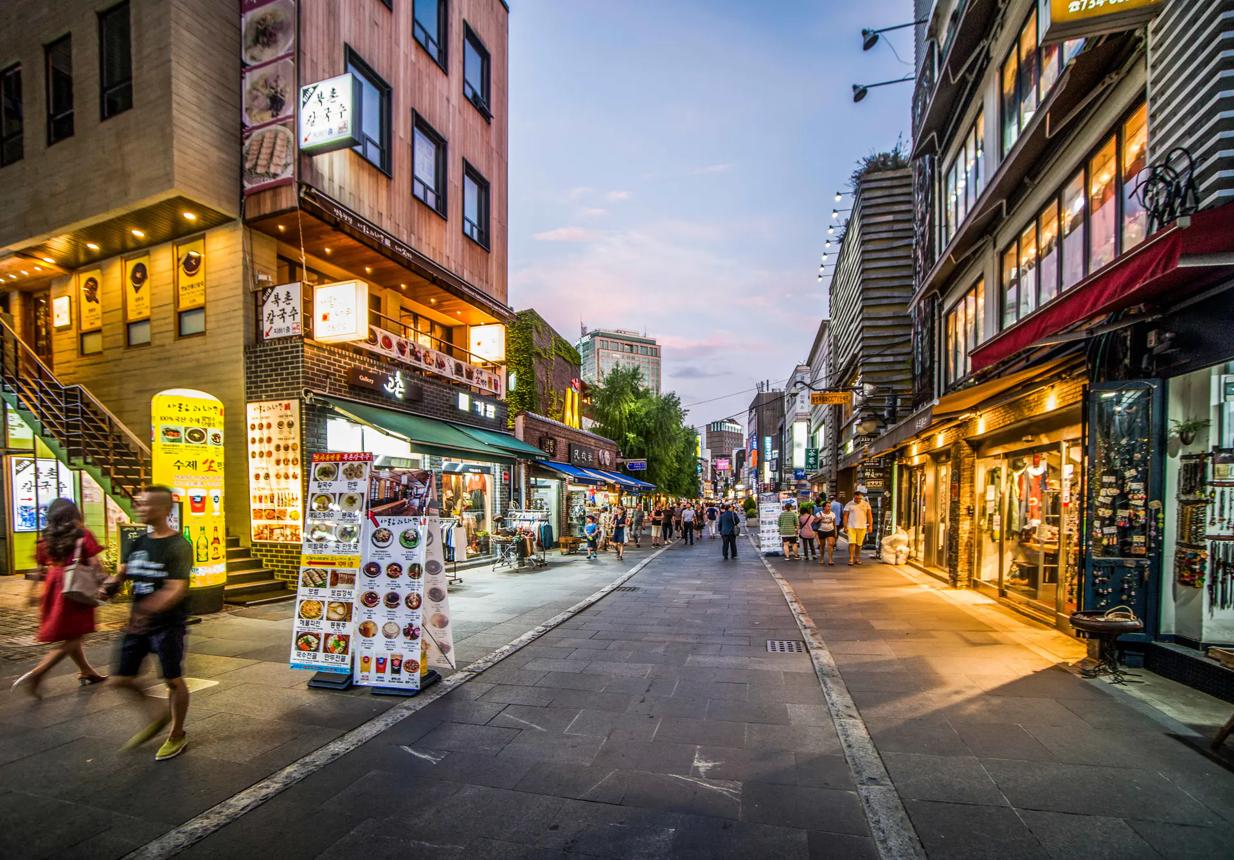
INSADONG
Traditional crafts, galleries, souvenirs and tea.
EVENING
IKSEON-DONG
Dinner or café.
WHY THIS ROUTE WORKS
It isn't:
Palace → random perfume class → shopping.
The whole day connects.
ARCHITECTURE
KOREAN HERITAGE
SCENT
CRAFT
FOOD & TEA
The whole route connects naturally as one Seoul experience.
ROUTE 2 — HONGDAE PERFUME DAY
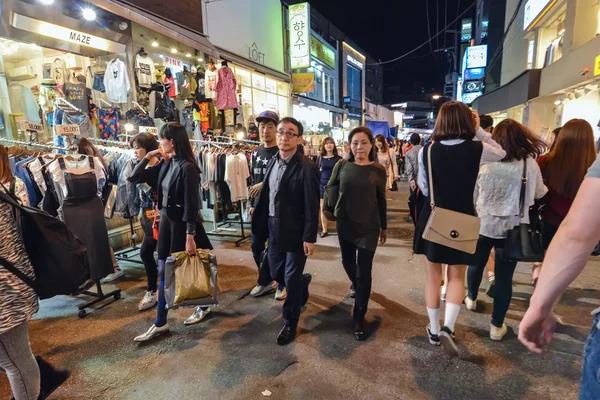
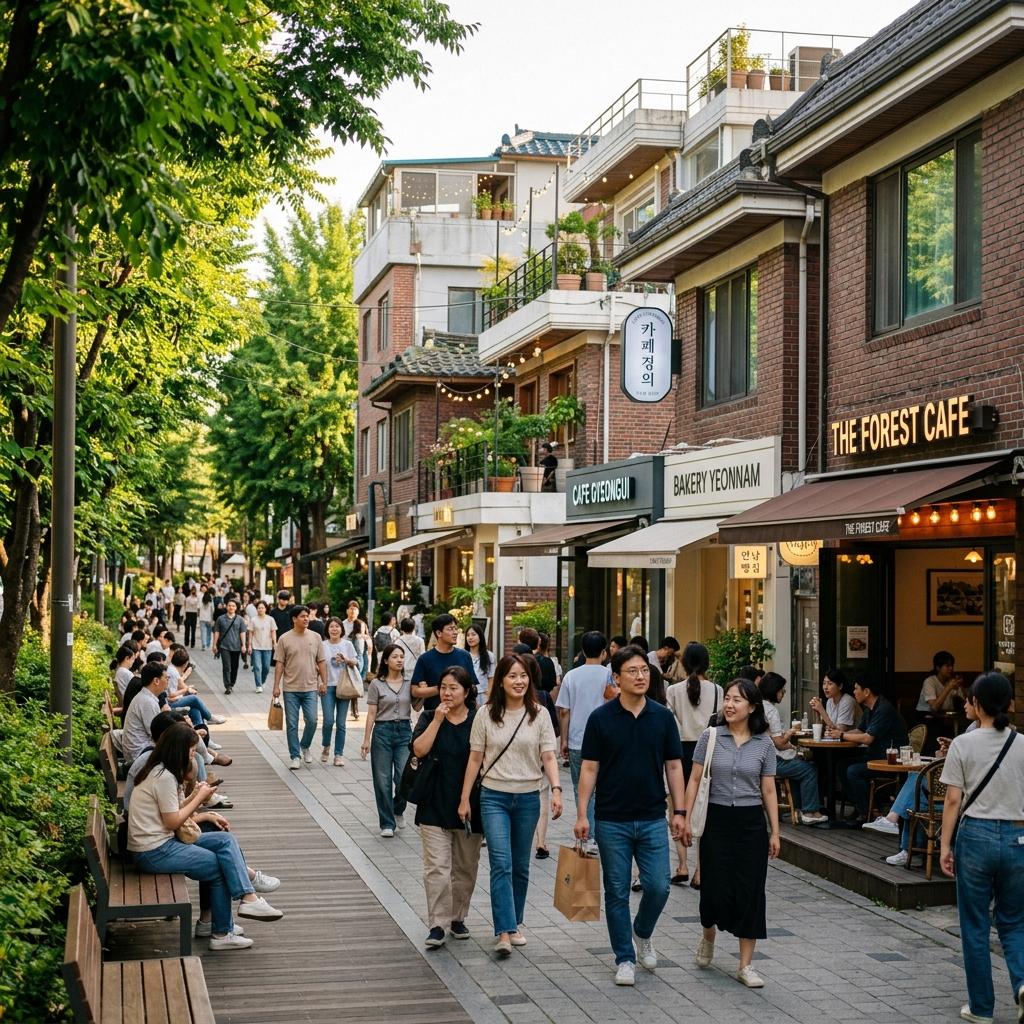
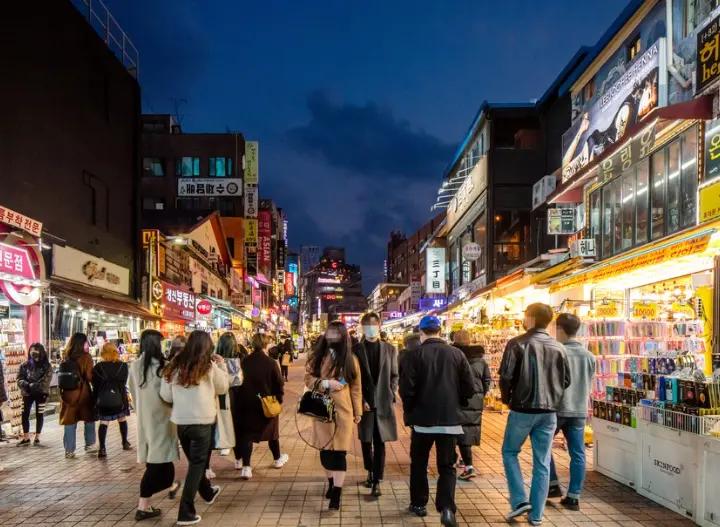
For younger travelers or anyone staying around Hongdae:
LATE MORNING
YEONNAM-DONG
Walk, café and brunch.
AFTERNOON
PARFUM9
Create your 50 mL signature fragrance.
HONGDAE SHOPPING
Fashion, beauty, accessories and character goods.
DINNER
HONGDAE
EVENING
Street atmosphere, cafés or nightlife.
This is much more:
MODERN SEOUL
than the Bukchon route.
BUKCHON OR HONGDAE?
CHOOSE BUKCHON IF:
You want:
- Korean Culture
- Hanok
- Traditional Seoul
- A more meaningful Korea-inspired perfume
and a slower cultural day.
CHOOSE HONGDAE IF:
You want:
- Convenience
- Lower current starting price
- Shopping
- Cafés
- Youth Culture
and a simple one-hour workshop.
WHAT SHOULD YOU MAKE?
If this is your first custom perfume:
DON'T TRY TO IMPRESS THE INSTRUCTOR.
Make something:
YOU WOULD ACTUALLY WEAR.
A technically interesting perfume that stays inside your suitcase for the next two years isn't a good souvenir.
BEFORE YOU LEAVE — CHECKLIST
- ☐ Finished perfume
- ☐ Bottle securely closed
- ☐ Your fragrance name
- ☐ Formula information, if provided
- ☐ Care/resting instructions
- ☐ Reorder information, if available
- ☐ Studio contact details
- And:
☐ TAKE A PHOTO.
FINAL CHOICE
FIRST VISIT TO KOREA
→ MUHWAWON + BUKCHON
It gives the experience a Korean context.
STAYING IN HONGDAE / WANT BETTER VALUE
→ PARFUM9
Simple, accessible and easy to fit into a normal Seoul day.
COUPLE
Either works—but make two connected fragrances rather than identical ones.
FINAL THOUGHT
You can buy Korean cosmetics.
You can buy clothes.
You can buy souvenirs.
But this experience gives you something slightly different.
You choose the memory.
You choose the mood.
You choose the scents.
You adjust the formula.
And when you leave Seoul:
THE SMELL OF YOUR TRIP LEAVES WITH YOU.