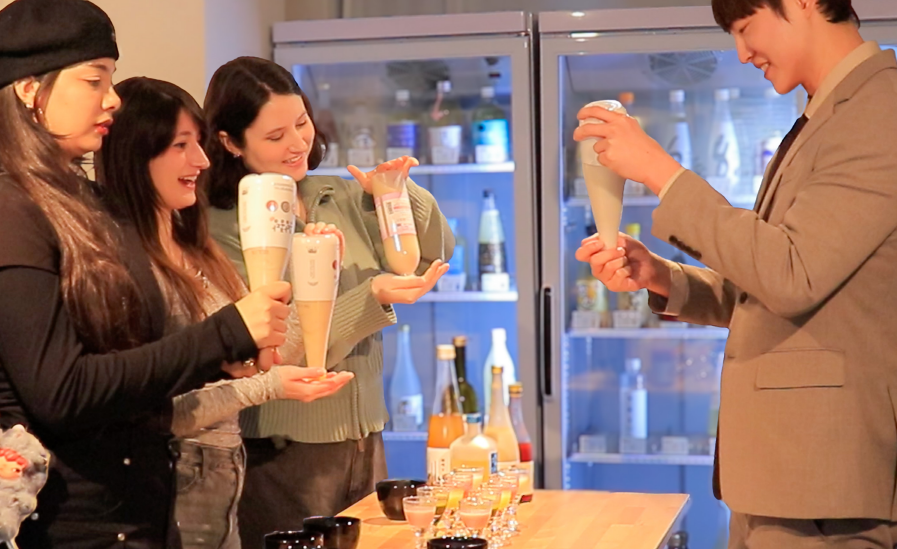
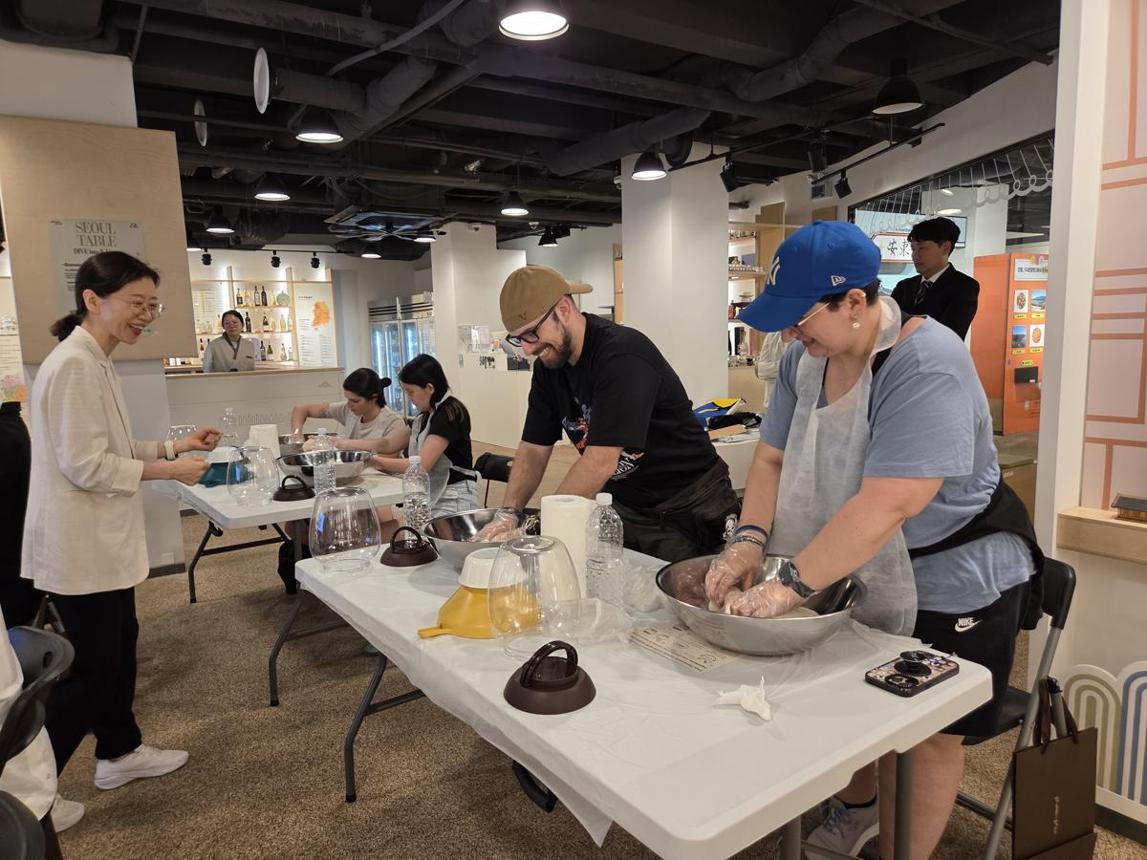
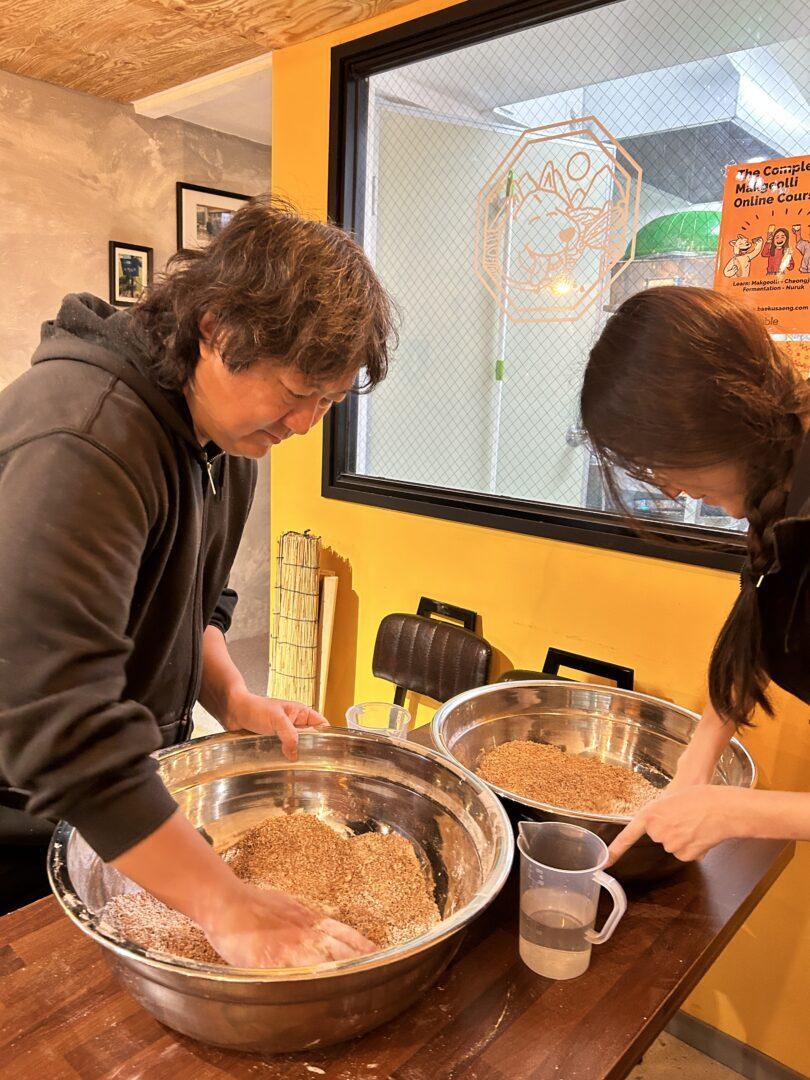
Makgeolli is one of Korea's oldest and most distinctive traditional alcoholic drinks.
You've probably seen it in Korean dramas — a cloudy white drink served from a bottle, bowl or kettle, often enjoyed with Korean pancakes.
But drinking makgeolli at a restaurant is only the beginning.
In Seoul, international visitors can go further:
MAKE IT YOURSELF.
Learn how rice and nuruk, Korea's traditional fermentation starter, are transformed into alcohol.
Discover different styles of Korean traditional liquor.
And taste makgeolli that can be completely different from the inexpensive bottles you may have seen at convenience stores.
This is not simply a drinking activity.
IT'S A KOREAN FOOD & FERMENTATION EXPERIENCE.
WHY TRY IT?
A good traditional liquor experience lets you understand something that is difficult to learn just by ordering a drink.
You can:
- See the ingredients
- Touch and mix the rice
- Learn what nuruk is
- Understand fermentation
- Discover different Korean liquors
- and, depending on the program:
MAKE YOUR OWN MAKGEOLLI.
For travelers interested in Korean food culture, this is one of the more unusual hands-on experiences available in Seoul.
WHAT IS MAKGEOLLI?
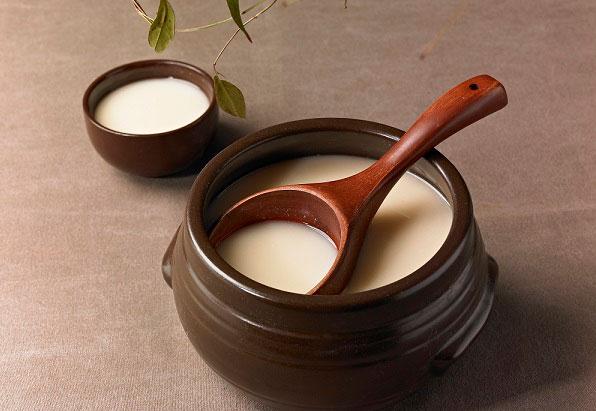
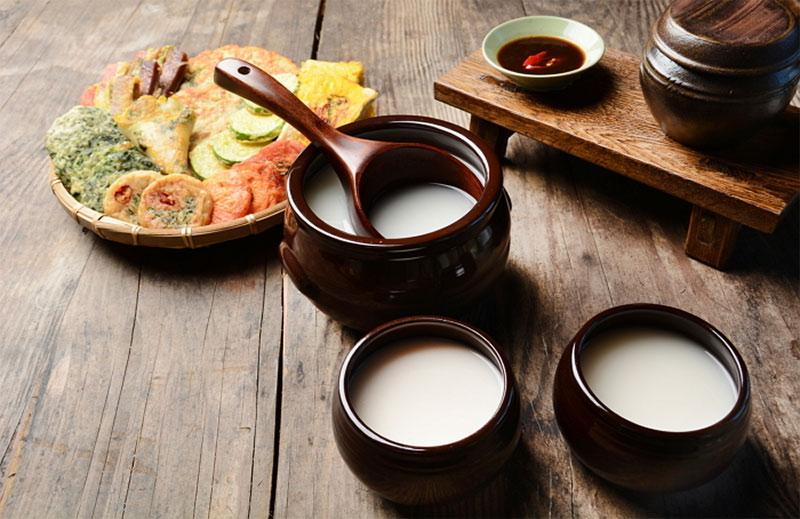
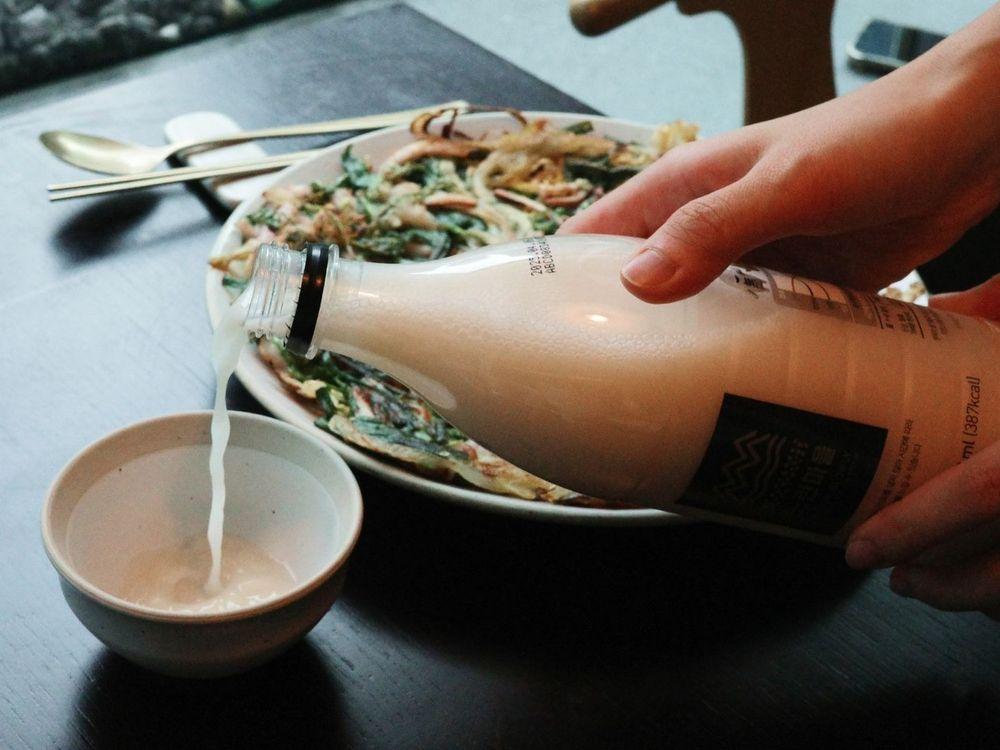
Makgeolli is a traditional Korean fermented alcoholic drink commonly made from:
RICE + NURUK + WATER
Its cloudy appearance is one of its most recognizable characteristics.
But don't expect every makgeolli to taste the same.
Depending on the ingredients and brewing method, it can be:
- Sweet
- Dry
- Tangy
- Creamy
- Light
- Rich
or naturally sparkling.
That's one reason tasting several varieties is much more interesting than trying only one supermarket bottle.
WHAT IS NURUK?
누룩 — NURUK
This is the Korean word worth remembering.
Nuruk is a traditional fermentation starter used in Korean alcohol making.
It contains microorganisms and enzymes that play an essential role in breaking down the grain's starch and enabling fermentation.
Simply put:
RICE
NURUK + FERMENTATION
KOREAN SOOL
You'll get to understand this much better when you actually see and handle the ingredients during a brewing class.
WHAT IS “SOOL”?
술 — SOOL / SUL
means alcoholic drink in Korean.
So makgeolli is Korean sool, but Korean sool isn't only makgeolli.
Traditional Korean alcoholic beverages include several styles:
MAKGEOLLI / TAKJU
Cloudy fermented rice liquor.
YAKJU / CHEONGJU
Clearer refined rice wines.
TRADITIONAL DISTILLED SOJU
Distilled Korean spirits.
REGIONAL & FRUIT LIQUORS
Traditional beverages made with local ingredients and regional methods.
A good tasting program introduces you to this broader world rather than treating all Korean alcohol as “soju.”
QUICK SUMMARY
- Experience
- Korean Traditional Liquor & Makgeolli
WHAT YOU CAN DO
- Makgeolli Brewing
- Traditional Liquor Tasting
- Learn About Nuruk
- Explore Korean Fermentation
- Discover Regional Korean Sool
- Best For
- Food Travelers · Couples · Solo Travelers · Korean Culture Fans · Fermentation Enthusiasts
TYPICAL TIME
ABOUT 2–3 HOURS
depending on the selected program.
- Language
- Traveler-oriented programs may be available in: · English / Korean · with additional languages offered by selected experiences.
RESERVATION
ADVANCE BOOKING RECOMMENDED
Some special foreign-tourist programs operate only on selected dates.
IMPORTANT
ALCOHOL EXPERIENCE — AGE RESTRICTIONS APPLY
Bring identification when required and check the individual program's current eligibility rules before booking.
WHERE SHOULD YOU EXPERIENCE IT?
For travelers, two clearly different choices are more useful than a long list of alcohol venues.
OPTION A
MAKE MAKGEOLLI
THE SOOL GALLERY — SEOUL
Best if you want to:
Learn + Make + Understand
OPTION B
TASTE MANY KINDS OF MAKGEOLLI
PREMIUM MAKGEOLLI TASTING — MYEONGDONG
Best if you want to:
Compare + Taste + Learn
They are different experiences.
One teaches you how Korean traditional alcohol is made.
The other teaches you how different Korean traditional liquors actually taste.
A. THE SOOL GALLERY
BEST FOR FIRST-TIME VISITORS
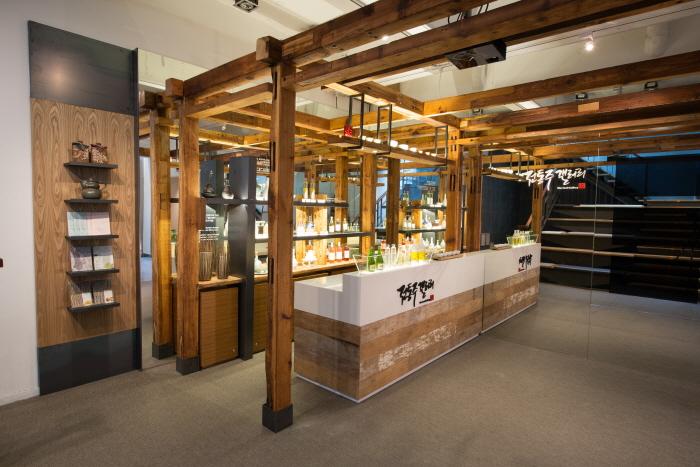
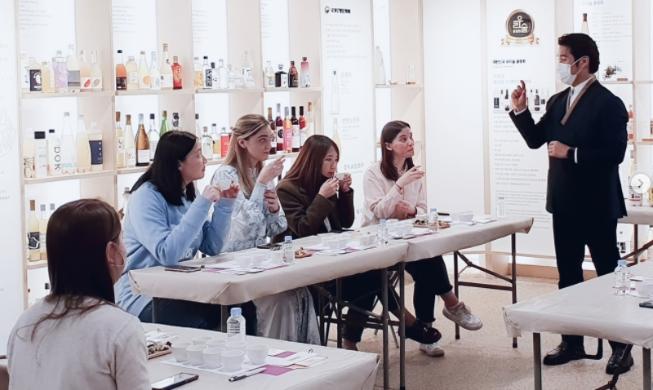
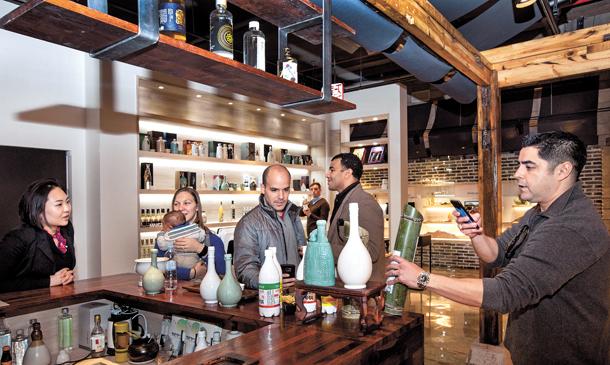
The Sool Gallery is a dedicated space for introducing Korean traditional alcoholic beverages.
For international visitors, the particularly interesting option is Seoul's special K-Liquor experience program.
The program combines:
TRADITIONAL LIQUOR GALLERY TOUR
About 30 minutes
HANDS-ON BREWING EXPERIENCE
About 90 minutes
TOTAL
ABOUT 2 HOURS
This is the recommended first experience for international visitors.
You're not simply sitting at a table drinking samples.
You learn what Korean traditional liquor is and then experience part of the brewing process yourself.
SPECIAL FOREIGN-TOURIST PROGRAM
The current Seoul visitor program is designed specifically for:
INTERNATIONAL VISITORS
PARTICIPANTS
Up to approximately:
16 PEOPLE
- Language
- English / Korean
CURRENT SPECIAL-PROGRAM PRICE
₩13,000
IMPORTANT
This price belongs to the special Seoul foreign-tourist program.
It should NOT be presented as the normal everyday price for every program at The Sool Gallery.
The special experience operates on:
SELECTED DATES
rather than as a daily walk-in class.
SPECIAL FOREIGN-TOURIST PROGRAM
ADVANCE RESERVATION REQUIRED
SELECTED DATES ONLY
That avoids misleading travelers.
LOCATION
THE SOOL GALLERY
- Hansik Space E:eum
- Address
- 1F, 18 Bukchon-ro, Jongno-gu, Seoul
SUBWAY
ANGUK STATION
Line 3
EXIT 2
Approximately:
2 MINUTES ON FOOT
GET DIRECTIONS
Anguk Station Exit 2 → The Sool Gallery
The location is excellent because you're already beside one of Seoul's best visitor areas.
B. PREMIUM MAKGEOLLI TASTING
BEST FOR TASTING MANY VARIETIES
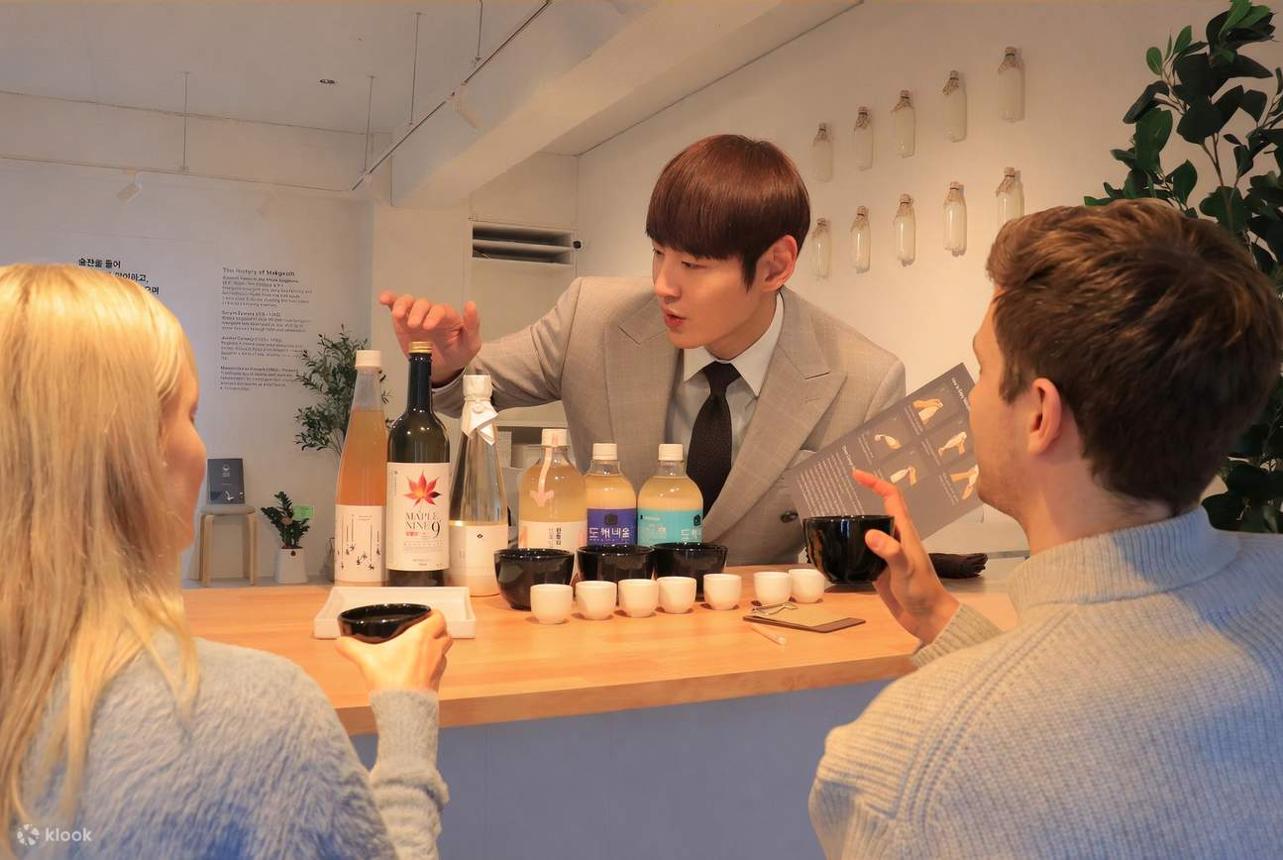
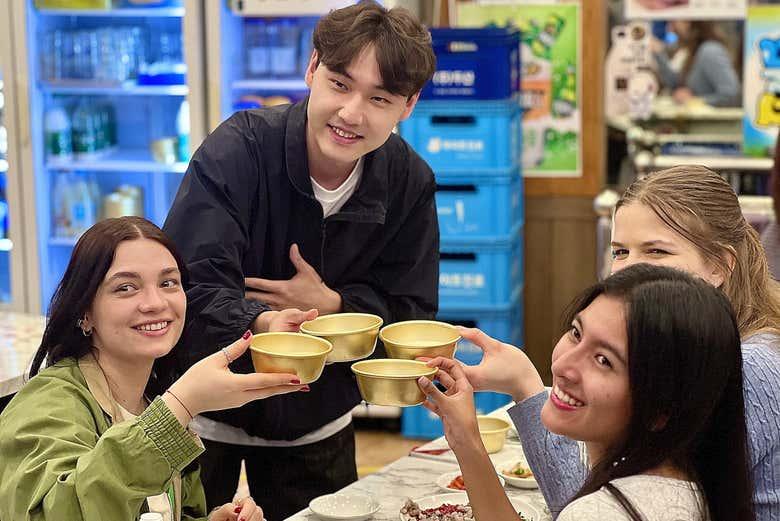
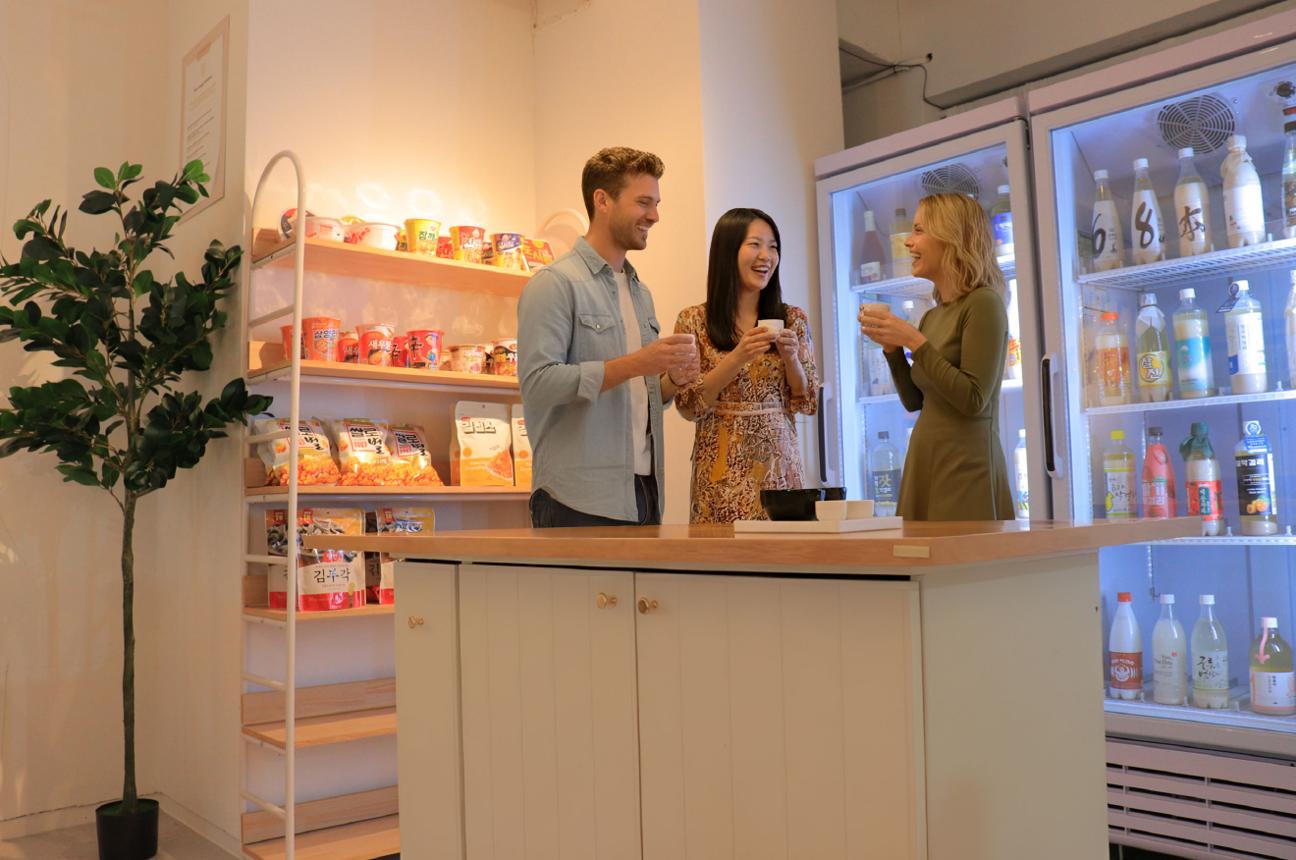
If you're more interested in tasting than brewing, choose a guided traditional-liquor experience instead.
A current Myeongdong visitor experience introduces travelers to:
30+ PREMIUM MAKGEOLLI
along with a wider selection of Korean traditional liquors.
Rather than drinking one bottle and deciding whether you “like makgeolli,” you can compare different:
- Aromas
- Sweetness
- Acidity
- Body
- Carbonation
and brewing styles.
EXPERIENCE TIME
Approximately:
2–3 HOURS
- Price
- Currently listed:
FROM ₩65,000
- Language
- Korean · English · Japanese · This is the stronger choice for someone who already likes Korean alcohol and wants to explore it in greater depth.
WHICH EXPERIENCE SHOULD YOU CHOOSE?
“I'VE NEVER TRIED KOREAN TRADITIONAL LIQUOR.”
→ THE SOOL GALLERY
“I WANT TO MAKE MAKGEOLLI.”
→ BREWING EXPERIENCE
“I WANT TO TRY LOTS OF DIFFERENT MAKGEOLLI.”
→ PREMIUM TASTING
“I'M MORE INTERESTED IN KOREAN CULTURE THAN DRINKING.”
→ GALLERY + BREWING EXPERIENCE
“I ALREADY LOVE MAKGEOLLI.”
→ PREMIUM GUIDED TASTING
FIRST-TIME PICK
THE SOOL GALLERY + MAKGEOLLI-MAKING EXPERIENCE
For a first-time visitor, making is more memorable than simply tasting.
You'll learn about:
- Rice
- Nuruk
- Fermentation
and Korean traditional liquor culture.
Then when you see makgeolli later at a Korean restaurant:
YOU'LL ACTUALLY KNOW WHAT'S INSIDE THE BOTTLE.
And because The Sool Gallery is near Anguk, you can easily combine the experience later with:
- Bukchon Hanok Village
- Changdeokgung Palace
- Insadong
and traditional Korean food.
HOW MAKGEOLLI IS ACTUALLY MADE
Rice, Nuruk, Water & Time — See How Korea's Cloudy Rice Wine Is Born
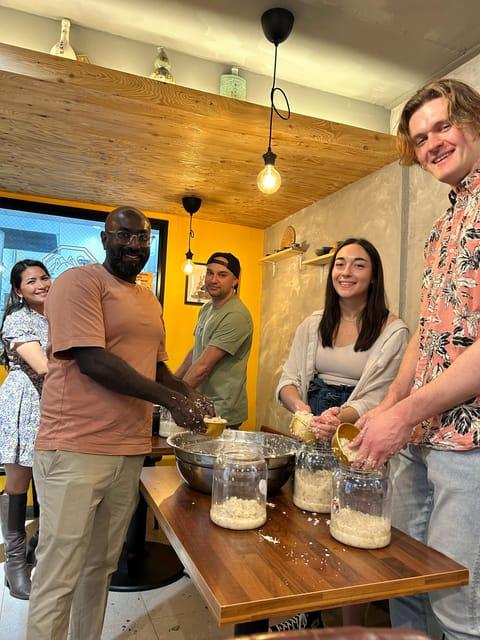
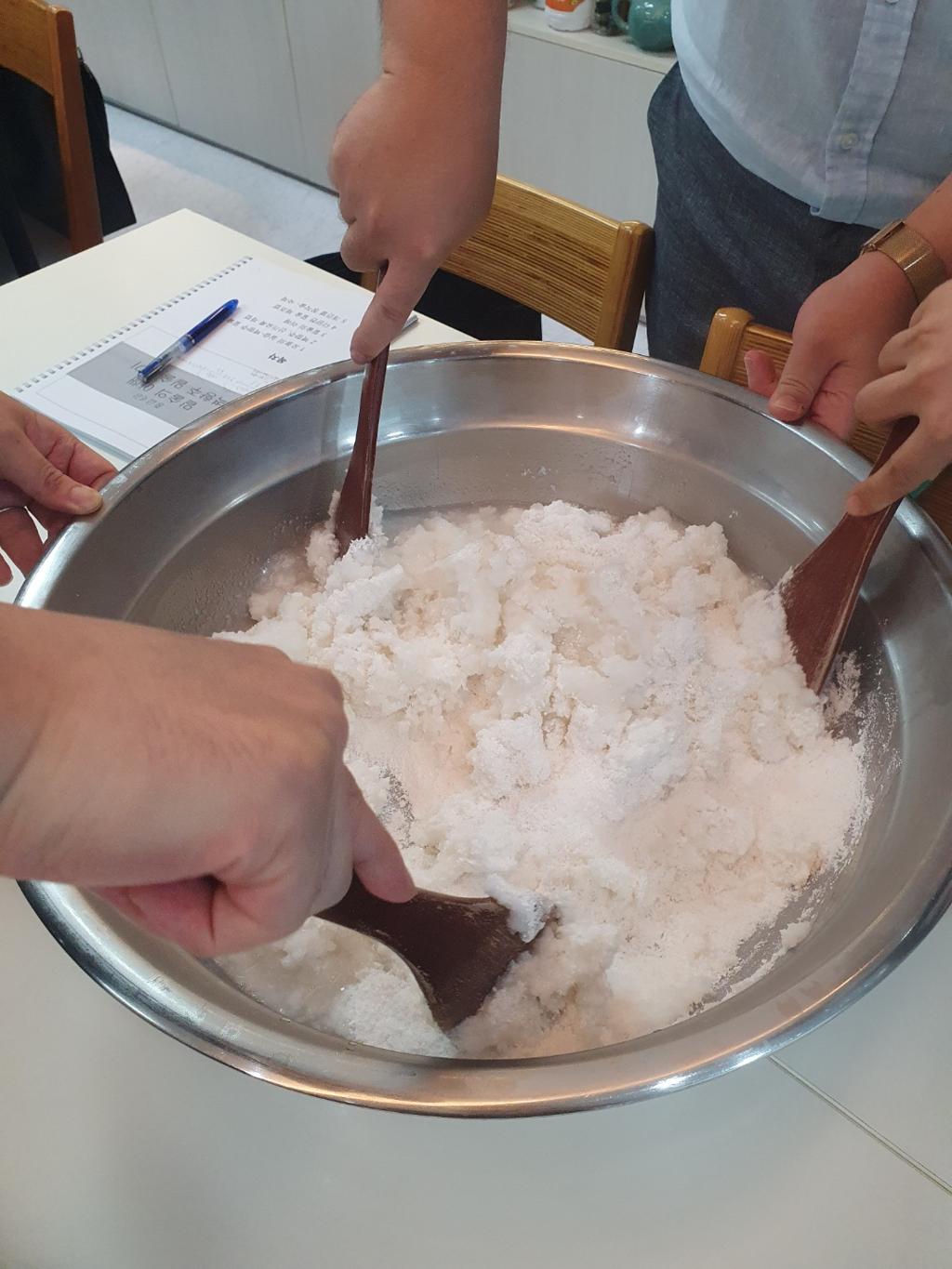
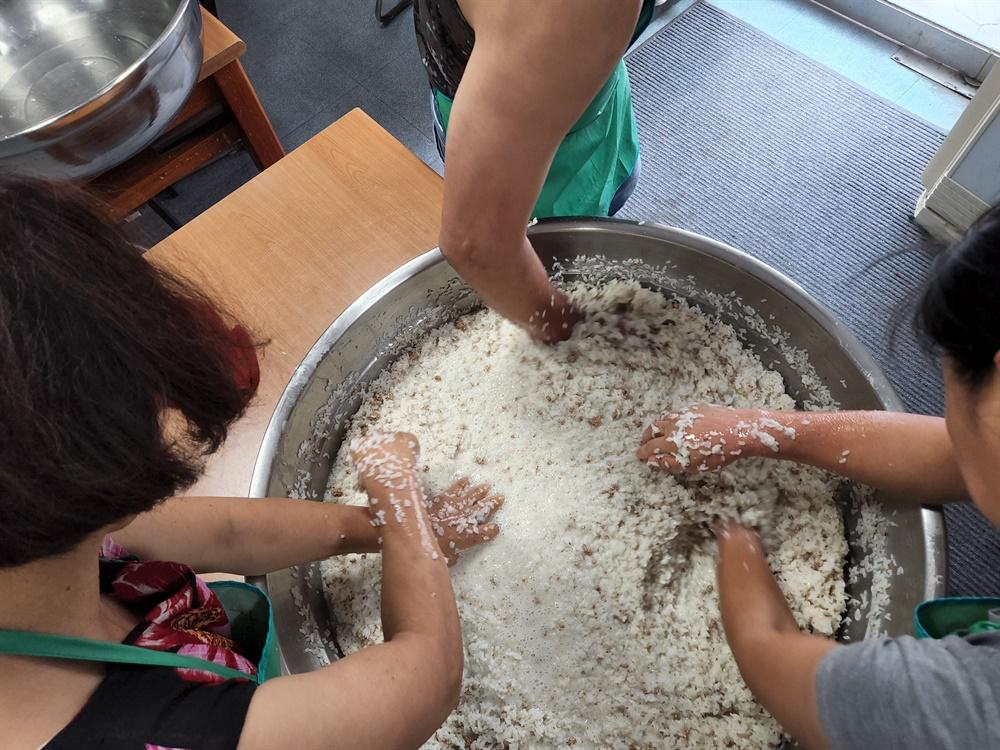
Makgeolli may look like a simple cloudy drink.
But making it is a fermentation process that transforms cooked grain into alcohol.
The basic idea is surprisingly easy to understand:
RICE + NURUK + WATER + FERMENTATION
MAKGEOLLI
VISITKOREA describes makgeolli as fermented liquor made by combining grain, fermentation starter and water, fermenting the mixture and then filtering it. Traditional fermentation commonly takes around one to two weeks, although the exact process varies by recipe and brewer.
- 1
STEP 1 — PREPARE THE RICE
EVERYTHING STARTS WITH GRAIN
Rice is one of the foundations of modern makgeolli.
The rice is washed and cooked before being mixed with the fermentation starter.
Different brewers can use different:
- Rice varieties
- Rice preparation
- Water
and recipes.
These choices help explain why two bottles of makgeolli can taste completely different.
- 1
STEP 2 — COOL THE COOKED RICE
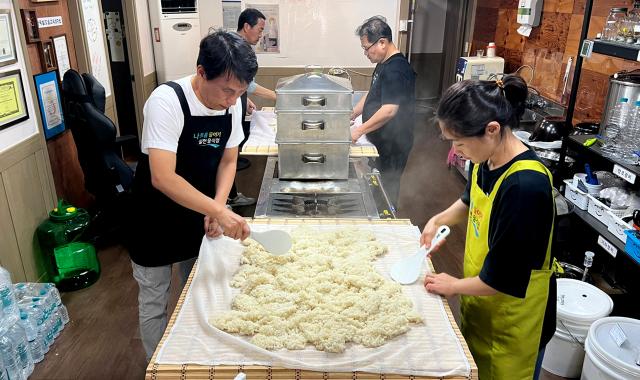
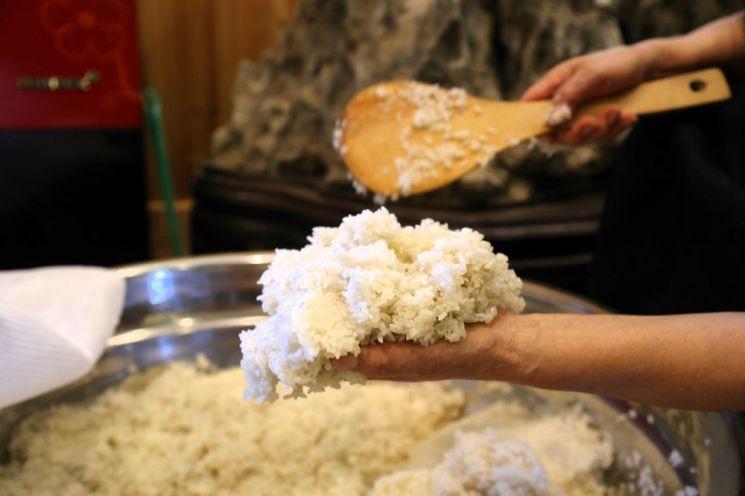
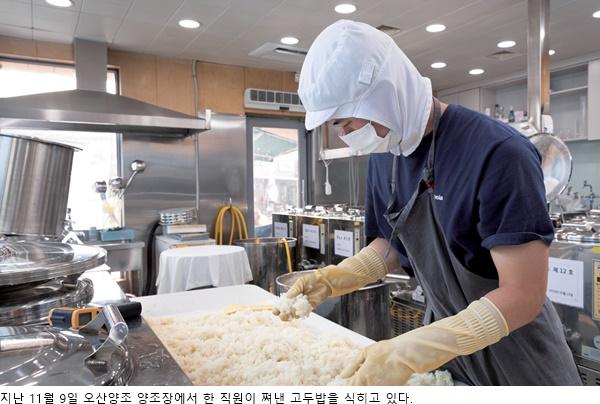
The cooked rice is allowed to cool before it is combined with the fermentation ingredients.
At this point it still looks like food.
But the next ingredient changes everything.
- 1
STEP 3 — ADD NURUK
누룩 — NURUK
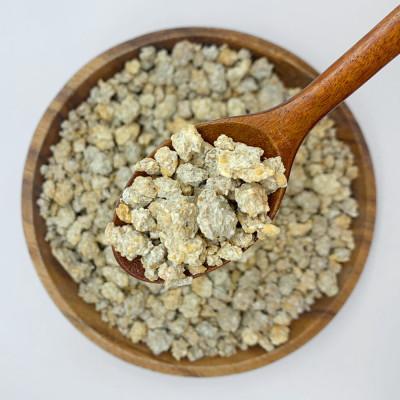
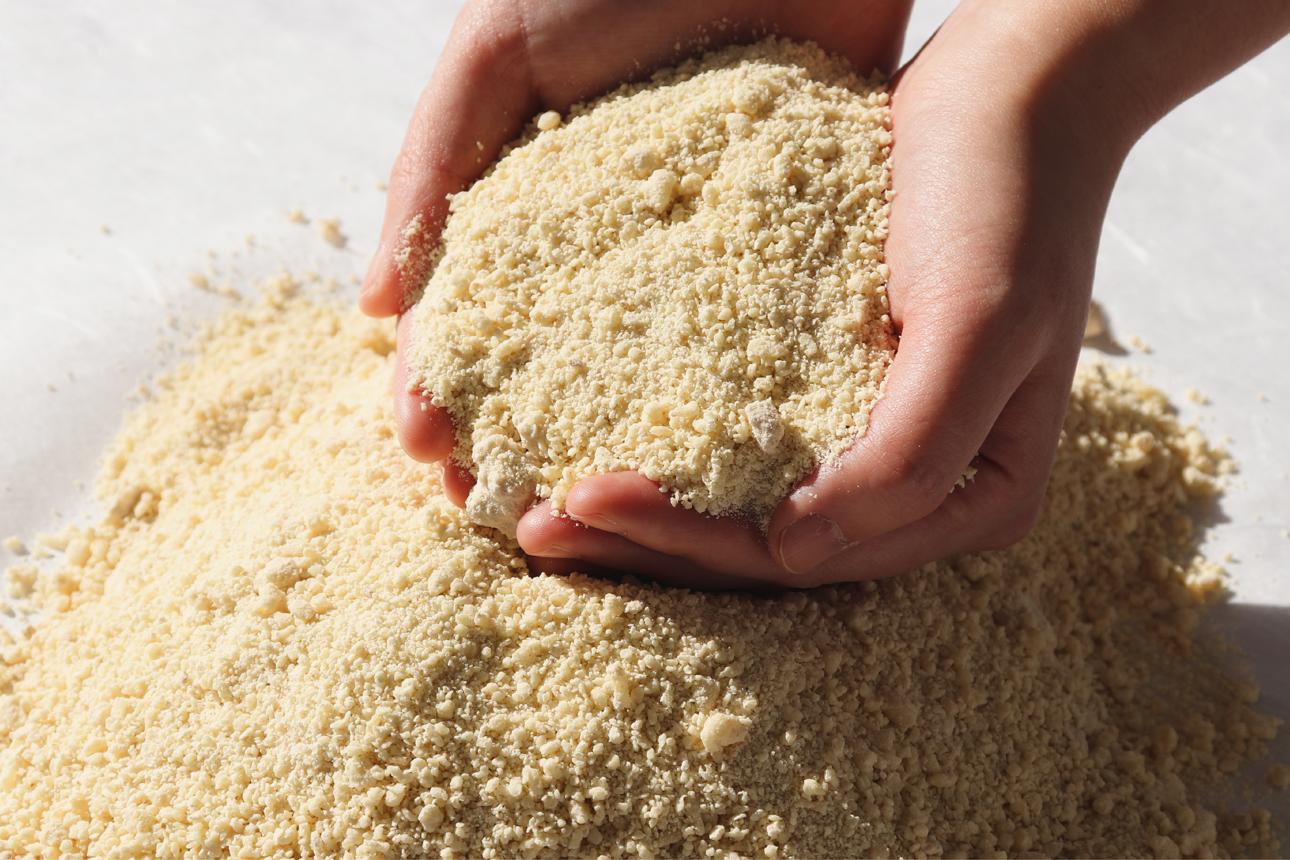
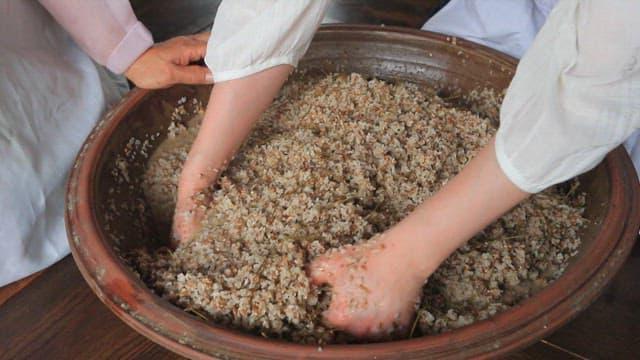
Nuruk is one of the most important ingredients in traditional Korean alcohol.
It's a fermentation starter traditionally made from grains such as wheat or rice.
It contains microorganisms and enzymes that help transform the grain starches and enable alcoholic fermentation.
Traditional Korean liquor culture is deeply connected to nuruk; VISITKOREA describes traditional liquor as beginning with this fermentation starter, much as other Korean fermented foods rely on their own starter cultures.
EASY WAY TO REMEMBER IT
RICE PROVIDES THE STARCH.
NURUK HELPS UNLOCK IT.
FERMENTATION CREATES THE ALCOHOL.
- 1
STEP 4 — MIX RICE + NURUK + WATER
THIS IS THE HANDS-ON PART.
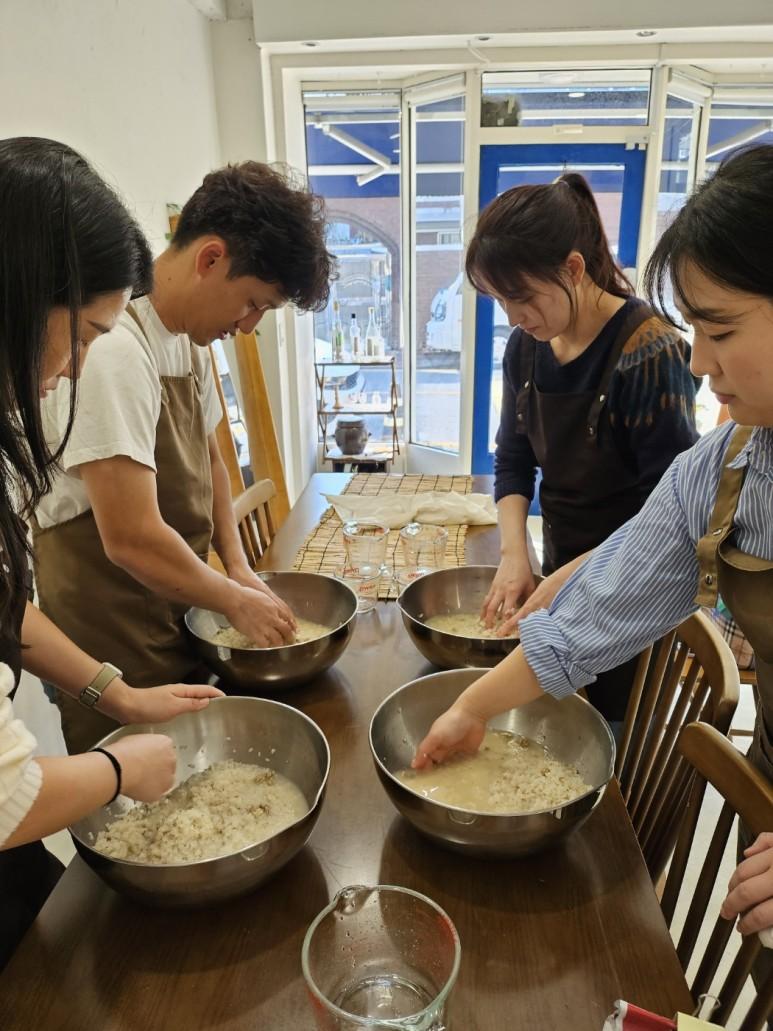
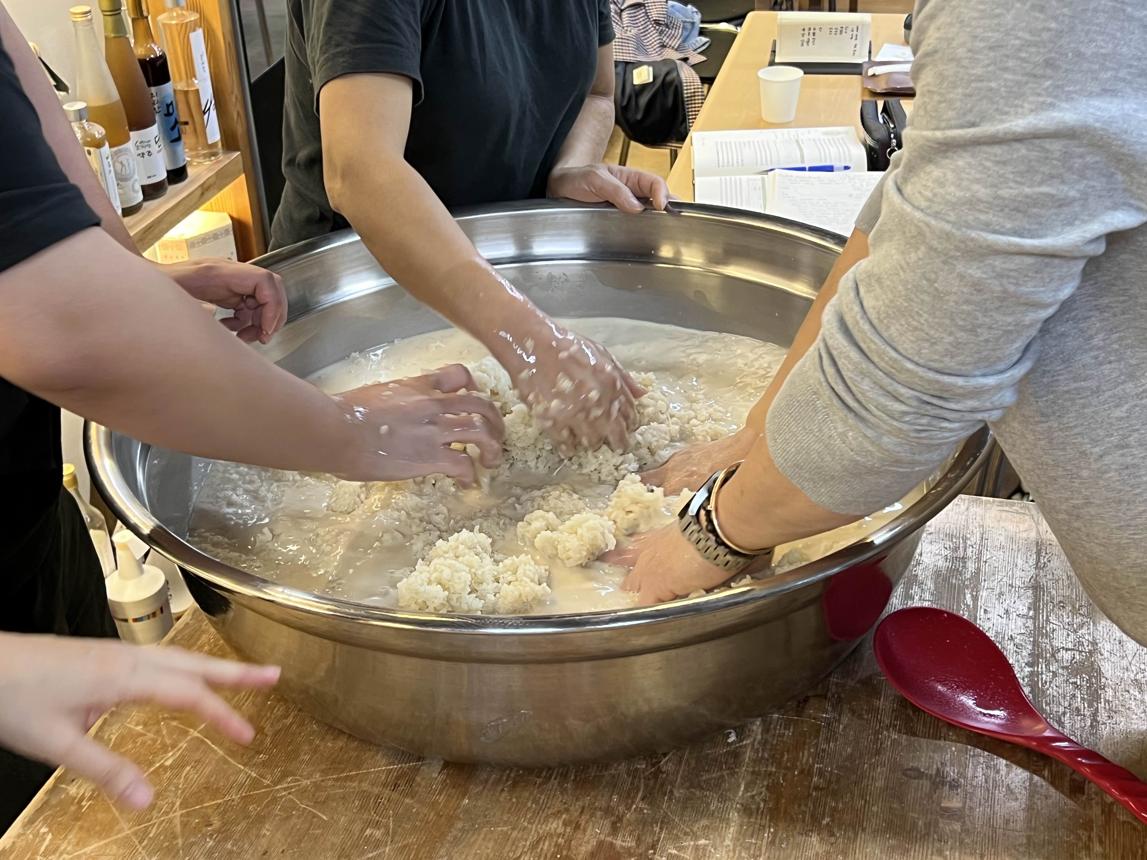
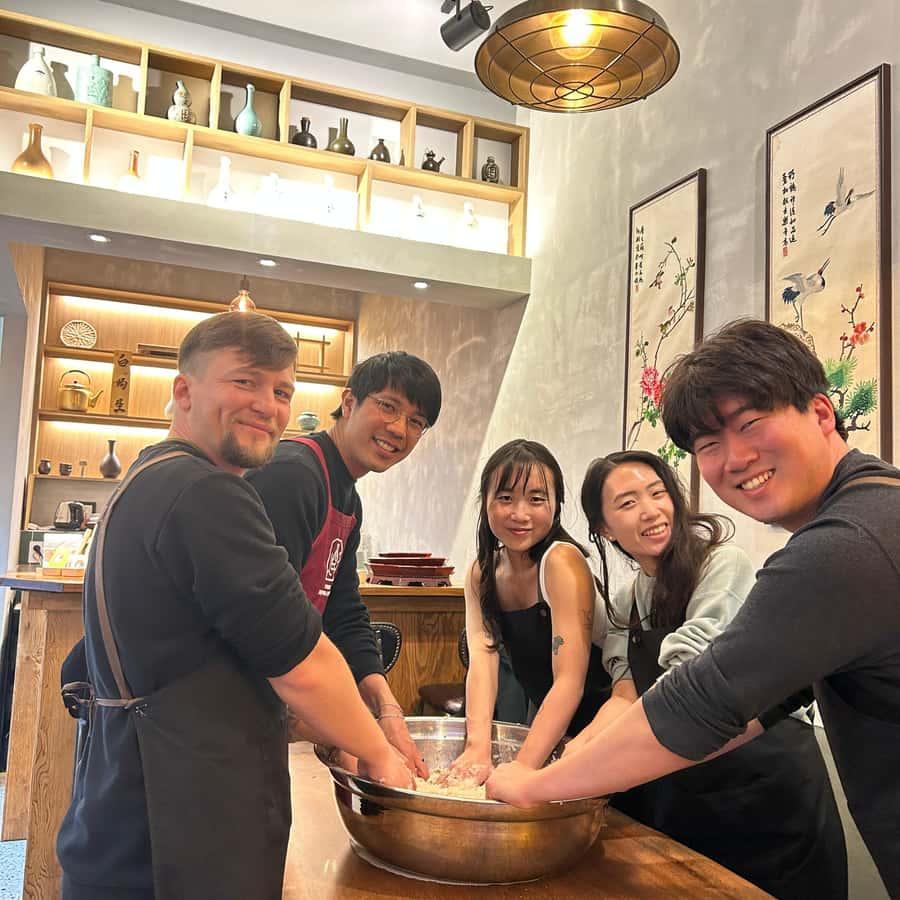
The prepared rice is combined with:
NURUK
WATER
The ingredients are mixed together to create the fermentation mixture.
This is one of the best parts of a hands-on makgeolli workshop because you're no longer just listening to an explanation.
YOU'RE ACTUALLY WORKING WITH THE INGREDIENTS.
Real Korean brewery experiences documented by VISITKOREA have visitors combine rice, water and nuruk as part of the brewing process.
- 1
STEP 5 — FERMENTATION
Now comes the ingredient you can't hold:
TIME.
The mixture is left to ferment.
During fermentation, enzymes help convert starches into sugars while microorganisms, including yeast, contribute to alcohol production and flavor development.
VISITKOREA describes traditional makgeolli fermentation as generally taking approximately:
1–2 WEEKS
and another official tourism explanation gives an example of roughly 10–15 days before straining.
The exact time depends on the brewing method.
WHAT'S HAPPENING INSIDE?
You don't need a chemistry degree to understand it.
Think of it like this:
RICE STARCH
ENZYMES HELP BREAK IT DOWN
FERMENTABLE SUGARS
YEAST FERMENTATION
ALCOHOL + FLAVOR + AROMA
This transformation is why traditional Korean alcohol belongs naturally alongside Korea's broader fermentation culture.
- 1
STEP 6 — FILTER IT
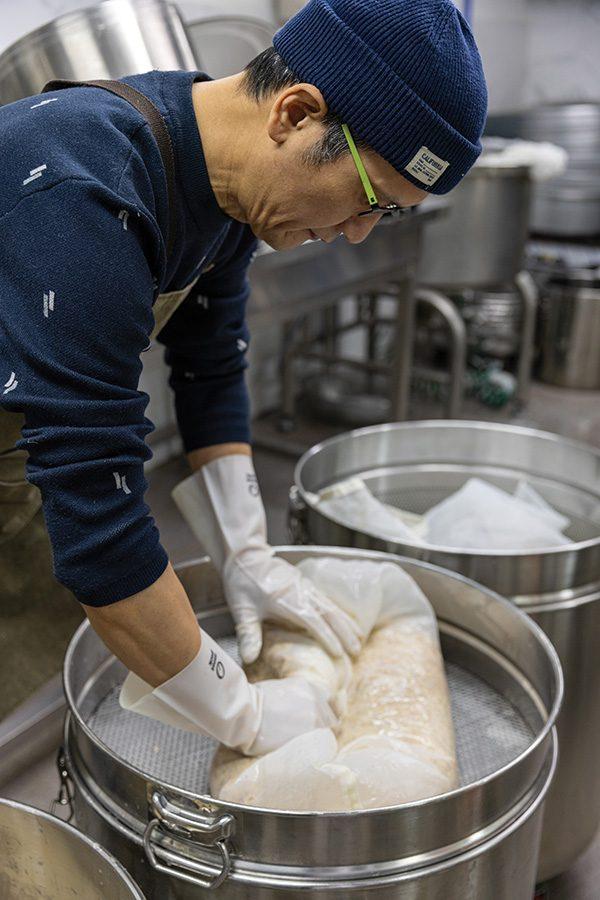
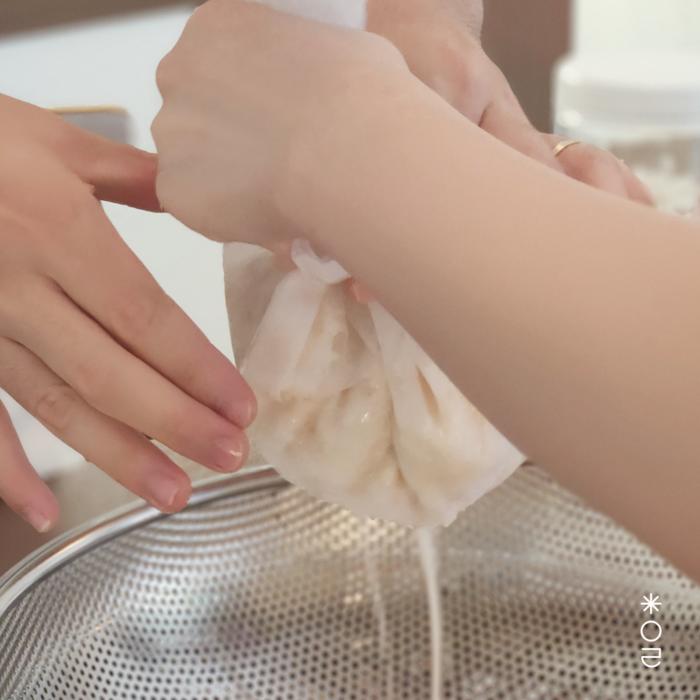
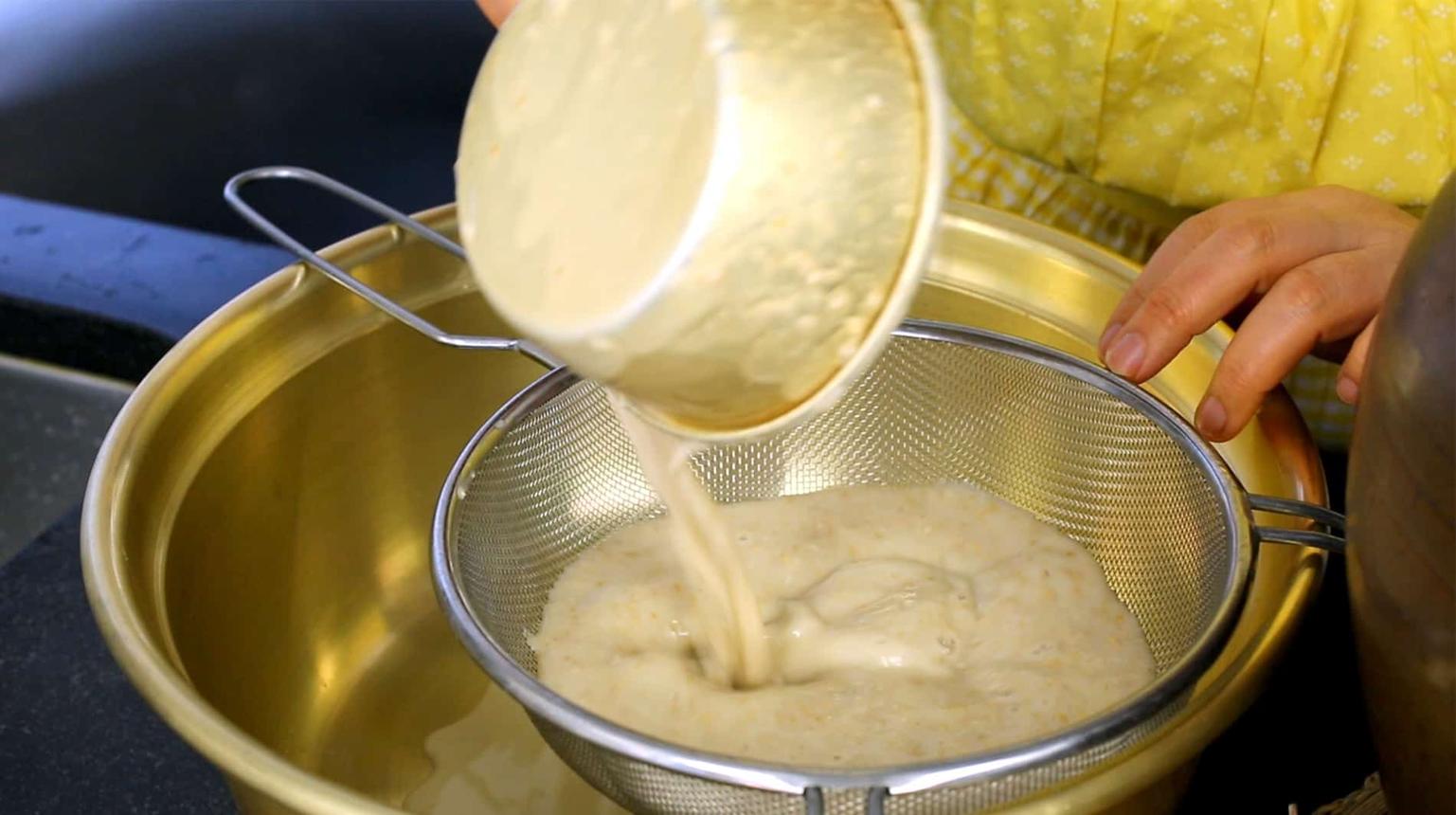
After fermentation, the liquid is separated from much of the solid material.
The fermented mixture is filtered or strained.
In fact, the name makgeolli is commonly explained as meaning something like:
“FRESHLY / SIMPLY FILTERED LIQUOR.”
Some traditional brewery experiences even let visitors participate in the filtering stage themselves.
- 1
STEP 7 — NOW IT LOOKS LIKE MAKGEOLLI
The result has the familiar:
CLOUDY, MILKY APPEARANCE.
But there's something many first-time visitors misunderstand.
THERE IS NO MILK IN MAKGEOLLI.
The cloudy appearance comes from rice-derived particles remaining in the fermented drink.
VISITKOREA specifically attributes makgeolli's milky appearance to rice particles remaining after fermentation.
So:
WHITE DOESN'T MEAN MILK.
IT COMES FROM THE RICE.
WHY DOES SOME MAKGEOLLI TASTE COMPLETELY DIFFERENT?
Because there isn't one universal recipe.
Change the:
- Rice
- Nuruk
- Water
- Fermentation time
- Temperature
- Filtering
- or brewing technique,
and you can change the final character of the drink.
That's why makgeolli can range from:
SWEET
to
DRY
from:
CREAMY
to
LIGHT
and from:
SOFT
to
NOTICEABLY SPARKLING.
There are now more than 1,000 varieties produced around Korea according to VISITKOREA.
WHAT ABOUT SAENG MAKGEOLLI?
생막걸리 — FRESH / UNPASTEURIZED MAKGEOLLI
This is another useful term for foreigners.
Some makgeolli retains active microorganisms after production.
That can contribute to flavor and continued change in the bottle, but it also makes storage and transportation more demanding.
VISITKOREA notes that draft/fresh makgeolli retaining brewing microorganisms can be more difficult to transport and store for long periods.
TRAVEL TIP
If you buy fresh makgeolli:
- Keep it refrigerated as instructed
- and
follow the bottle's opening instructions.
Some products can build pressure from continued fermentation.
CAN YOU DRINK THE MAKGEOLLI YOU JUST MADE?
NOT IMMEDIATELY.
This is important.
You can't mix rice, nuruk and water at 2 PM and drink finished makgeolli at 3 PM.
IT NEEDS TIME TO FERMENT.
How your own mixture is handled after a tourist workshop depends on that specific program.
Some brewery experiences allow participants to take their prepared batch home; others structure the experience differently. For example, VISITKOREA describes Geumpung Brewery's program as allowing participants to bottle and take home the mixture they make.
“Make it and drink your own makgeolli immediately.”
Instead:
“Make the brewing mixture and learn how it develops through fermentation.”
THE ENTIRE PROCESS
RICE
COOK
COOL
ADD NURUK
ADD WATER
MIX
FERMENT
FILTER
MAKGEOLLI
TRAVEL TIP
When you're taking photos during the workshop, don't only photograph the finished bottle.
Get a photo of:
YOUR HANDS MIXING THE RICE AND NURUK.
That's the moment that actually shows:
“I MADE MAKGEOLLI IN KOREA.”
HOW TO TASTE & ENJOY KOREAN MAKGEOLLI
Sweet, Dry, Creamy or Sparkling — Find the Makgeolli You Actually Like
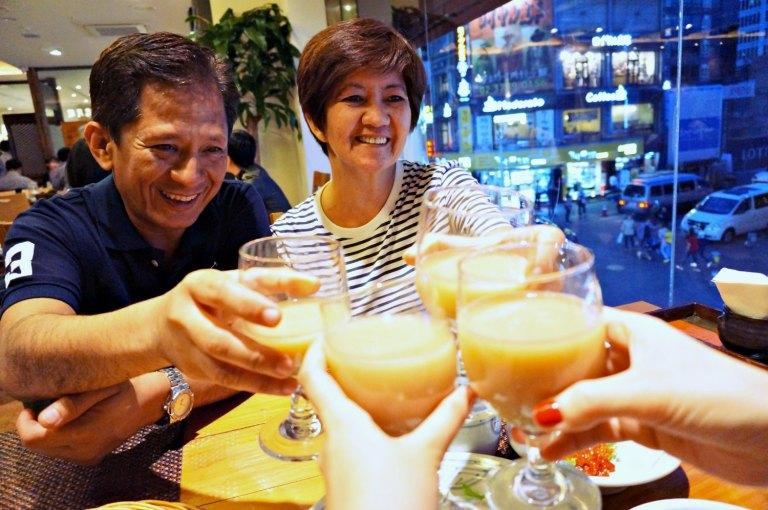
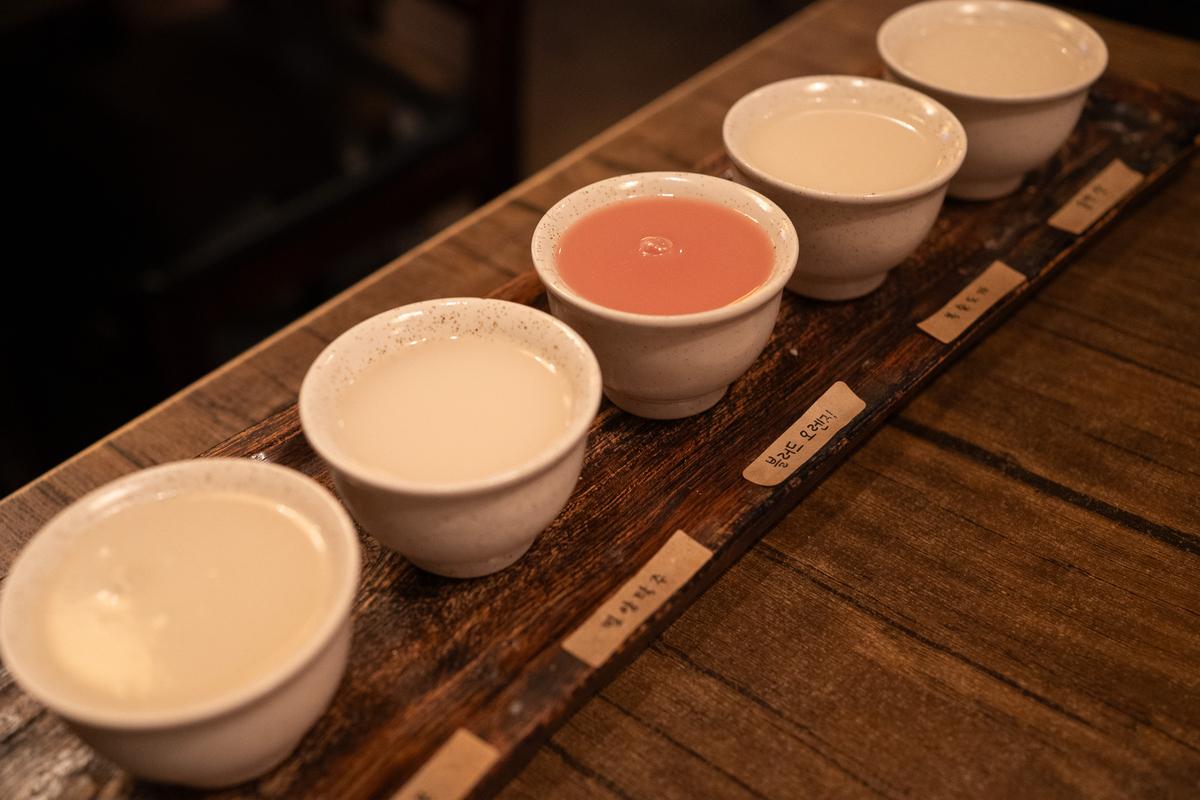
Many first-time visitors try one bottle of makgeolli and decide:
- “I like makgeolli.”
- or:
- “Makgeolli isn't for me.”
That's a little like drinking one Korean beer and deciding whether you like every alcoholic drink made in Korea.
Makgeolli varies enormously.
The better question is:
WHAT KIND OF MAKGEOLLI DO YOU LIKE?
START WITH THE AROMA
Don't drink it immediately.
Pour a small amount and smell it first.
Depending on the product, you may notice aromas that remind you of:
- Cooked Rice
- Grain
- Yogurt
- Fruit
- Flowers
- Herbs
or fermentation.
Premium makgeolli can be considerably more aromatic and complex than many first-time visitors expect.
TASTE THE SWEETNESS
SWEET ↔ DRY
One of the easiest differences to recognize is sweetness.
Some makgeolli is noticeably sweet and approachable.
Others are much drier.
IF YOU'RE NEW TO MAKGEOLLI
A softer, slightly sweeter style may be easier to start with.
IF YOU LIKE DRY WINE OR SAKE
Ask for:
LESS SWEET / DRIER MAKGEOLLI.
Useful Korean:
- 덜 단 막걸리 있어요?
- Deol dan makgeolli isseoyo?
- “Do you have a less-sweet makgeolli?”
NOTICE THE ACIDITY
Makgeolli isn't supposed to taste only sweet.
Fermentation can give it a noticeable:
TANGY / TART / SOUR CHARACTER.
That acidity can make the drink surprisingly refreshing, especially when paired with rich or fried Korean food.
A well-balanced makgeolli can combine:
SWEETNESS + ACIDITY + GRAIN FLAVOR
rather than tasting like a sugary rice drink.
FEEL THE TEXTURE
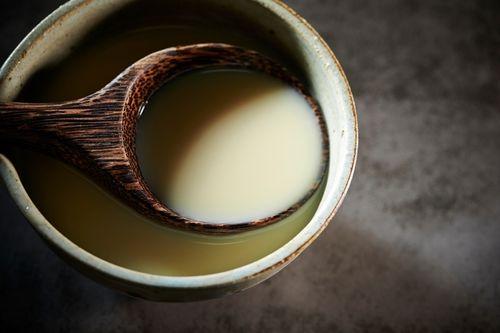
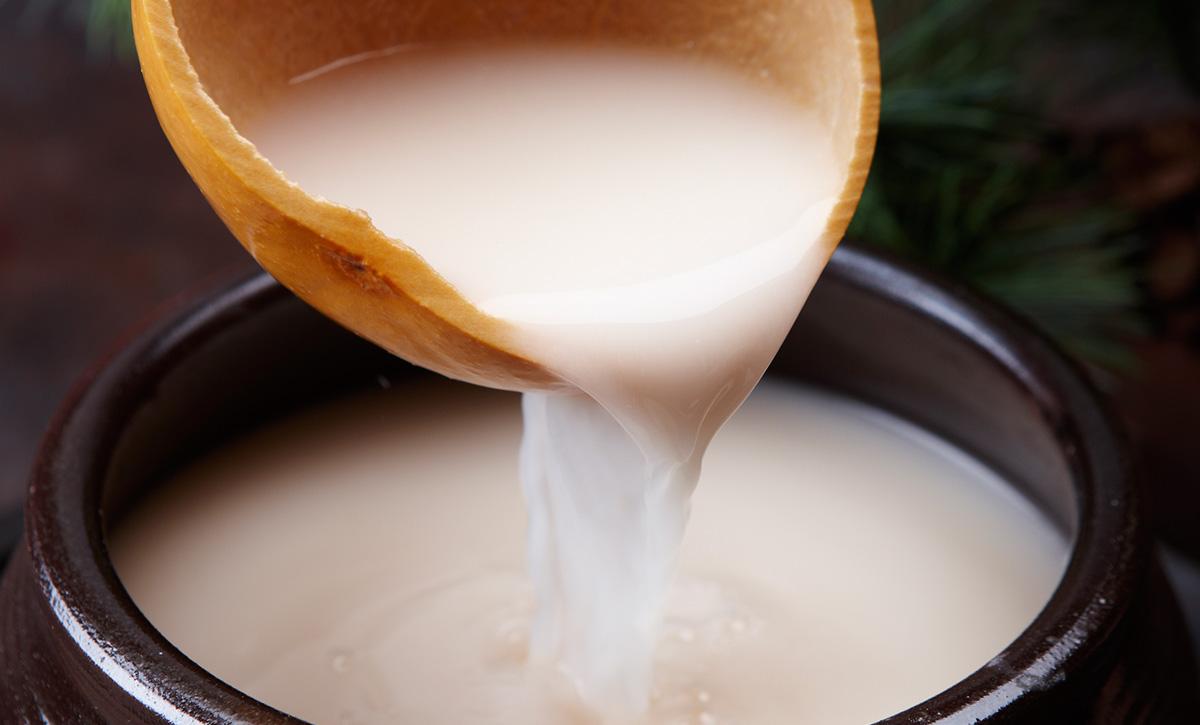
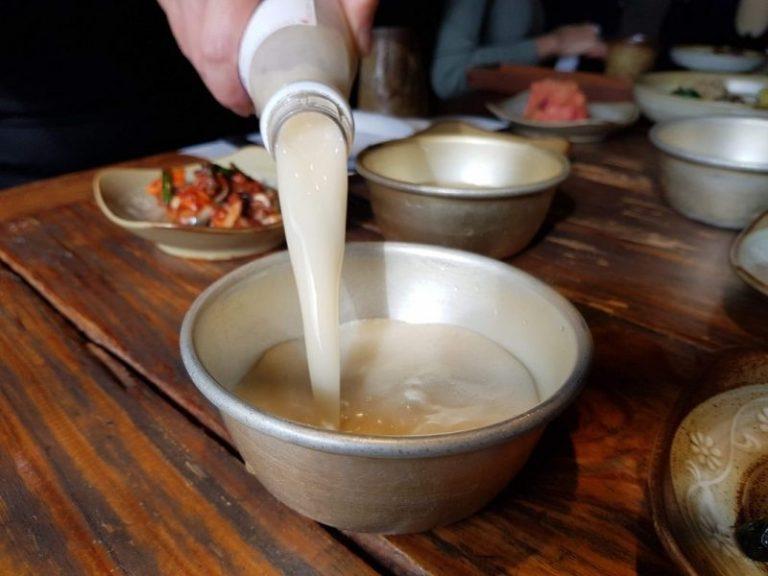
Because makgeolli contains suspended material from the brewing process, texture is part of the experience.
Some styles feel:
LIGHT
while others can feel:
CREAMY
THICKER
or more substantial.
This is one of the biggest differences between makgeolli and many clear alcoholic drinks.
IS IT SPARKLING?
Some makgeolli has noticeable carbonation.
You might feel:
TINY BUBBLES
or even a fairly lively sparkle.
This can come from fermentation and gives certain fresh styles a refreshing character.
If you normally like:
- Sparkling Wine
- Cider
- or naturally fermented drinks,
try a more sparkling makgeolli.
FRESH OR PASTEURIZED?
SAENG MAKGEOLLI — 생막걸리
means fresh/unpasteurized makgeolli.
It can retain active microorganisms and continue changing after bottling.
That can produce interesting:
- Freshness
- Acidity
- Aroma
and carbonation.
But it also means:
STORAGE MATTERS.
Keep fresh makgeolli refrigerated according to the producer's instructions.
If you're flying home with Korean alcohol, don't assume every fresh bottle is a good travel souvenir.
A shelf-stable product may be much easier to transport.
SHOULD YOU SHAKE MAKGEOLLI?
Look at the bottle.
You'll often see sediment settled at the bottom.
Traditionally, makgeolli is mixed before serving so the sediment is redistributed.
But:
DON'T VIOLENTLY SHAKE A PRESSURIZED BOTTLE.
Fresh or actively carbonated makgeolli can contain pressure.
Follow the producer's instructions.
If necessary, gently roll or mix the bottle rather than treating it like a cocktail shaker.
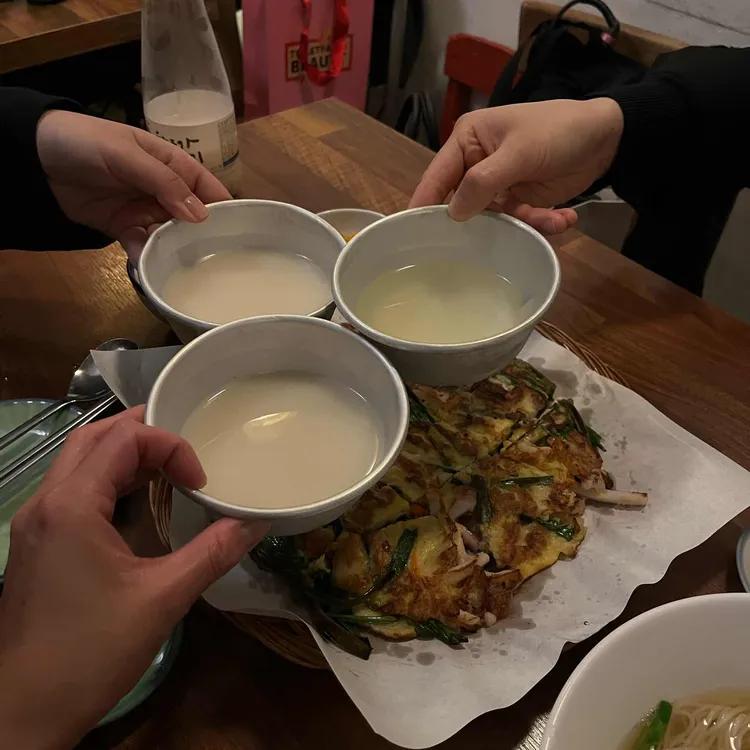
THE CLASSIC FOOD PAIRING
MAKGEOLLI + JEON
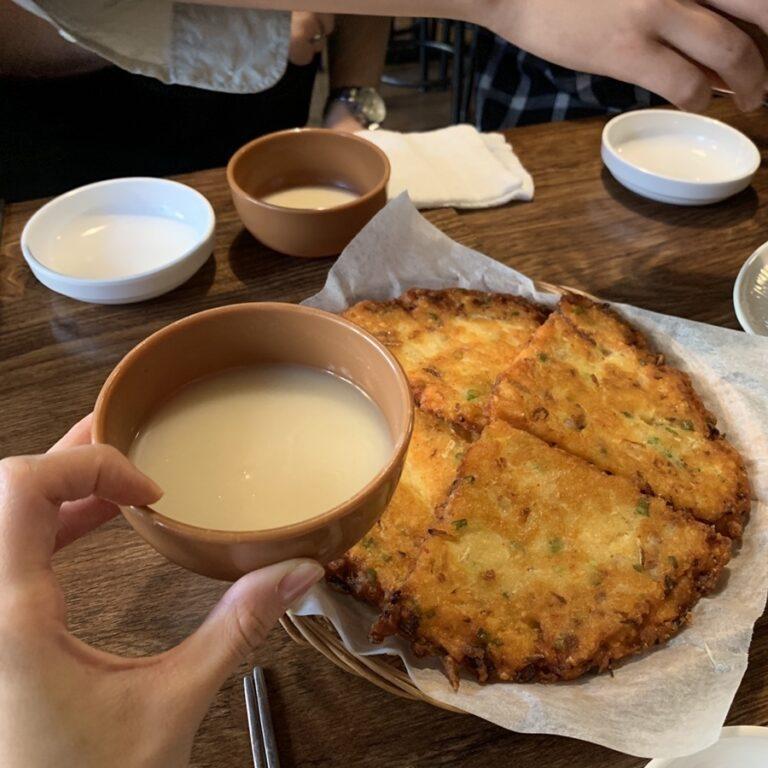
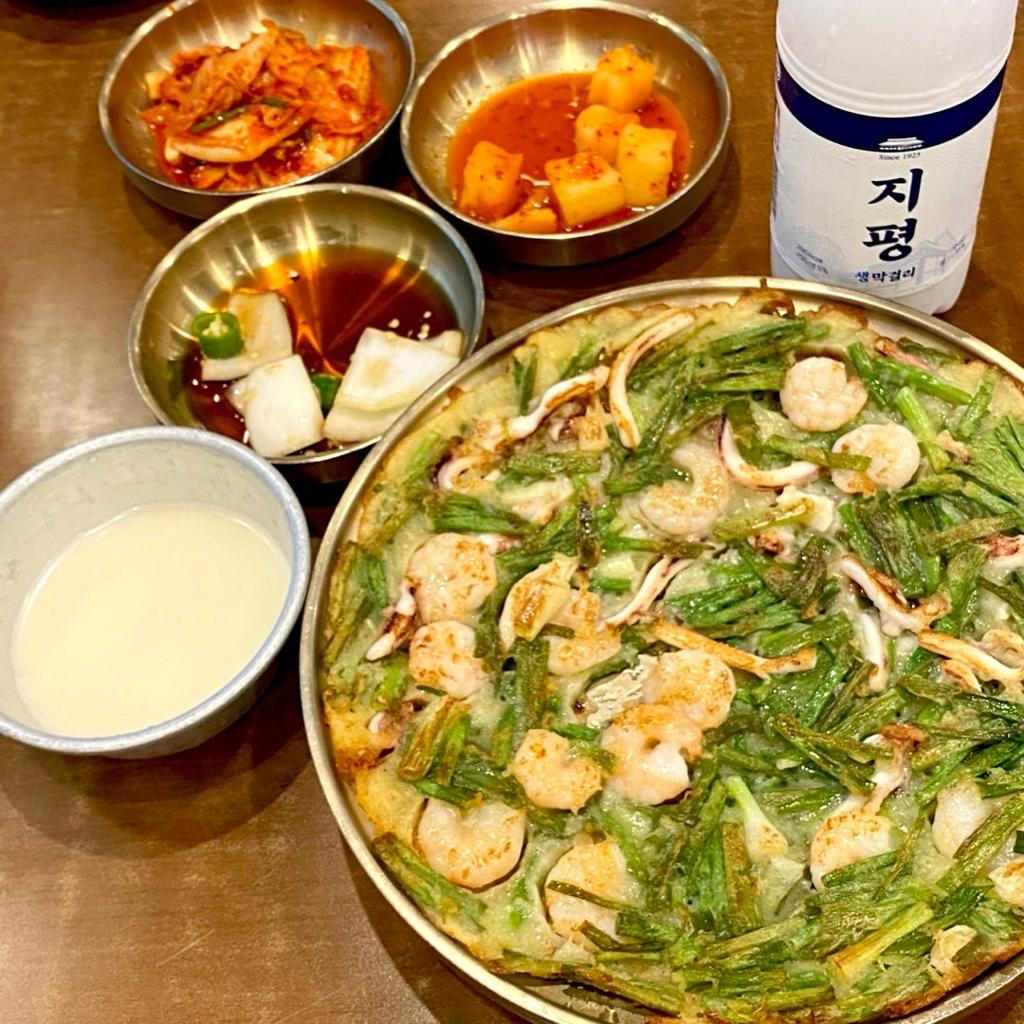
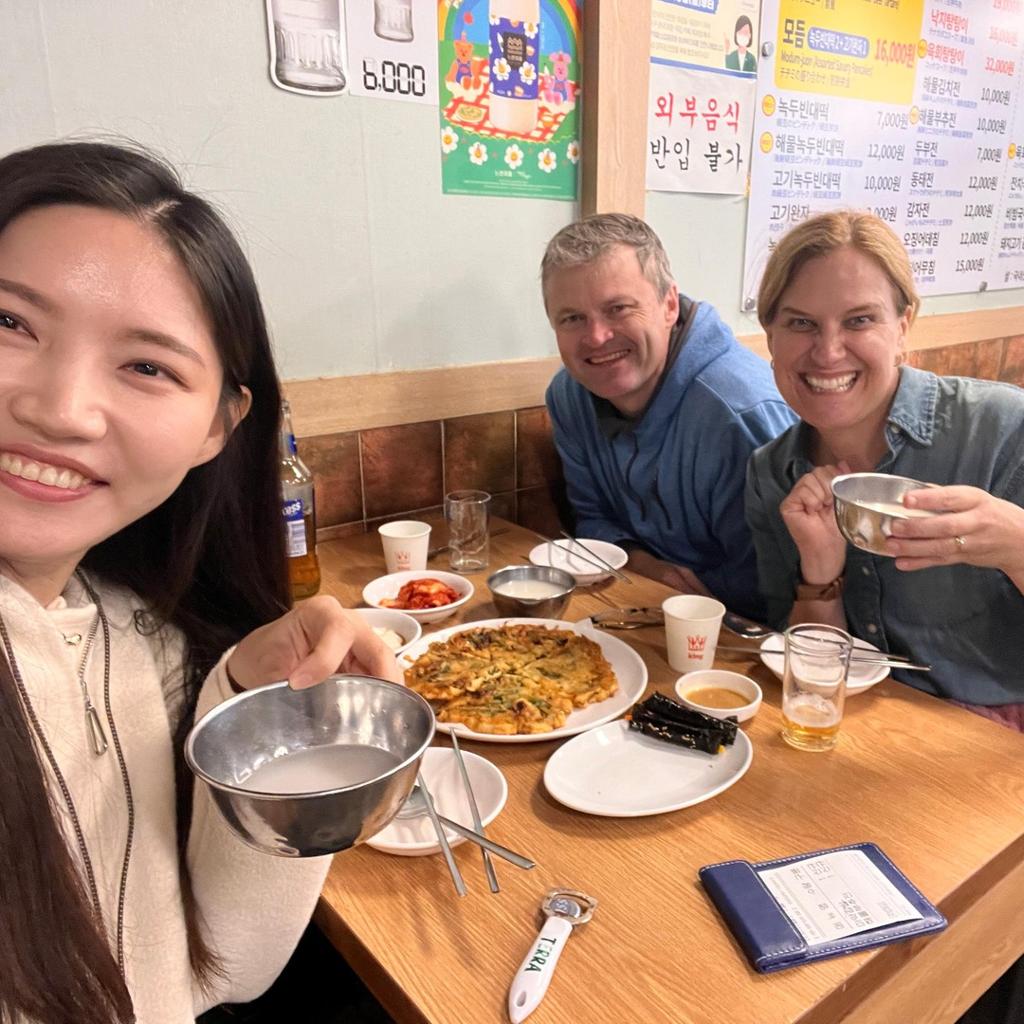
If you're going to try one classic combination:
ORDER JEON.
Jeon refers broadly to Korean pan-fried dishes.
Popular choices include:
PAJEON
Green-onion pancake.
HAEMUL PAJEON
Seafood and green-onion pancake.
KIMCHIJEON
Kimchi pancake.
The savory, oily character of jeon works particularly well with makgeolli's acidity and fermentation flavors.
This pairing is deeply familiar in Korean drinking culture.
WHY DO KOREANS TALK ABOUT MAKGEOLLI ON RAINY DAYS?
You've probably heard:
“RAIN = PAJEON + MAKGEOLLI.”
It's a popular Korean cultural association.
One common explanation connects the sound of rain with the sizzling sound of jeon cooking in a pan.
Whether or not that's the reason people actually decide to order it, the combination has become culturally recognizable.
So if it's raining during your Seoul trip:
DON'T AUTOMATICALLY CALL THE DAY RUINED.
It might be a good excuse for:
PAJEON + MAKGEOLLI.
OTHER FOODS TO TRY
Makgeolli isn't limited to pancakes.
DUBU KIMCHI
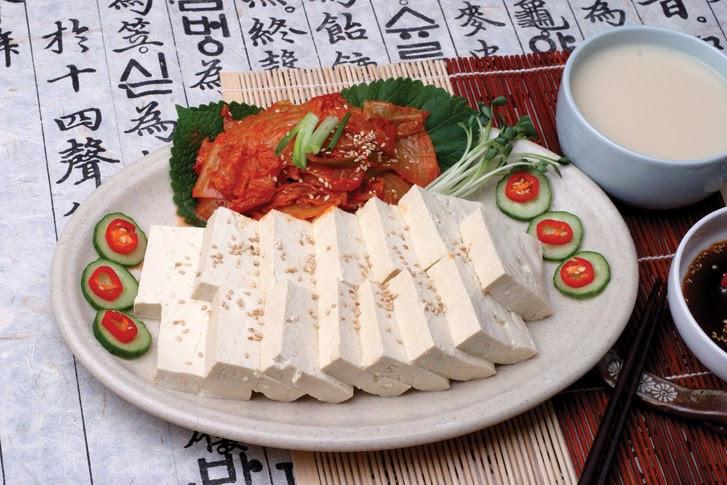
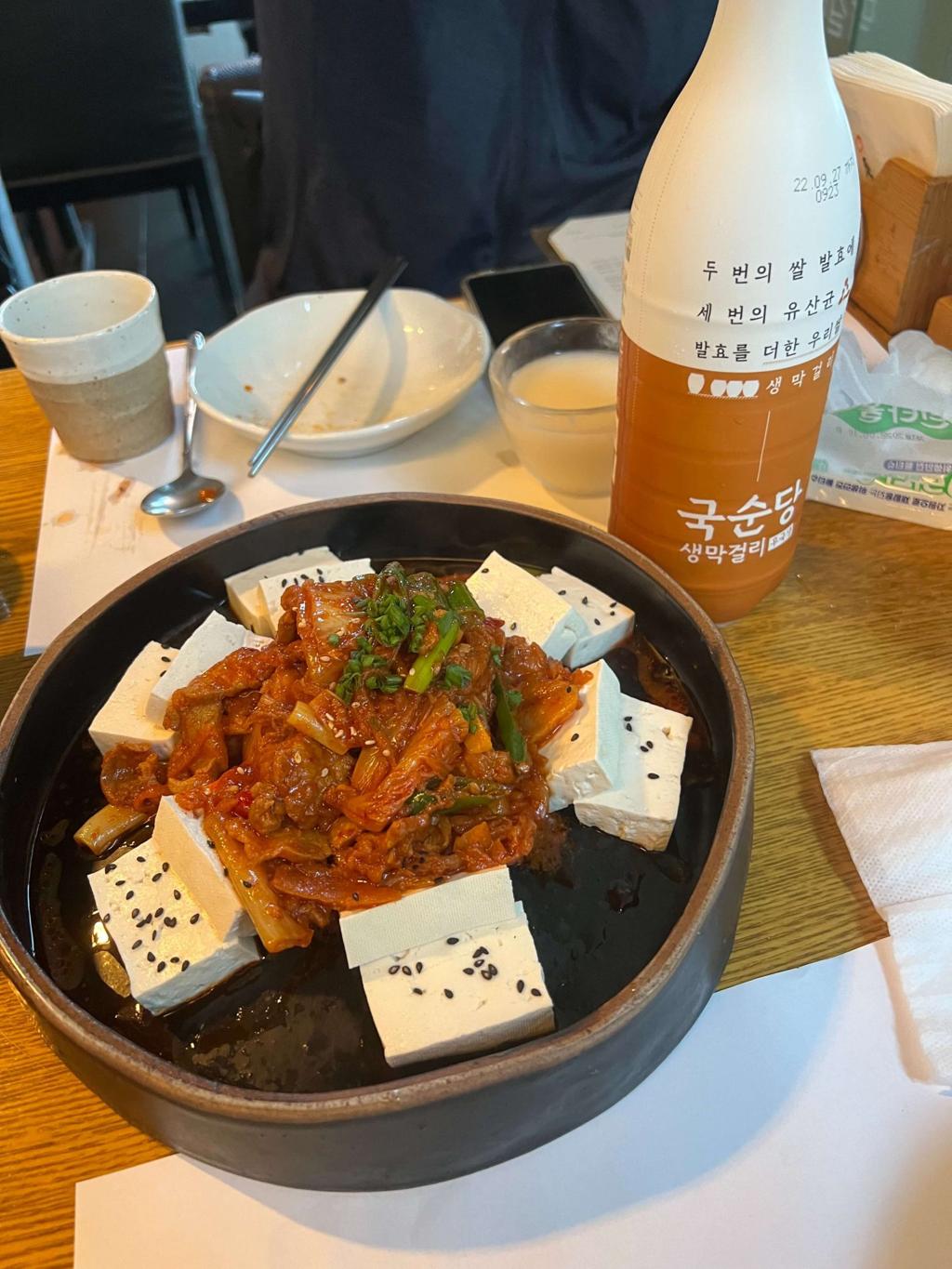
Warm tofu with stir-fried kimchi.
A very good choice if you want something stronger in flavor than jeon.
BOSSAM
Boiled pork served with kimchi and condiments.
The richness of the pork can work well with a refreshing, slightly acidic makgeolli.
ACORN JELLY — DOTORIMUK
A lighter traditional accompaniment.
Good when you don't want another heavy fried dish.
DON'T ORDER ONLY ONE BOTTLE FOR A TASTING EXPERIENCE
If you're at a specialist traditional-liquor bar and traveling with other adults:
TRY DIFFERENT STYLES.
Instead of three bottles of the same makgeolli, compare:
ONE SWEETER
ONE DRIER
ONE FRESH / SPARKLING
Then you'll actually understand the differences.
Better still:
ORDER A TASTING FLIGHT
when the venue offers one.
HOW TO ORDER MAKGEOLLI IN KOREA
You don't need fluent Korean.
막걸리 주세요.
Makgeolli juseyo.
“Makgeolli, please.”
But that's very broad.
At a specialist bar, try:
막걸리 추천해 주세요.
Makgeolli chucheonhae juseyo.
“Please recommend a makgeolli.”
너무 달지 않은 걸로 추천해 주세요.
Neomu dalji aneun geollo chucheonhae juseyo.
- “Please recommend one that isn't too sweet.”
- 드라이한 막걸리 있어요?
- Deuraihan makgeolli isseoyo?
- “Do you have a dry makgeolli?”
- 생막걸리 있어요?
- Saeng makgeolli isseoyo?
- “Do you have fresh makgeolli?”
HOW IS IT SERVED?
Depending on the venue, makgeolli may be served in:
- Bowls
- Cups
- Glasses
or traditional-style vessels.
Don't worry if a premium tasting bar serves it in a wine glass.
Modern Korean traditional-liquor culture isn't limited to rustic kettles and metal bowls.
Contemporary producers increasingly treat makgeolli as a drink worth evaluating for:
- Aroma
- Acidity
- Texture
- Rice character
and food pairing.
MAKGEOLLI VS GREEN-BOTTLE SOJU
International visitors often group the two together simply because they're Korean alcohol.
They're very different.
MAKGEOLLI
- Fermented
- Cloudy
- Grain-forward
- Usually lower alcohol than distilled spirits
- Can be sweet, sour, creamy or sparkling
COMMON GREEN-BOTTLE SOJU
Usually a clear diluted spirit with a cleaner, stronger alcoholic profile.
TRADITIONAL DISTILLED SOJU
Something different again.
It belongs to Korea's traditional liquor world and can have much more pronounced ingredient, fermentation and distillation character.
So:
KOREAN ALCOHOL ≠ GREEN-BOTTLE SOJU.
That's one of the main ideas this experience should teach.
FIRST-TIMER TASTING ORDER
If you're trying several traditional liquors:
START LIGHT.
A sensible progression is:
- 1
LIGHT / CLEAN MAKGEOLLI
- 2
RICHER MAKGEOLLI
- 3
SWEETER OR MORE AROMATIC STYLE
- 4
CLEAR TRADITIONAL RICE WINE
- 5
DISTILLED SPIRIT — This helps prevent a stronger drink from overwhelming subtler flavors at the beginning.
If you're on a guided tasting, follow the host's serving order instead.
ASK KOREA'S FIRST MAKGEOLLI MEAL
For someone trying makgeolli in Korea for the first time, keep it simple:
MAKGEOLLI
HAEMUL PAJEON
DUBU KIMCHI
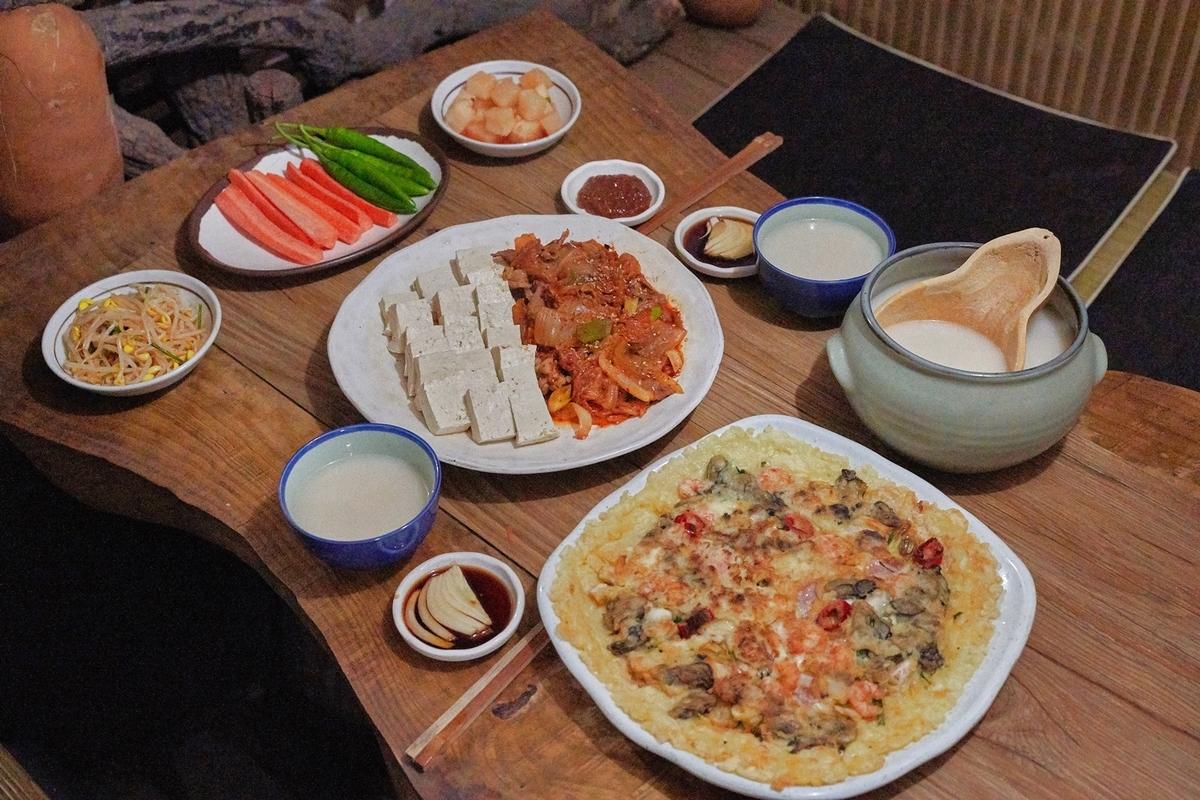
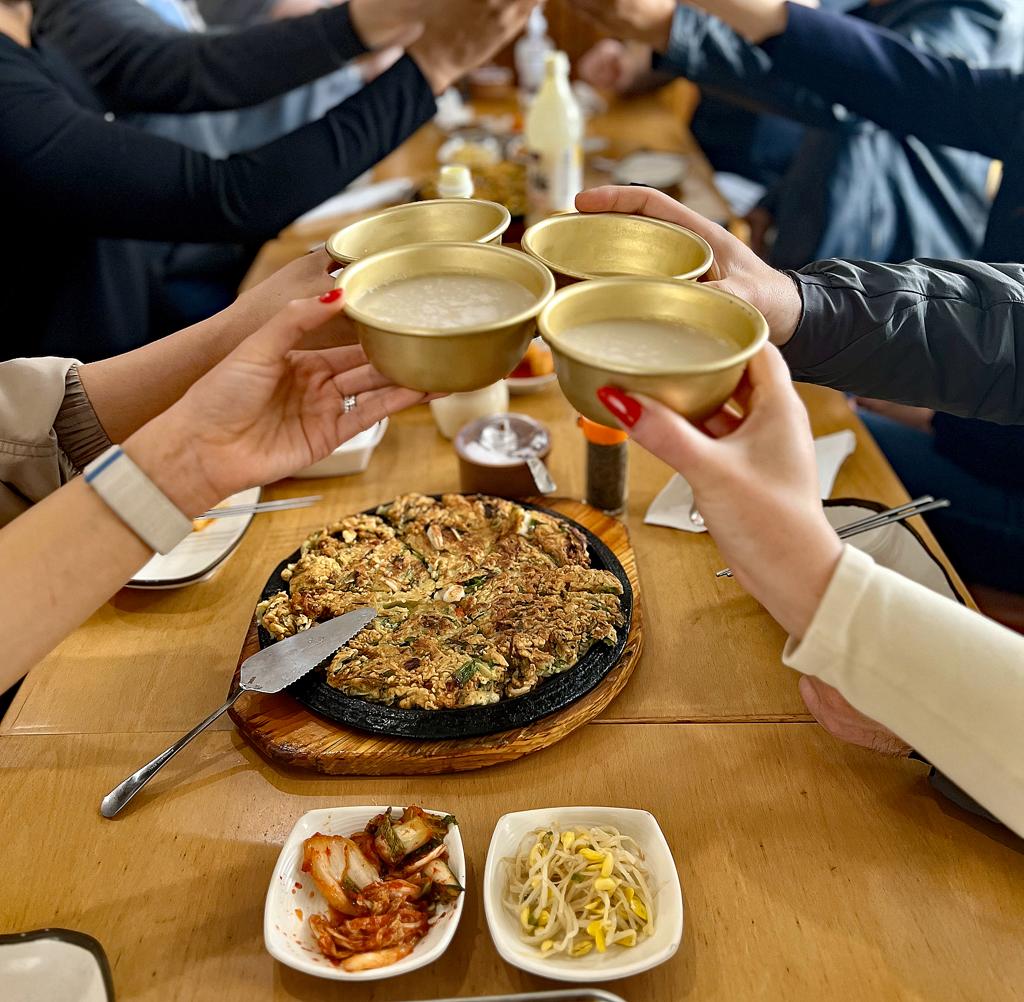
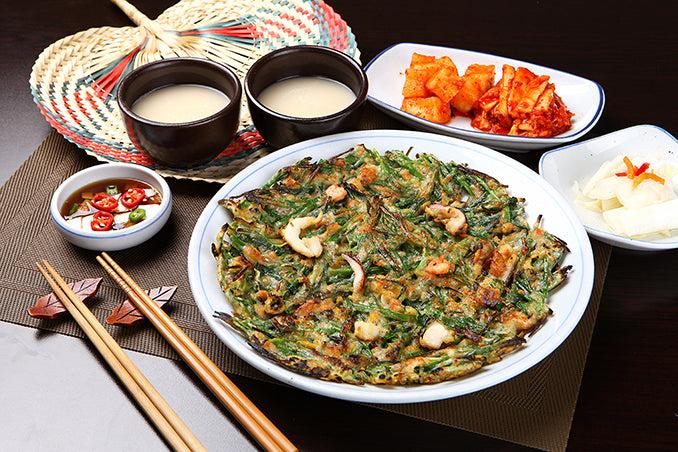
Don't order five different dishes just because you're trying Korean drinking culture.
Start with two classic foods and compare how the drink tastes with each one.
DRINKING ETIQUETTE — KEEP IT SIMPLE
Traditional Korean drinking etiquette can become complicated if you read every rule online.
A foreign traveler doesn't need to memorize all of it.
Remember three things:
POUR FOR OTHERS WHEN SHARING
It's common for people drinking together to pour for one another.
USE TWO HANDS WHEN APPROPRIATE
Especially when giving or receiving a drink from someone older or in a more formal situation.
YOU DON'T HAVE TO KEEP DRINKING
Korean drinking culture has changed considerably.
Being polite does not mean drinking more alcohol than you want.
MOST IMPORTANT TIP
TASTE — DON'T RACE.
The purpose of a traditional liquor experience isn't to see how many glasses you can drink.
Compare:
- Aroma
- Sweetness
- Acidity
- Texture
- Carbonation
and how the drink changes with food.
That's when makgeolli becomes much more interesting than simply:
“KOREAN RICE ALCOHOL.”
BEFORE YOU BOOK + PLAN YOUR MAKGEOLLI DAY IN SEOUL
- Age
- ,
- Reservation
- s,
- Price
- ,
- Language
- & the Perfect Traditional Seoul Route
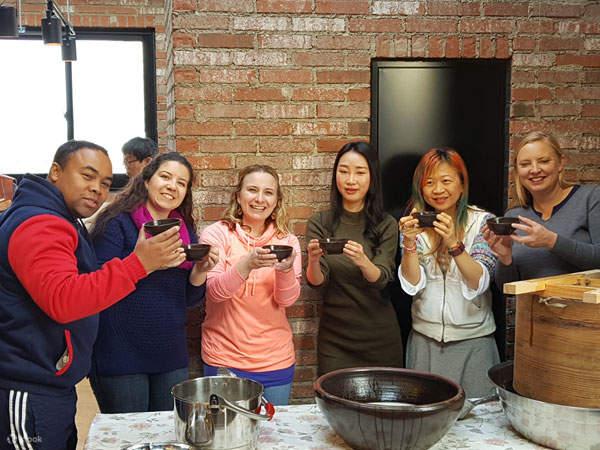
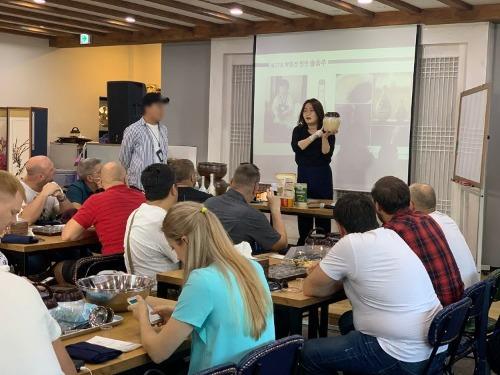
A makgeolli experience is easy to add to a Seoul itinerary.
But unlike visiting a palace or market, alcohol-related programs may have:
- Age
- restrictions
- Advance reservations
- Limited program dates
and different rules depending on the experience.
Check these details before building your day around the class.
CHECK THE AGE REQUIREMENT
THIS IS AN ALCOHOL EXPERIENCE.
Programs involving the production or tasting of alcoholic beverages are intended for eligible participants under Korean law and the individual program's rules.
BRING IDENTIFICATION
For international visitors:
BRING YOUR PASSPORT OR ACCEPTED PHOTO ID.
This is especially important for foreign-tourist programs that may also require proof of visitor eligibility.
IMPORTANT
Don't copy an unclear age statement from a translated booking page into your itinerary.
Check the current age requirement shown by the organizer when making the reservation.
RESERVE BEFORE YOU GO
For a hands-on brewing class:
DON'T RELY ON WALK-IN AVAILABILITY.
The special foreign-tourist K-Liquor program at The Sool Gallery operates on selected dates rather than every day.
That means:
CHECK THE DATE
RESERVE
RECEIVE CONFIRMATION
THEN BUILD YOUR SEOUL ROUTE.
This is particularly important during weekends and peak travel periods.
UNDERSTAND THE PRICE
There are two very different experiences in this guide.
SPECIAL K-LIQUOR PROGRAM
Current special-program price:
₩13,000
This is the limited foreign-tourist program.
It should not be interpreted as the standard price for every traditional-liquor experience at The Sool Gallery.
PREMIUM MAKGEOLLI TASTING
Current Myeongdong experience:
FROM ₩65,000
This is a different product built around guided tasting of numerous premium makgeolli and other Korean traditional liquors.
So the price difference makes sense:
₩13,000 SPECIAL PROGRAM
- Cultural introduction + hands-on experience
- versus
₩65,000+ PREMIUM EXPERIENCE
Extensive guided tasting
CHECK THE LANGUAGE
Traveler-oriented traditional-liquor programs may provide English support, but don't assume every ordinary brewery or makgeolli bar does.
When reserving:
CONFIRM THE LANGUAGE OF YOUR SESSION.
For tasting experiences, language matters more than you might expect.
A good guide explains:
- Rice variety
- Nuruk
- Fermentation
- Region
- Sweetness
- Acidity
and why one drink tastes different from another.
Without that explanation, you're mostly just drinking samples.
DON'T ARRIVE ON AN EMPTY STOMACH
This isn't a challenge to see how much Korean alcohol you can drink.
If the program includes tasting:
EAT BEFOREHAND.
Or plan a proper Korean meal immediately afterward.
The objective is to understand Korean traditional liquor, not maximize alcohol consumption.
Water between samples is also sensible.
WHAT SHOULD YOU WEAR?
Nothing special.
For a brewing workshop, comfortable clothing is enough.
If you're actually handling ingredients:
- Avoid very loose sleeves
- Tie back long hair if requested
and follow the instructor's hygiene directions.
This is food and fermentation preparation, so cleanliness matters.
CAN YOU TAKE MAKGEOLLI HOME?
SOMETIMES — BUT CHECK FIRST.
Don't assume the mixture you prepare during a workshop can automatically be carried back to your hotel or overseas.
The program determines what happens to the brewing mixture.
If you buy bottled makgeolli separately, also check whether it is:
FRESH / UNPASTEURIZED
or
PASTEURIZED / MORE SHELF-STABLE.
Fresh makgeolli generally requires more careful refrigeration and handling.
FLYING HOME WITH MAKGEOLLI?
This needs more thought than buying a box of snacks.
Consider:
- Refrigeration
- Bottle pressure
- Leakage
- Airline baggage rules
and your destination country's alcohol import allowance.
TRAVEL TIP
If you're buying Korean traditional liquor as an international souvenir:
ASK THE SHOP WHICH PRODUCTS ARE SUITABLE FOR OVERSEAS TRAVEL.
A bottle designed for easier transport is a better souvenir than spending your flight worrying about a fermenting bottle inside your suitcase.
GET DIRECTIONS — THE SOOL GALLERY
THE SOOL GALLERY
- Hansik Space E:eum
- Address
- 1F, 18 Bukchon-ro, Jongno-gu, Seoul
SUBWAY
ANGUK STATION
Line 3
EXIT 2
Approximately:
2 MINUTES ON FOOT
THE SOOL GALLERY
The location is one of the strongest things about this experience.
Don't travel across Seoul just for the class and immediately leave.
You're already in one of the best areas for a half-day cultural itinerary.
PLAN YOUR MAKGEOLLI DAY
ROUTE 1 — RECOMMENDED
BUKCHON + K-LIQUOR + INSADONG
MORNING
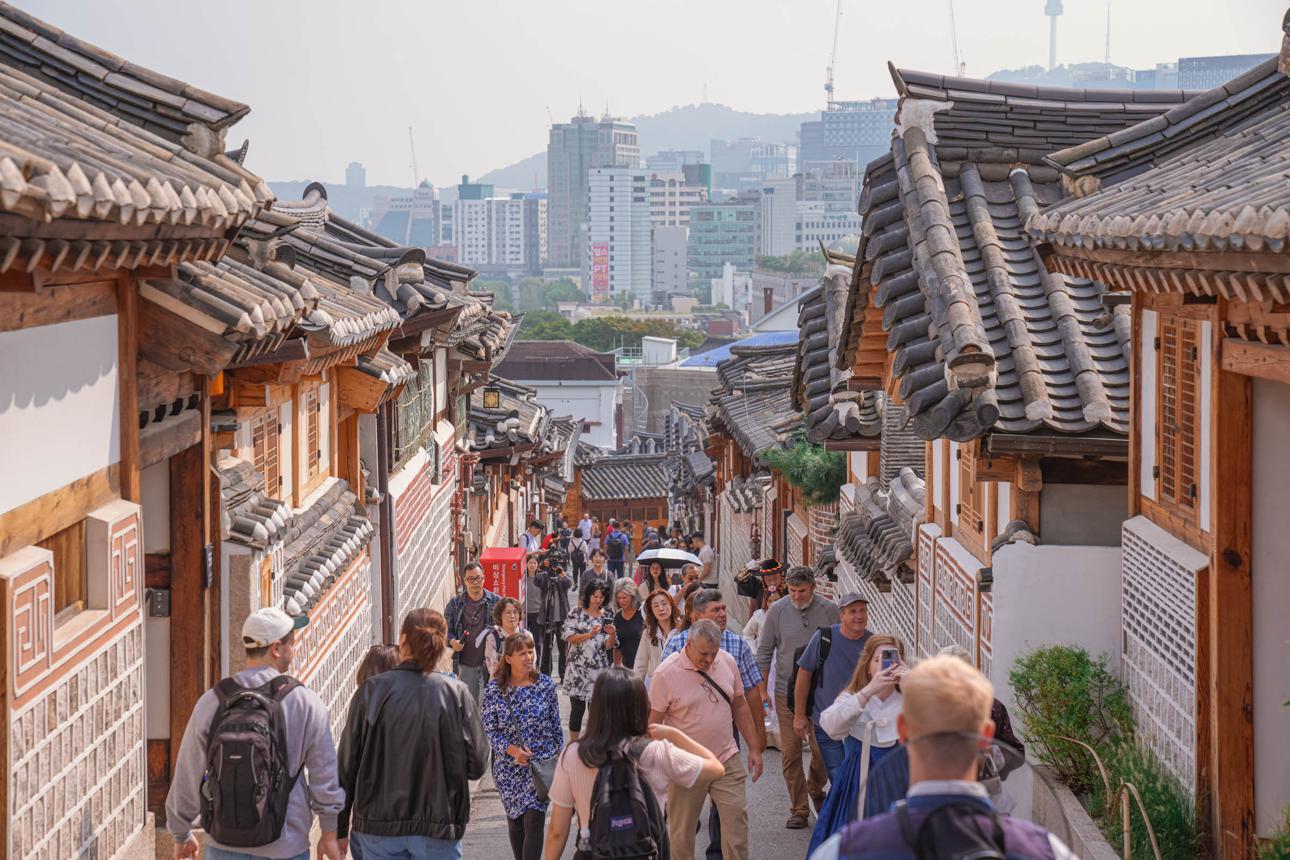
ANGUK STATION
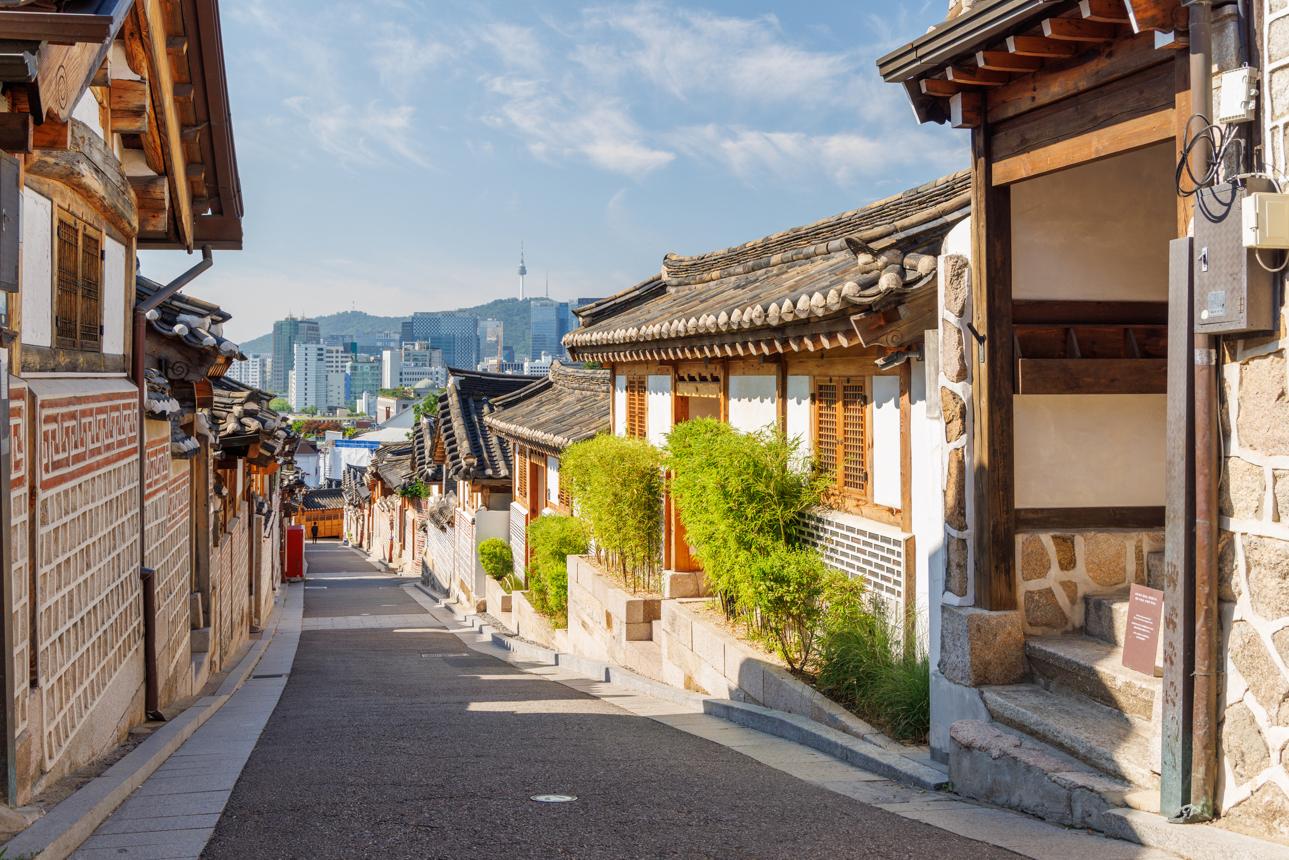
BUKCHON HANOK VILLAGE
Walk through the traditional hanok neighborhood.
Don't rush.
Bukchon is much better explored on foot than from a vehicle.
LUNCH AROUND ANGUK
Choose a proper meal before an alcohol-related program.
THE SOOL GALLERY
Learn about Korean traditional liquor and join your booked experience.
INSADONG
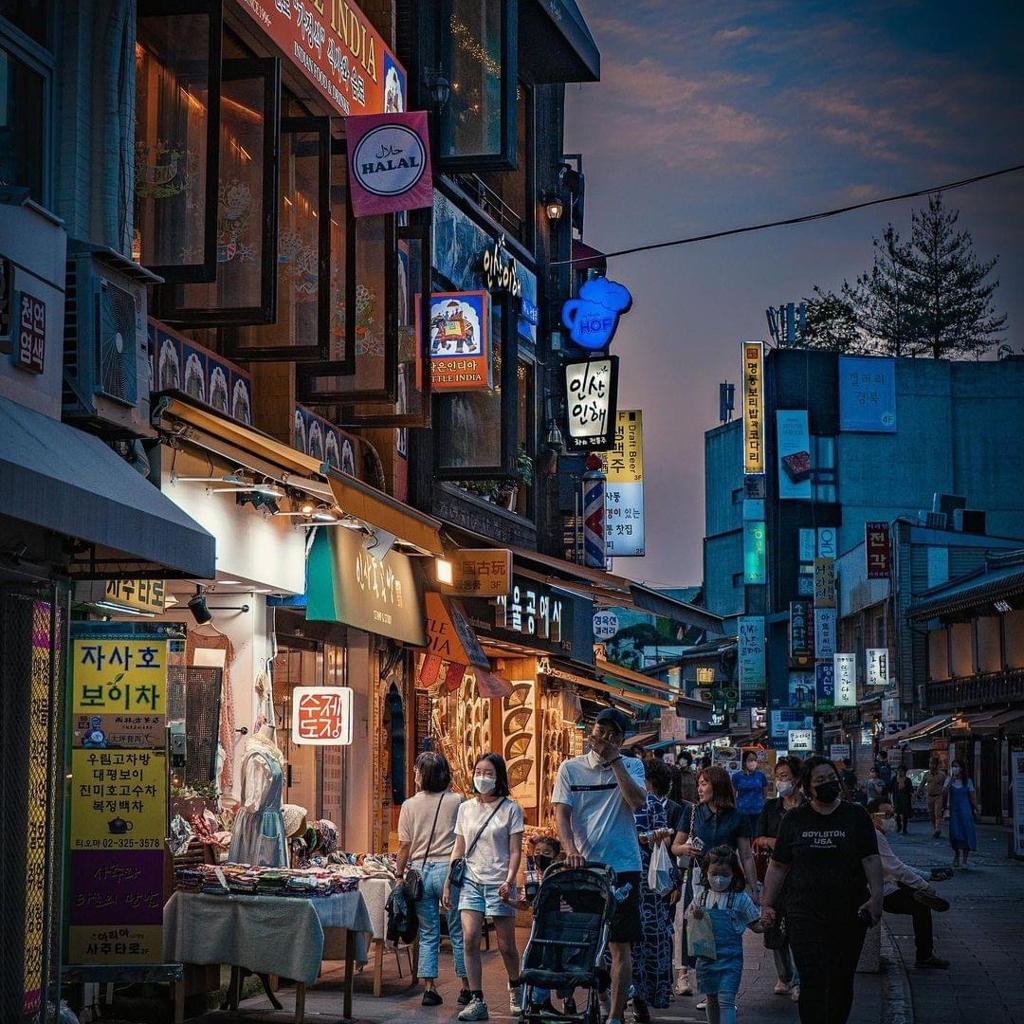
Walk south toward Insadong.
Explore:
- Traditional crafts
- Tea
- Souvenirs
- Galleries
and small shops.
MAKGEOLLI + JEON DINNER
Now the drink you've just learned about has context.
This route works especially well because the whole day tells one story:
TRADITIONAL SEOUL
TRADITIONAL CRAFT & CULTURE
KOREAN FERMENTATION
KOREAN FOOD + MAKGEOLLI
ROUTE 2 — PALACE + MAKGEOLLI
CHANGDEOKGUNG PALACE
BUKCHON
THE SOOL GALLERY
INSADONG
CHEONGGYECHEON EVENING WALK
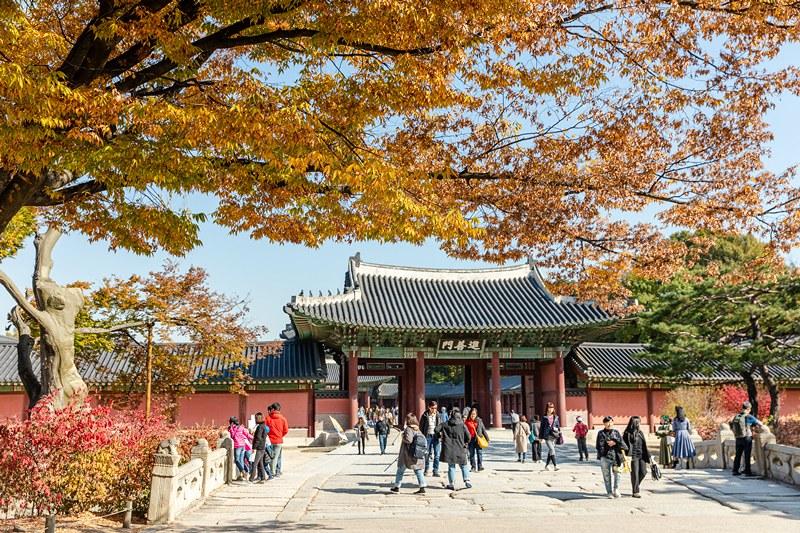
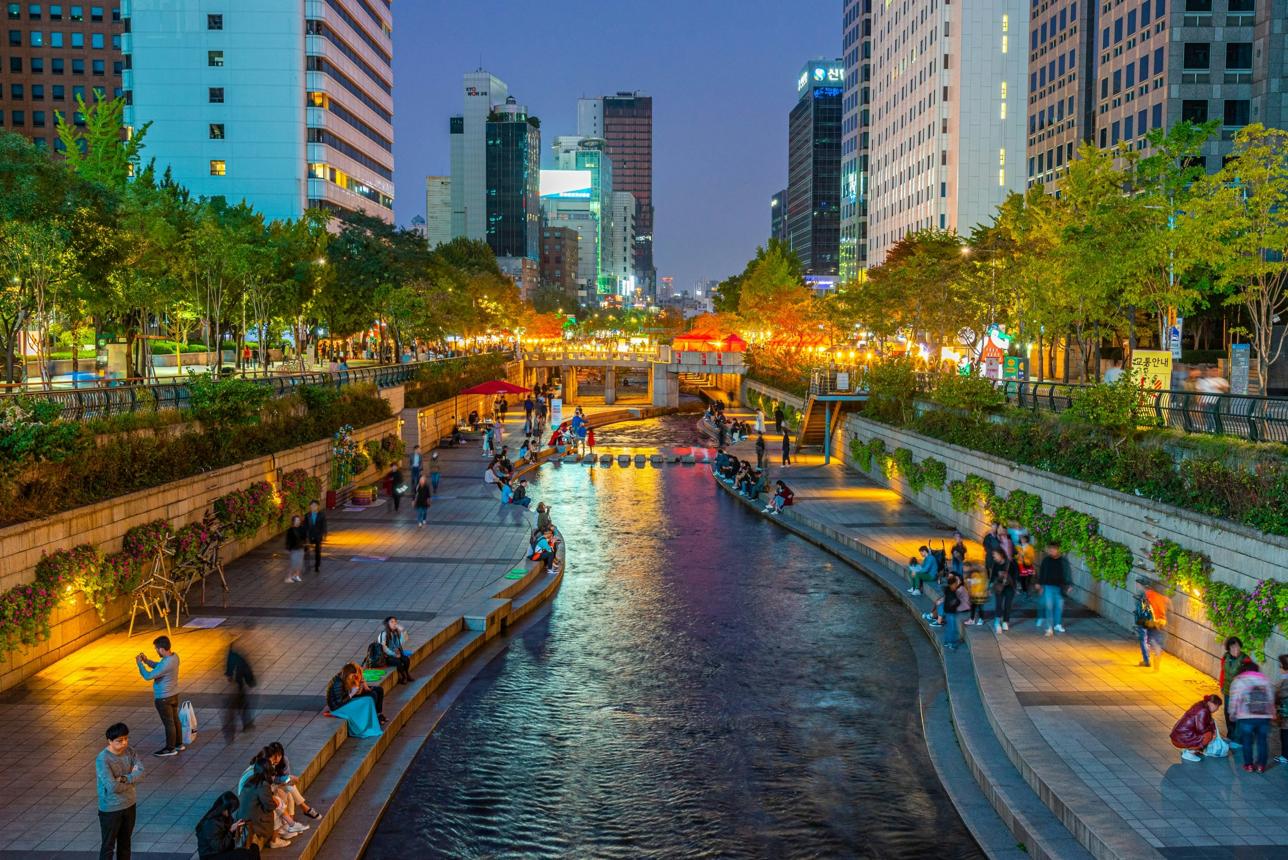
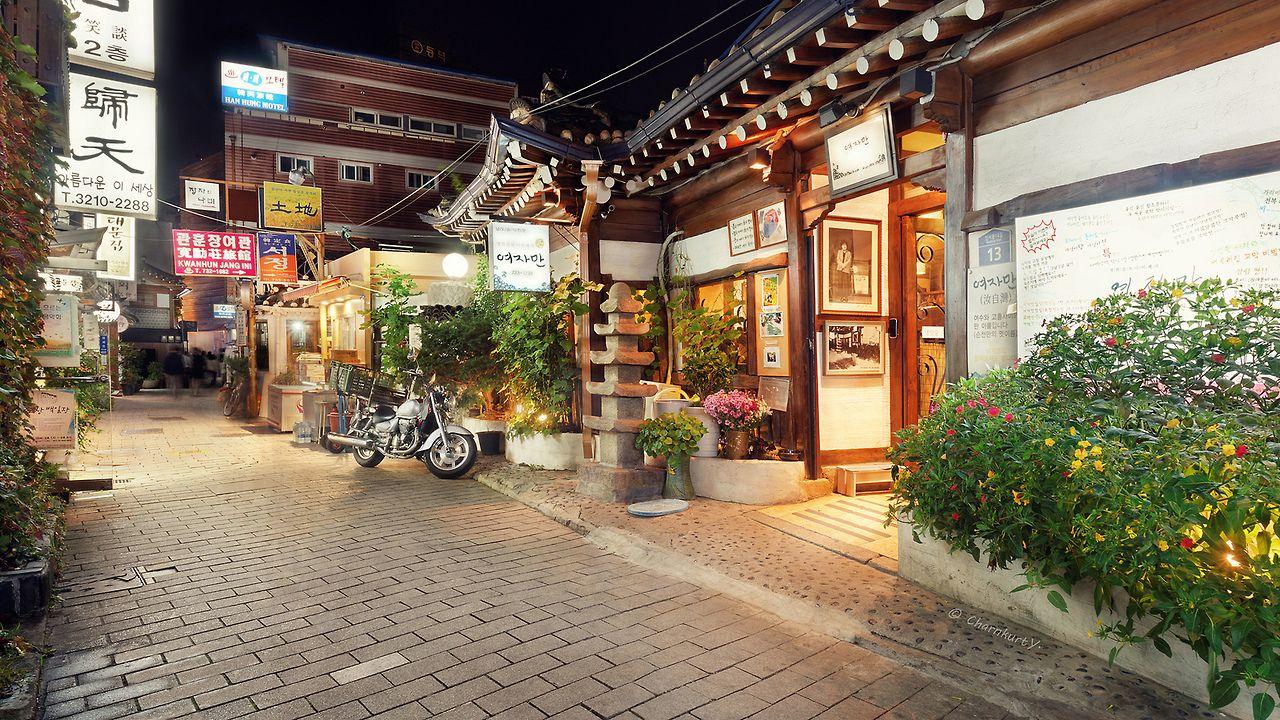
This is better for first-time visitors who also want one major Seoul palace.
Again, almost everything stays within the same general area.
No unnecessary cross-city travel.
ROUTE 3 — PREMIUM TASTING DAY
If you've chosen the premium Myeongdong tasting instead:
MYEONGDONG
SHOPPING / K-BEAUTY
EARLY MEAL
PREMIUM MAKGEOLLI TASTING
CHEONGGYECHEON OR EULJIRO
This works better for travelers whose priority is modern Seoul rather than Bukchon heritage.
BREWING OR TASTING?
YOU WANT...
CHOOSE
- First Korean liquor experience
- The Sool Gallery
- Hands-on activity
- Makgeolli Brewing
- Learn about nuruk
- Makgeolli Brewing
- Try many varieties
- Premium Tasting
- Food & alcohol experience
- Premium Tasting + Dinner
- Traditional Seoul day
- Anguk / Bukchon Experience
WHAT SHOULD A FIRST-TIMER DO?
If you only have time for one:
MAKE MAKGEOLLI.
You can drink makgeolli at hundreds of places.
But learning about:
- Rice
- Nuruk
- Fermentation
and actually handling the brewing ingredients gives you something a restaurant can't.
Then have one good makgeolli with dinner.
That's enough.
DON'T TRY TO “COMPLETE” THE MAKGEOLLI LIST
There are far too many varieties.
You don't need:
- 10 bottles
- 20 tastings
or every famous regional brand in one night.
Try:
2–3 DIFFERENT STYLES.
For example:
- 1
LIGHT & CLEAN
- 2
DRY / FRESH
- 3
RICHER / SWEETER — You'll learn more from comparing three different styles carefully than drinking ten without paying attention.
RESPONSIBLE ENJOYMENT
Korean traditional liquor is part of the country's food and fermentation culture.
Treat it that way.
TASTE IT.
EAT WITH IT.
LEARN ABOUT IT.
DON'T RUSH IT.
Never drive after drinking, and use Seoul's subway, bus or taxi system to return to your accommodation.
TRAVEL TIP
The best version of this experience isn't:
- “I drank Makgeolli in Korea.”
- It's:
“I learned how Makgeolli is made, worked with rice and nuruk, discovered which style I like, and then tried it with Korean food.”
That's a real Korean cultural experience.
FINAL THOUGHT
Makgeolli looks simple:
RICE.
NURUK.
WATER.
But change the ingredients, fermentation or brewer and the result can be completely different.
That's what makes this experience worthwhile.
You don't leave simply knowing the name of another Korean drink.
YOU UNDERSTAND WHY IT TASTES THE WAY IT DOES.