TOPIK — Test of Proficiency in Korean
Korean Language Proficiency Test for Foreigners
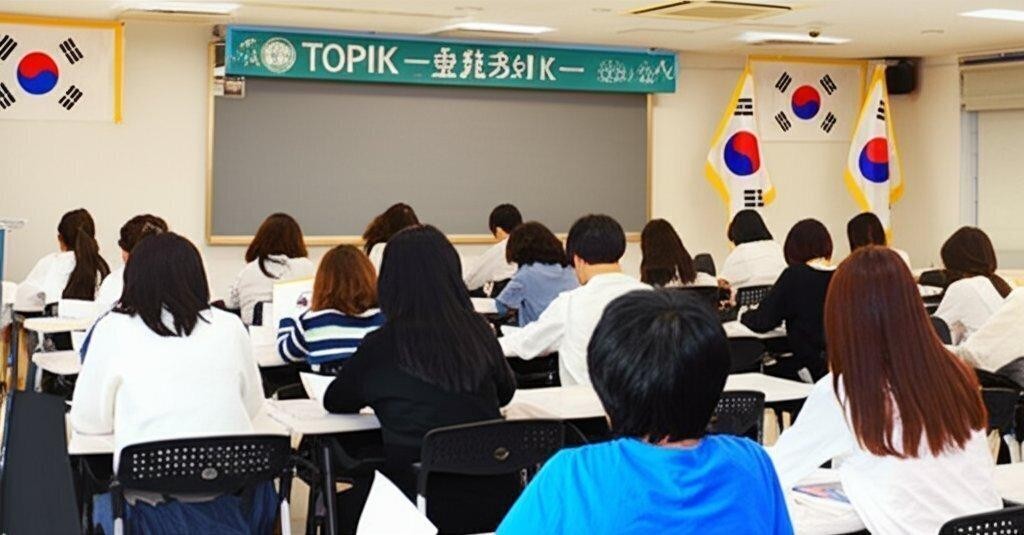
TOPIK is Korea's official Korean-language proficiency test administered by the National Institute for International Education (NIIED). It is widely used by international students and foreigners who need to demonstrate their Korean-language ability.
Quick Summary
Foreigners: Yes
Levels: TOPIK I — Levels 1–2 / TOPIK II — Levels 3–6
Main Skills: Listening, Reading and Writing depending on the test level
Useful For: University admission, Korean-language proficiency verification and other situations requiring an official Korean-language score.
What You Need to Know
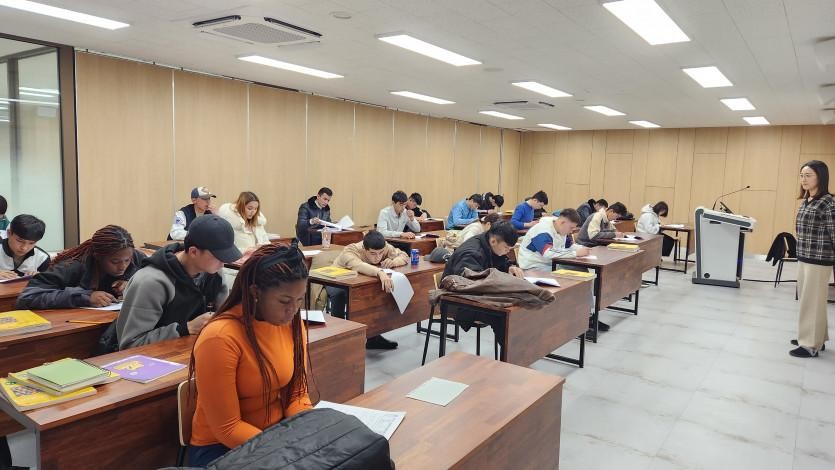
TOPIK I is designed for beginner-level Korean learners, while TOPIK II covers intermediate to advanced proficiency. TOPIK is available in paper-based and computer-based formats depending on the examination schedule and location.
Registration periods, test locations and available test formats can change, so applicants should always check the current official schedule before applying.
Official Contact
- Organization
- National Institute for International Education (NIIED) — TOPIK Center
- TOPIK
- www.topik.go.kr
- NIIED
- www.niied.go.kr
- Telephone
- +82-2-3668-1331
- topik@korea.kr
- Address
- 191 Jeongjail-ro, Bundang-gu, Seongnam-si, Gyeonggi-do 13557, Republic of Korea
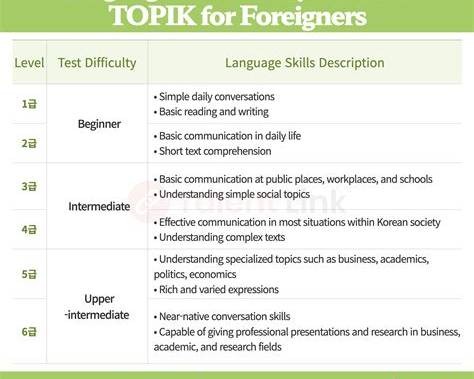
TOPIK Test Structure & Levels
| Level | Test Difficulty | Language Skills Description |
|---|---|---|
| Level 1 (1급) | Beginner | • Simple daily conversations • Basic reading and writing |
| Level 2 (2급) | Beginner | • Basic communication in daily life • Short text comprehension |
| Level 3 (3급) | Intermediate | • Basic communication at public places, workplaces, and schools • Understanding simple social topics |
| Level 4 (4급) | Intermediate | • Effective communication in most situations within Korean society • Understanding complex texts |
| Level 5 (5급) | Upper-intermediate | • Understanding specialized topics such as business, academics, politics, economics • Rich and varied expressions |
| Level 6 (6급) | Upper-intermediate | • Near-native conversation skills • Capable of giving professional presentations and research in business, academic, and research fields |
Understanding TOPIK I and TOPIK II
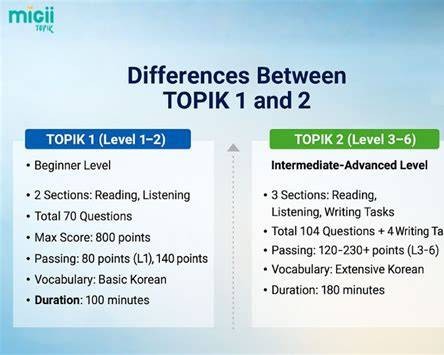
TOPIK is divided into two main test levels: TOPIK I for beginner learners and TOPIK II for intermediate and advanced learners. Your final TOPIK level is determined by your total test score.
Quick Summary
- TOPIK I: Levels 1–2
- TOPIK II: Levels 3–6
- Highest Level: Level 6
- TOPIK I Skills: Listening and Reading
- TOPIK II Skills: Listening, Reading and Writing
- Certificate Validity: 2 years from the date the results are announced
TOPIK I — Beginner
TOPIK I is intended for learners with basic Korean-language ability. It consists of:
- Listening: 30 questions
- Reading: 40 questions
- Total: 70 questions
- Maximum Score: 200 points
Level 1: 80–139 points
Level 2: 140–200 points
There is no writing section in TOPIK I.
TOPIK II — Intermediate to Advanced
TOPIK II is designed for learners who need intermediate or advanced Korean proficiency. It consists of:
- Listening: 50 questions
- Writing: 4 questions
- Reading: 50 questions
- Maximum Score: 300 points
Level 3: 120–149 points
Level 4: 150–189 points
Level 5: 190–229 points
Level 6: 230–300 points
The writing section is particularly important for applicants aiming for higher TOPIK levels.
What Do the TOPIK Levels Mean?
Level 1 — Basic Beginner
Can understand and use basic Korean needed for simple everyday situations.
Level 2 — Beginner
Can communicate about familiar everyday topics and handle basic situations in Korea.
Level 3 — Intermediate
Can communicate in many everyday situations and understand Korean needed for general social activities.
Level 4 — Upper Intermediate
Can understand and use Korean for a wider range of social, educational and professional situations.
Level 5 — Advanced
Can use Korean effectively in professional, academic and more complex social situations.
Level 6 — Highly Advanced
Can understand and express complex ideas in Korean with a high level of proficiency.
Which TOPIK Level Do Foreigners Need?
There is no single TOPIK level required for all foreigners. The required level depends on the purpose.
| Purpose | Typical Requirement |
|---|---|
| Basic Korean proficiency | TOPIK 1–2 |
| University admission | Often TOPIK 3 or higher |
| Some university programs | TOPIK 4 or higher may be required |
| Graduation requirements | Varies by university |
| Employment | Depends on employer and occupation |
| Scholarships | Depends on the scholarship program |
| Visa / immigration purposes | Depends on the specific immigration program |
Important: Universities, employers, scholarship programs and immigration authorities can establish different requirements. Applicants should always verify the current requirement with the relevant organization.
TOPIK Score Validity
TOPIK scores are generally valid for two years from the date the test results are announced.
If you need TOPIK for university admission, employment or another official purpose, check that your score will still be valid when you submit your application.
Official Resource
- TOPIK — National Institute for International Education (NIIED)
- TOPIK Official Website / https://www.topik.go.kr/TWMAIN/TWMAIN0010.do
How to Register for TOPIK in Korea

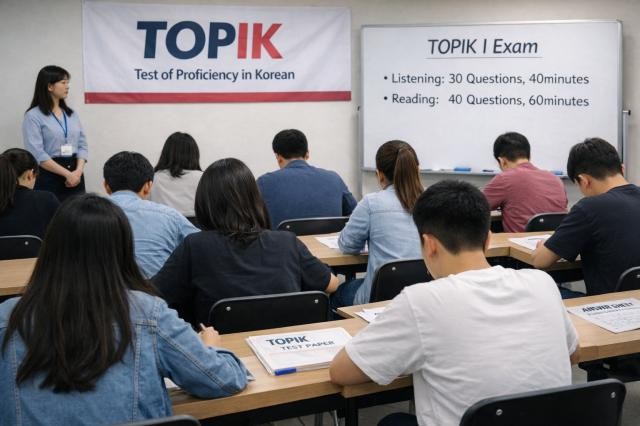
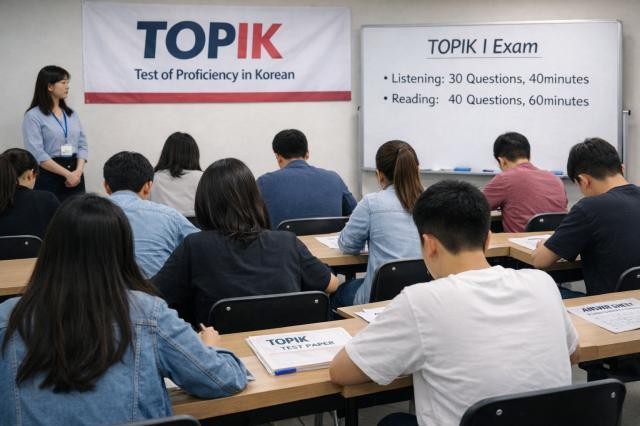
- TOPIK I Exam
- Listening: 30 Questions, 40 minutes
- Reading: 40 Questions, 60 minutes
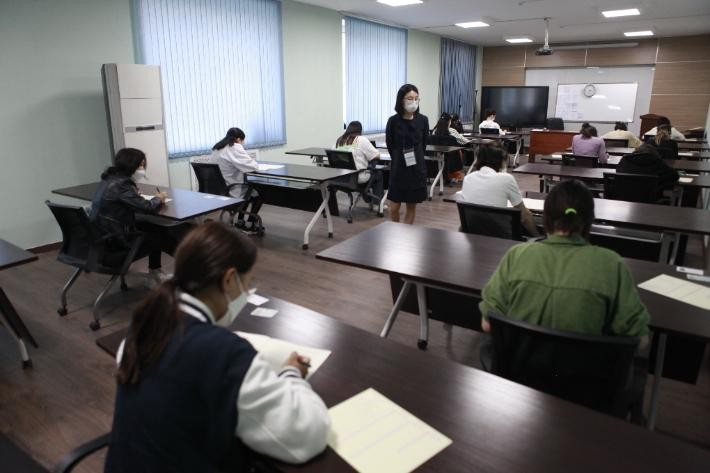
TOPIK Registration Guide for Foreigners
Foreigners living in Korea can apply for TOPIK during the official registration period announced for each examination. Test dates, registration periods and available test centers vary by examination.
Applicants should check the official TOPIK website before each registration because schedules and test-center availability can change.
Quick Summary
Who Can Apply: Foreigners and overseas Koreans learning Korean
Where to Apply: TOPIK official website
Test Types: TOPIK I, TOPIK II and TOPIK Speaking
Formats: PBT and IBT, depending on the examination
Test Centers: Available locations vary by examination
Important: Registration periods are limited and popular test centers may fill quickly.
Before Registration
Prepare the information and documents required by the current TOPIK registration system.
Applicants should make sure that their personal information matches the identification document they will use for the examination. Always check the official announcement for the specific examination before registering.
Registration Process
Step 1 — Check the Test Schedule
Check the official TOPIK website for the current examination schedule, registration period, test date and result announcement date.
Step 2 — Choose the Test
Select the appropriate examination:
- TOPIK I
- TOPIK II
- TOPIK IBT, when available
- TOPIK Speaking, when available
Step 3 — Select a Test Center
Choose an available test center during registration. Test centers differ between examination sessions and availability is not guaranteed.
Step 4 — Complete Your Application
Enter the required personal information and complete the application according to the instructions shown in the registration system.
Step 5 — Pay the Examination Fee
Complete payment within the required period and confirm that your application has been successfully processed. Fees can differ according to the TOPIK test type. Applicants should check the current fee shown in the official examination notice.
Step 6 — Check Your Application
After registration, check your application details and examination information through the TOPIK system.
Important for Foreign Applicants
Use your correct name and personal information when applying. Your identification information should correspond with the information used for the examination.
Do not rely on an old TOPIK schedule because registration dates, test locations, fees and examination formats may change.
For domestic registration, TOPIK currently warns that the registration process is not supported on mobile devices during the application period, so applicants should use a PC or regular laptop.
2026 TOPIK Schedule
TOPIK examinations are held multiple times during the year. The Ministry of Education and NIIED publish an official annual implementation notice containing:
- Registration periods
- Test dates
- Result announcement dates
- Examination fees
- Applicant instructions
Because these details change each year, users should be directed to the current official schedule. The 2026 schedule is officially published by NIIED.
Official Resources
- TOPIK Official Website
- www.topik.go.kr
- National Institute for International Education (NIIED)
- www.niied.go.kr
- TOPIK Center — Telephone
- +82-2-3668-1331
- PBT / IBT Email
- topik@korea.kr / itopik@korea.kr
TOPIK Test Day Guide
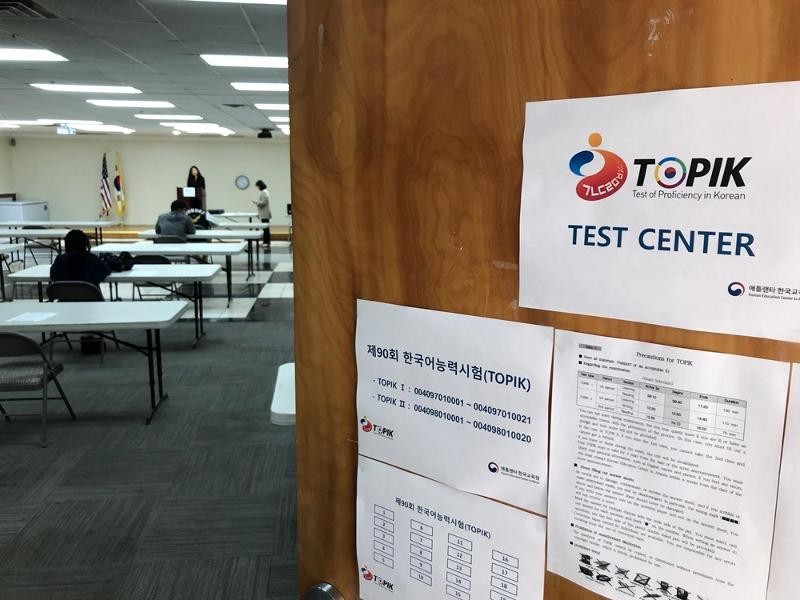
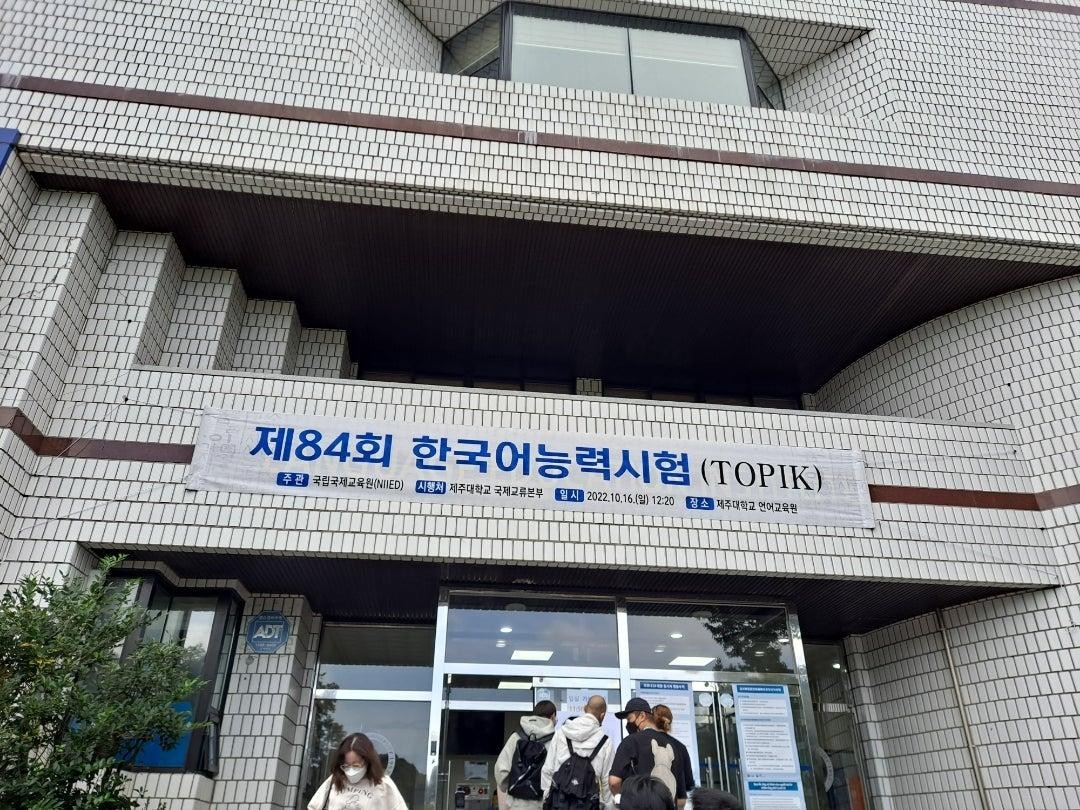
What Foreigners Need to Know on Test Day
Taking TOPIK in Korea is straightforward, but candidates should understand the test-day procedures before arriving at the examination center.
Rules and procedures can differ depending on whether you take TOPIK PBT, TOPIK IBT or TOPIK Speaking. Candidates taking the examination outside Korea should also check the instructions provided by their local test administrator.
Quick Summary
- Who: Registered TOPIK candidates
- Test Types: TOPIK I / TOPIK II / TOPIK Speaking
- Formats: PBT / IBT
- Before the Test: Confirm your test center, test time and candidate information
- Identification: Bring an accepted identification document
- Important: Follow the official instructions for your specific examination session
Before Going to the Test Center
Check your examination information carefully before leaving for the test center.
Make sure you know:
- Test date
- Test center
- Test type
- Candidate information
- Reporting and entry time
- Identification requirements
Arriving without the required identification or after the permitted entry time may affect your ability to take the examination.
Always check the latest official TOPIK notice rather than relying on information from a previous test.
TOPIK PBT
PBT — Paper-Based Test is the traditional paper examination.
TOPIK I PBT
- Listening — 30 questions
- Reading — 40 questions
- Total testing time — 100 minutes
- Maximum score — 200
TOPIK II PBT
- Listening — 50 questions
- Reading — 50 questions
- Writing — 4 questions
- Total testing time — 180 minutes
- Maximum score — 300
TOPIK I evaluates beginner Korean proficiency, while TOPIK II evaluates intermediate to advanced proficiency.
TOPIK IBT
IBT — Internet-Based Test is taken on a computer at an authorized examination center.
The IBT format differs from PBT in the number of questions, testing time and scoring system.
Candidates planning to take IBT should become familiar with the computer-based testing system before the examination.
TOPIK Speaking
TOPIK Speaking is a separate speaking assessment. The current official structure consists of:
- 6 Tasks
- Approximately 30 Minutes
- Maximum Score: 200
- Levels: 1–6
TOPIK Speaking is separate from TOPIK I and TOPIK II.
Identification
Candidates must follow the identification requirements announced for their examination. Foreign residents should carefully check which identification documents are accepted before test day. Candidates taking TOPIK outside Korea should pay particular attention because identification and test-center entry procedures may differ by country.
What to Bring
Candidates should check the official examination notice before test day and prepare all required items. Depending on the test format and examination session, requirements may differ. Do not rely on unofficial websites or information from an older examination.
After the Test
Results are released according to the official TOPIK schedule. TOPIK results can be used for purposes including:
- University admission and graduation
- Employment applications
- Korean-language proficiency verification
- Global Korea Scholarship (GKS)
- Certain employment and permanent-residency visa qualifications
The required TOPIK level varies according to the university, employer, scholarship or immigration program.
Important for Foreigners
If you take TOPIK outside Korea, registration procedures, examination fees, identification requirements and test-center rules may be different.
Always check with the local TOPIK administering organization before the examination.
Official Resources
- TOPIK Official Website
- www.topik.go.kr
- National Institute for International Education (NIIED)
- www.niied.go.kr
- TOPIK Center — Telephone
- +82-2-3668-1331
- PBT / IBT Email
- topik@korea.kr / itopik@korea.kr
Free TOPIK Preparation & Study Resources

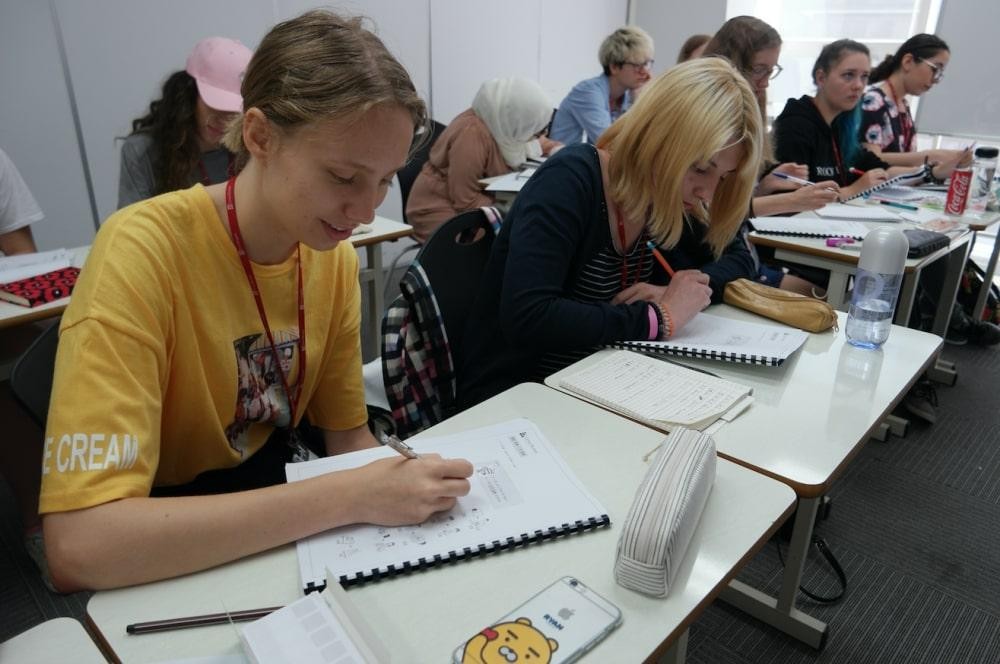

Free Official Resources for Foreign TOPIK Candidates
Foreigners preparing for TOPIK do not necessarily need to pay for a private academy. Korea provides several official online learning resources that can be used to study Korean and prepare for the examination.
Free resources include TOPIK lectures, previous examination questions, listening materials, writing guides and computer-based TOPIK practice.
Quick Summary
Cost: Many official resources are free
Best For: TOPIK beginners and independent learners
Available: Online
Materials: Video lessons, past questions, listening files and writing resources
IBT Practice: Available through the official TOPIK system
Korean Courses: Online King Sejong Institute provides courses from introductory to advanced levels.
Free TOPIK I Video Lessons
The Korean government's Study in Korea service provides free beginner-level TOPIK I learning videos. The lectures are available in multiple languages, making them particularly useful for foreigners beginning their TOPIK preparation. Learners can use these materials before moving on to more intensive TOPIK study.
Today's TOPIK
Learners can practice with TOPIK questions regularly through the official learning service. The service provides five past TOPIK questions each day, allowing candidates to build a daily study routine without purchasing additional materials.
Past Examination Materials
Official learning resources include:
- Previous TOPIK examination questions
- PDF study materials
- Listening MP3 files
- Writing guides
These materials are particularly useful because candidates can become familiar with the types of questions used in the actual examination.
Free TOPIK IBT Practice
Candidates planning to take TOPIK IBT can practice using the official computer-based test environment.
The practice system allows users to become familiar with functions such as:
- Listening questions
- Reading questions
- Selecting answers with a mouse
- Drag-and-drop questions
- Reviewing answers
- Submitting answers
Using the practice system before test day can help first-time IBT candidates understand how the examination interface works.
Online King Sejong Institute
The Online King Sejong Institute is an official Korean-language learning platform operated by the King Sejong Institute Foundation.
It offers Korean courses ranging from introductory and beginner levels through intermediate and advanced Korean.
Available areas include:
- Beginner Korean
- Intermediate Korean
- Advanced Korean
- Reading
- Writing
- Business Korean
- Self-learning courses
- Instructor-supported online courses
Courses are also offered with support in numerous languages, including English, Vietnamese, Russian, Chinese, Arabic, Spanish, Indonesian, Japanese, Portuguese, Thai, Bengali, Nepali, Khmer and Mongolian.
Free Korean Level Test
Learners who are unsure of their Korean level can use the online Korean diagnostic assessment provided through Nuri King Sejong Institute.
The assessment includes beginner and intermediate tests covering Listening and Reading and helps learners identify an appropriate King Sejong Institute course level.
Important for Foreigners
TOPIK preparation does not have to begin with a paid academy.
A good starting route is:
Check your Korean level → Study Korean online → Practice official TOPIK questions → Try the IBT environment → Register for the official TOPIK examination
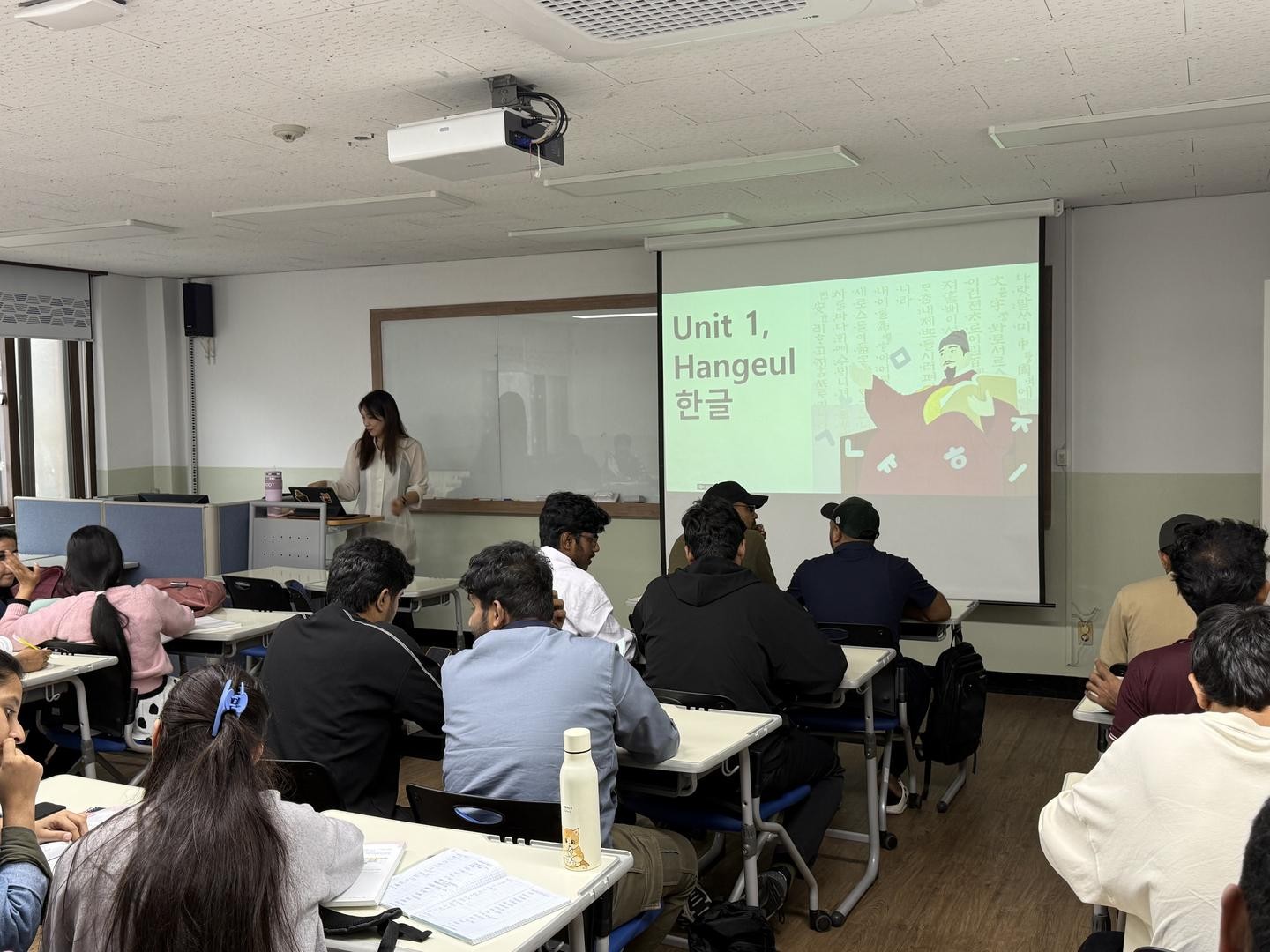
Students who need structured classroom instruction can also consider university-affiliated Korean language institutes and local foreign-resident support programs in Korea.
Official Resources
- TOPIK
- www.topik.go.kr
- Study in Korea
- www.studyinkorea.go.kr
- Online King Sejong Institute
- www.iksi.or.kr
- Nuri King Sejong Institute
- nuri.iksi.or.kr
Free Korean Classes & Support Programs for Foreigners in Korea
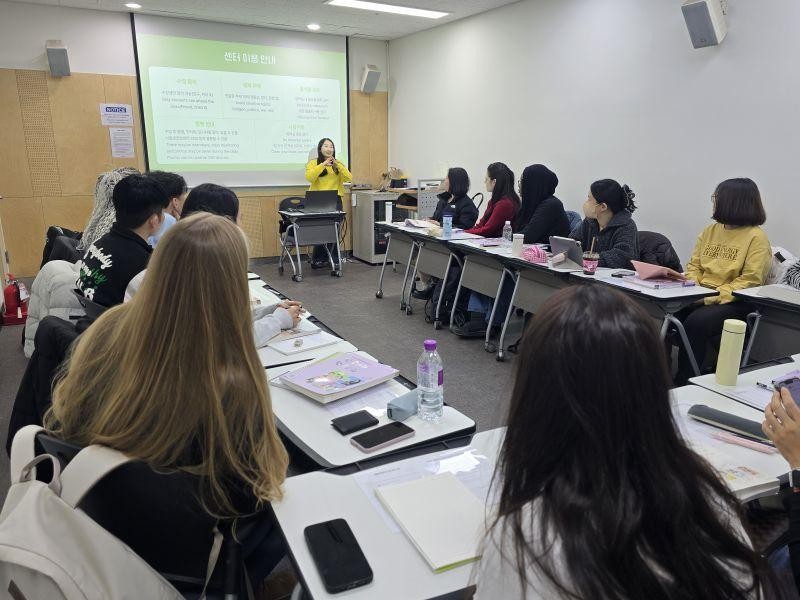
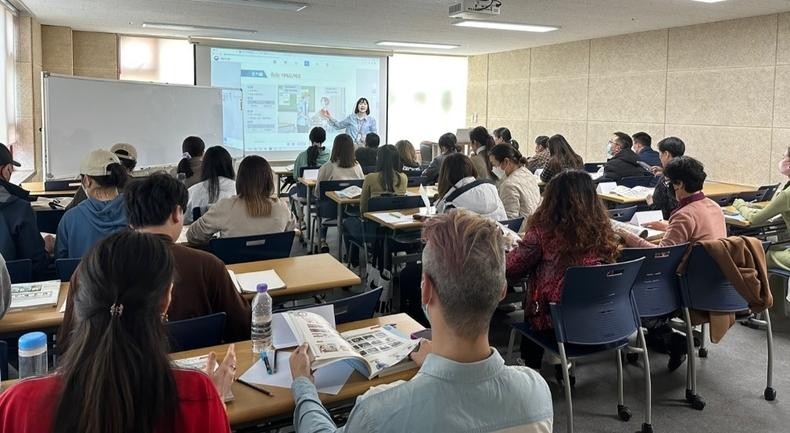
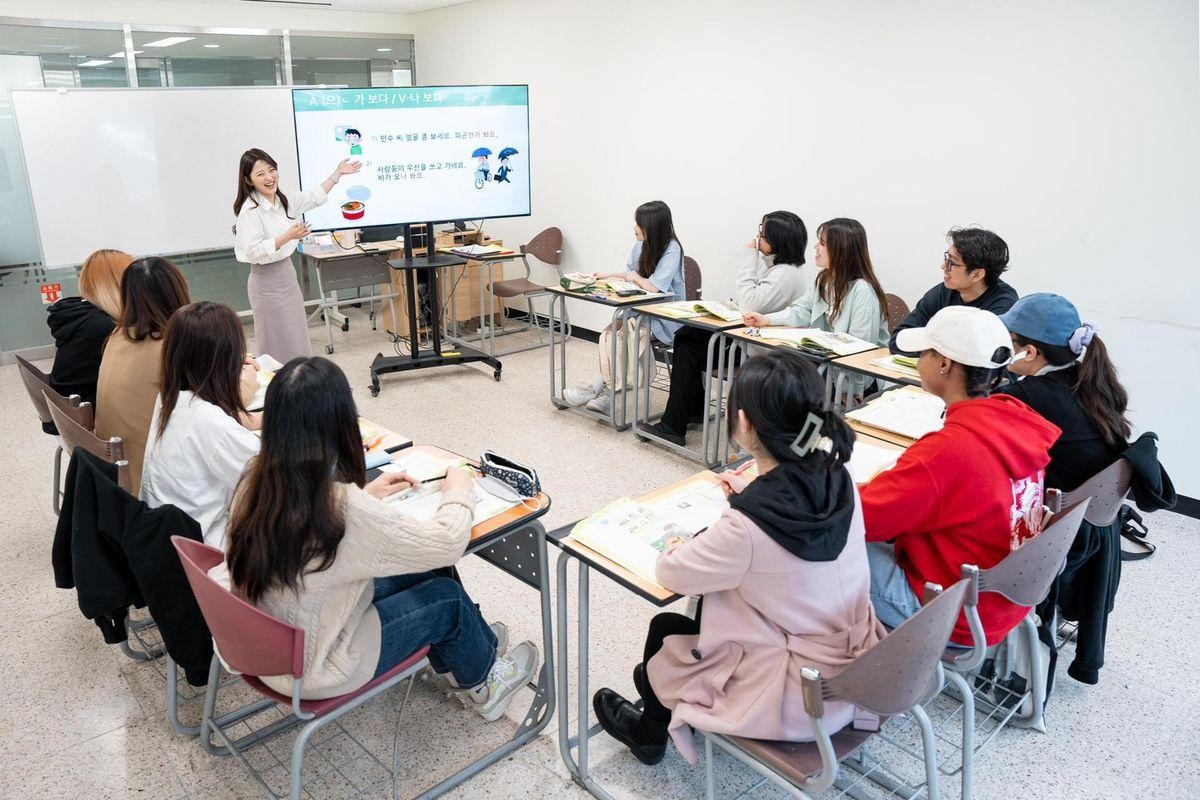
Korean Language Learning and Support Programs for Foreign Residents
Foreign residents in Korea have access to Korean-language education through government programs, local governments, foreign resident centers, multicultural family centers and online learning services.
Depending on the program, classes may be free or offered at a low cost. Availability, eligibility and registration periods vary by location and organization.
Quick Summary
Who: Foreign residents, international students, workers, marriage immigrants and other eligible foreign nationals
Programs: Korean language, TOPIK preparation, settlement education and integration programs
Cost: Many programs are free; others may charge a small fee
Where: Foreign resident centers, multicultural family centers, local government programs and online
Online Option: Free Online King Sejong Institute
Important: Programs and registration periods change throughout the year.
Local Foreign Resident Centers
Many cities and districts operate centers that provide services for foreign residents.
Depending on the center, services may include:
- Korean-language classes
- TOPIK preparation
- Daily-life Korean
- Employment-related education
- Interpretation and translation
- Immigration and legal information
- Living consultations
- Cultural programs
- Community activities
Programs vary considerably by location, so foreigners should check the center serving their area. For example, Seoul Global Center is one of Seoul's major foreign-resident support facilities.
Multicultural Family Support
Foreign residents who are members of multicultural families may also be eligible for Korean-language and settlement-support programs through Korea's family support system. Programs can include Korean-language learning, interpretation, family education, counseling and assistance with adapting to life in Korea. Eligibility depends on the particular program.
Korea Immigration & Integration Program — KIIP
The Korea Immigration & Integration Program, commonly known as KIIP, is designed to help immigrants learn the Korean language and understand Korean society.
It is particularly important for foreigners planning long-term settlement in Korea.
KIIP is different from TOPIK.
TOPIK is primarily a Korean-language proficiency examination.
KIIP is an immigration and social-integration education program.
Depending on the immigration procedure involved, completion of KIIP or related assessment results may have relevance to certain residence, permanent residency or naturalization requirements.
Applicants should always verify the current immigration requirements before relying on KIIP for a specific visa or status.
Online King Sejong Institute
Foreigners who cannot attend classroom lessons can study Korean through the Online King Sejong Institute.
It is an official free online Korean-language learning service provided by the King Sejong Institute Foundation.
Courses range from introductory through advanced Korean and include different learning formats. Current course areas include:
- Introductory Korean
- Beginner Korean
- Intermediate Korean
- Advanced Korean
- Business Korean
- Self-learning courses
- Teacher-assisted courses
- Live online classes
The service can be accessed on computers and mobile devices, and multilingual learning content is available. Course materials for Online King Sejong Institute are also available free through Nuri King Sejong Institute.
University Korean Language Programs
Many Korean universities operate Korean-language institutes for international students and foreign residents. These programs generally provide more intensive and structured Korean-language education than community classes. They can be useful for foreigners preparing for:
- University admission
- TOPIK
- Academic study in Korean
- Daily life in Korea
- Long-term Korean-language development
Unlike many government or community programs, university Korean-language programs normally charge tuition.
Programs for Foreign Workers
Foreign workers may also find Korean-language and settlement programs through foreign worker support organizations. Services can vary by center and may include:
- Korean-language education
- Workplace Korean
- Labor counseling
- Interpretation
- Daily-life assistance
- Employment-related information
For example, Incheon Support Center for Foreign Workers operates in Incheon as a support organization for foreign workers.
How to Find a Free Class Near You
Foreign residents should first check:
- 1Their city or district foreign resident center
- 2Local multicultural family support services
- 3Immigration integration programs
- 4Online King Sejong Institute
- 5University Korean-language institutes if intensive study is needed
Because local courses open and close throughout the year, always check the current registration notice before visiting a center.
Important for Foreigners
Do not assume that every Korean-language program is available to every foreign resident.
Some programs may be limited according to:
- Place of residence
- Visa or immigration status
- Student or worker status
- Multicultural-family eligibility
- Korean proficiency level
- Registration period
- Available class capacity
Check eligibility directly with the organization before applying.
Official Resources
- Online King Sejong Institute
- www.iksi.or.kr
- Nuri King Sejong Institute
- nuri.iksi.or.kr
- Korea Immigration & Integration Program — Socinet
- www.socinet.go.kr
- Danuri — Multicultural Family Support
- www.liveinkorea.kr
- Study in Korea
- www.studyinkorea.go.kr